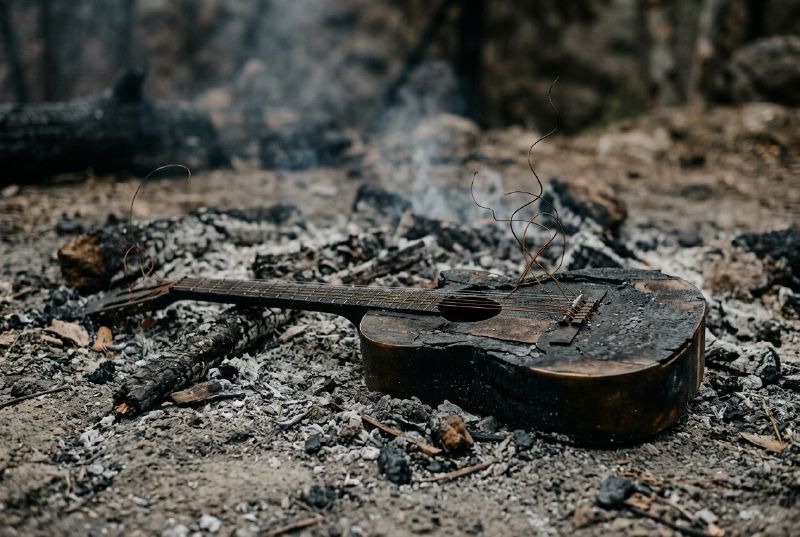
The Taliban silenced Afghanistan’s musicians with fire, threats and the airwaves. After taking Kabul in August 2021, they restricted music and in places made it a crime. Their vice and virtue ministry burned seized instruments, and selling an instrument became an offence that could be punished.
The message reached musicians before the fighters did. A singer the Guardian called Farhan said Taliban commanders phoned and messaged him with accusations of “moral corruption” as they neared his city. He buried his instruments in a field and left the country.
The killing that set the tone
Weeks after the takeover, the folk singer Fawad Andarabi was killed. His son Jawad told the Associated Press his father was shot in the head on the family farm in the Andarab valley. The Taliban did not answer the accusation, the BBC reported.
For others the warning came at night. A Kabul wedding singer the BBC called Khan said armed men smashed every instrument in his office and asked where he was. He and his family left before dawn.
Off the air
The Taliban moved on broadcasting even before Kabul fell. In each city they took, they banned music on local FM stations, the BBC reported. State broadcasting became the Voice of Sharia, playing religious chanting.
Massood Sanjer, director of the Moby group that runs Tolo News, told the BBC its 24-hour music station had closed.
A Taliban spokesman told The New York Times in late August 2021 that “Music is forbidden in Islam.” The BBC notes that most Muslims do not share that reading.
What was lost
The ban undid two decades of growth. After the first Taliban government fell in 2001, music was taught again at the Afghanistan National Institute of Music, where the country’s first female orchestra formed. Billboard traced a scene that ran from the talent show Afghan Star to hip-hop, hard rock and black metal bands.
Weddings stopped hiring live bands. Many moved indoors and played recorded songs quietly instead.
The first Taliban government, from 1996 to 2001, had banned all music except unaccompanied religious chanting. Rolling Stone reports it enforced the ban with brutal methods, including a suicide bombing at a student concert at the music institute.
Into exile
Many musicians ran. The BBC spoke to six singers who had crossed into Pakistan illegally and were hiding near Islamabad and Peshawar. One, who had sung for the Afghan national army, said he believed the Taliban would execute him.
Qudrat Wasefi was 22 and working at the music institute on August 15, 2021. As the Taliban entered Kabul he opened the studio windows and played his trumpet as loud as he could. He spoke to Rolling Stone from Cambridge, Massachusetts, and still dreams of going home.
Omaid Sharifi of ArtLords, a collective that works on Afghan art, told the Guardian the progress was lost, “back to almost zero”.