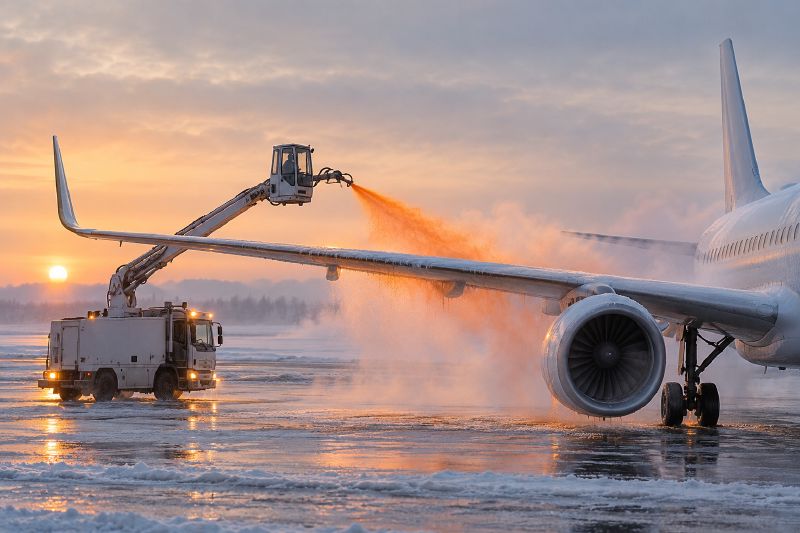
Ice on a wing changes its shape and texture, and disrupts the air flowing over it. It adds drag, cuts lift, and can stall the aircraft, leading to a total loss of control. Even a little frost, snow, or ice on the wings or tail is dangerous, and a safe departure needs none there at all.
Weight is the second problem. On a plane full of fuel, the extra load of ice on the wings and body can stop it getting airborne. It also throws off the pilots’ performance sums, such as how fast the plane can climb and whether the runway is long enough.
How much damage ice has done
A study by researchers from the US National Transportation Safety Board counted 583 accidents and more than 800 deaths between 1982 and 2000 that could be blamed on ice. NASA’s Glenn Research Center has put icing as a factor in up to 10% of fatal airline accidents.
In October 1994, American Eagle flight 4184 was in a holding pattern near its airport when it flew into freezing rain. Ice built up so fast that moving parts on the wings failed, and it crashed in Roselawn, Indiana, killing all 68 people on board.
Some crews get lucky. In March 2001, Comair flight 5054 hit freezing rain clouds at 17,000 feet on its way from Nassau to Orlando. Its airspeed fell by nearly 70 knots, and it dropped 7,000 feet before the pilots regained control and landed in West Palm Beach.
What the crews spray, and why it is orange
The work happens once everyone is on board and the plane is ready to go, because the fluid only protects for a limited time. At Alaska Airlines, Celley Buchanan says that window, called holdover time, is typically about 22 minutes from spraying to takeoff. The flight deck crew works out the exact figure from the temperature and weather.
The first fluid is a heated mix of glycol and water, sprayed at high pressure to melt the ice. Crews dye it orange so they can see where they have been. In sleet, freezing rain, or falling snow, airlines often add a second, thicker anti-icing fluid. It is green, goes on unheated, and slides off the wings once the plane climbs away.
Salt, the pavement answer, is no use. It corrodes a plane’s aluminium skin.
Who is responsible
In the UK, the duty falls on the commander. Richard Taylor of the Civil Aviation Authority says the commander must check, before a flight, that the aircraft is free of ice and safe to fly. The airline must train the people who remove it.
The same logic holds in the US. Perry Cooper of Seattle–Tacoma International Airport says each airline, not each airport, must make sure its planes are ready. Delta and Alaska Airlines both inspect every aircraft when temperatures fall below 50 degrees, even briefly.
Why ice is less of a worry at cruising height
Once airborne, the plane protects itself. Many aircraft route hot air from the engines through pipes in the wings and tail to stop ice forming. Some aircraft use inflatable rubber boots on the wings to crack ice off, as Comair’s crew did.
Newer systems exist. Cox & Company’s Electro-Mechanical Expulsion Deicing heats the leading edge and then jolts the skin with electrical pulses to break the ice’s grip. In 2001 it became the first ice protection technology in 50 years to win FAA certification, on Raytheon’s Premier 1 business jet.