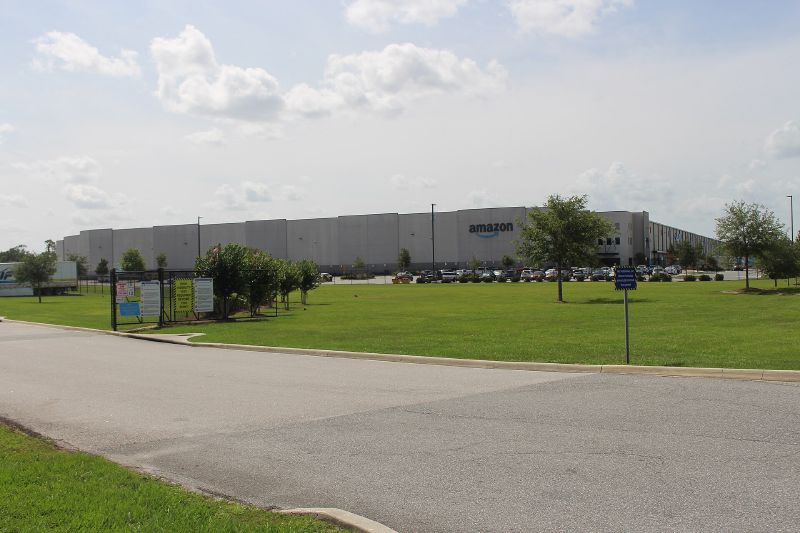
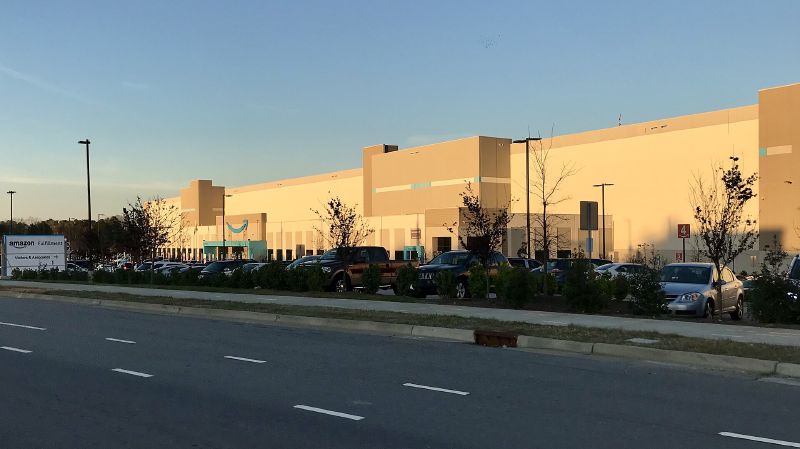
When the BBC visited Amazon’s Hemel Hempstead warehouse in 2015, a picker’s handheld scanner told them where to walk and counted down the seconds they had to reach the next item. The company’s general manager first denied the countdown existed. A scanner shown to the reporter then displayed one.
more
The same visit shows how the software works on the shop floor. It does not show how Amazon sets the target behind the timer.
How a pick begins
An online order reaches the system, which works out where the item sits in the building and sends a human picker to fetch it. The picker walks the aisles pushing a cart.
Shelves at the site are not sorted by category. The BBC found an HDMI cable near five copies of some Harry Potter sheet music, and a baby’s bottle across the aisle from a drain water diverter. The BBC says the layout means pickers need not think long about what they retrieve.
What the system watches
The picker scans each item to confirm it is the right one, and the item is scanned again at later points, such as when it gets a customer’s label. Low said the company can track where an item is at any moment.
The BBC’s Panorama programme had earlier reported that handhelds in some Amazon warehouses count down the seconds allowed for the next product. Picker Thomas Owens told the BBC he handled about 1,000 to 1,200 items a day. Over a 10-hour shift, the BBC worked out, that is almost two items a minute.
Owens added that missing a handful of countdowns was acceptable and did not stop pickers meeting their overall productivity targets. The sources do not say how Amazon calculates those targets.
The view from New York
A New York Times examination of Amazon’s JFK8 warehouse on Staten Island, republished by the Society for Human Resource Management, describes tracking at a finer grain. The Times reported that Amazon continued to track every minute of most warehouse workers’ shifts, including how long they paused.
If productivity flagged, the Times reported, Amazon’s computers assumed the worker was to blame. Early in the pandemic Amazon paused firing for low output, but the pause reached JFK8 workers without a clear announcement. Some of them kept worrying that slow work would cost them their livelihoods.
A pattern beyond Amazon
A joint report from the International Labour Organization and the European Commission’s Joint Research Centre studied logistics and healthcare workplaces in Italy, France, India and South Africa. It found algorithmic management is widely present in traditional sectors and brings efficiency gains.
The same report warned of possible damage to job quality and a strong potential for intrusive worker surveillance.