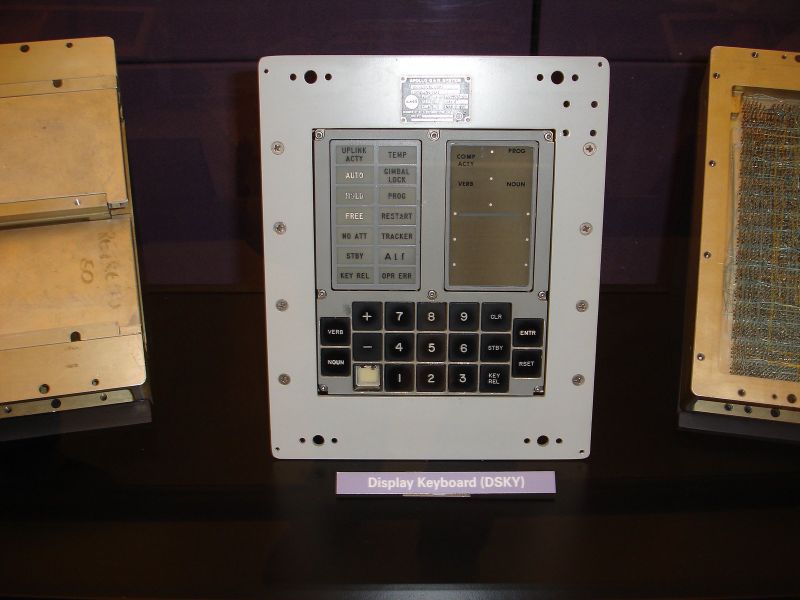
The computer that guided Apollo 11 to the Moon had 72 kilobytes of memory, and its programmers still had to cut features to make the software fit. The machine was the Apollo Guidance Computer.
more
What 72 kilobytes meant
The memory held 36,000 words, according to SpaceNews. The Planetary Society puts it at almost a million times less storage than a modest smartphone. The processor ran about 80,000 instructions per second. Ars Technica says the scarce memory shaped the software far more than that speed did.
Programmers wrote code on paper and punched it into cards. Then technicians wove long copper wires through and around tiny magnetic cores to store the logic. The BBC reported that former textile workers and watchmakers did the weaving for the defence firm Raytheon.
How the software was made to fit
Margaret Hamilton led the software team. She said the team rolled mission phases in and out of memory, and that this caused errors. One example came from her young daughter. Playing with a model of the computer, she started a pre-launch program in mid-mission, and the computer crashed. The same thing happened on Apollo 8 and reset the navigation system.
Jim Kernan, a lunar module software engineer, said the software once reached 150 percent of the available storage. On a day the team called “Black Friday”, NASA management ordered major cuts. Before that, Kernan said, the engineers expected the computer to fly the mission without help from the ground. Afterwards the ground took the lead role.
The hardware was as tight. The machine had to be small and light, never fail, and draw less power than a 60 watt bulb. To meet that, the team bet on integrated circuits, a technology whose first working example dated from 1958. The computer used only one type of circuit to reduce the risk of failure.
The alarms on 20 July 1969
On 20 July 1969, Neil Armstrong was a few thousand feet above the surface when a critical alarm sounded. For three seconds it looked as if the mission might abort. Armstrong was given a “go” to continue, and Eagle touched down after several more alarms.
Hugh Blair-Smith, who worked on the computer’s hardware and software, traced the alarms to the rendezvous radar. Buzz Aldrin had left it on during descent, though it was not needed. Blair-Smith said Aldrin acted on what happened on Apollo 10, when the lunar module briefly lost attitude control. The radar was taking up computer cycles, which triggered the alarms.
The engineers said they had not expected the radar to be on during descent when they developed and tested the computer. The landing went ahead anyway.