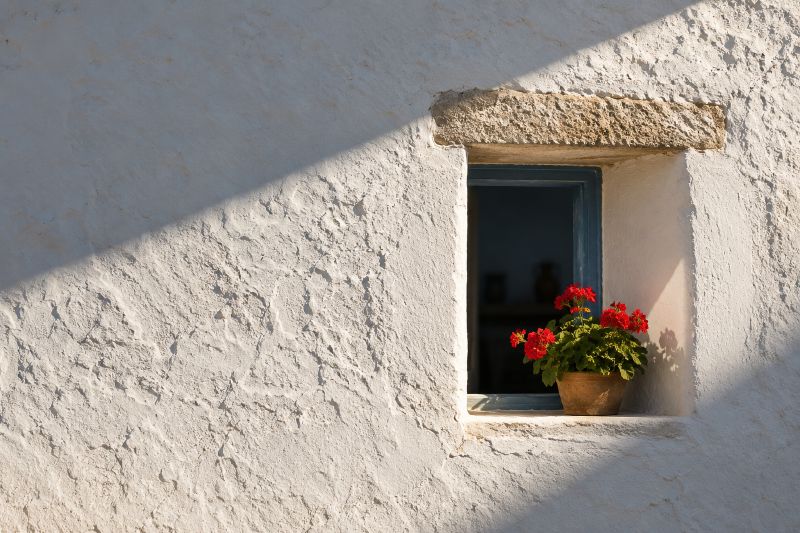
A heavy wall with a small, deep-set window keeps a room cool because in hot weather the main source of heat is usually the window, not the wall. John Palmer of the Passivhaus Trust told the BBC that in hot weather very little heat passes through walls. In temperate climates the main source is usually sunlight coming through glass.
Thick masonry adds a second effect. A deep envelope can cut heat gain, temper the light, and hold the temperature inside steady, as ArchDaily’s Diogo Borges Ferreira puts it. In many climates, he writes, building heavy was a passive way to stay comfortable.
How much heat a window lets in
Palmer gave a figure. A single square metre of glazing facing south can produce about 150 watts of heat, he said.
That makes the size and the shading of a window matter. The Passivhaus Trust argues that windows should face north and south, with the northern ones there for daylight. It also says glass should cover less than a quarter of a building’s south face.
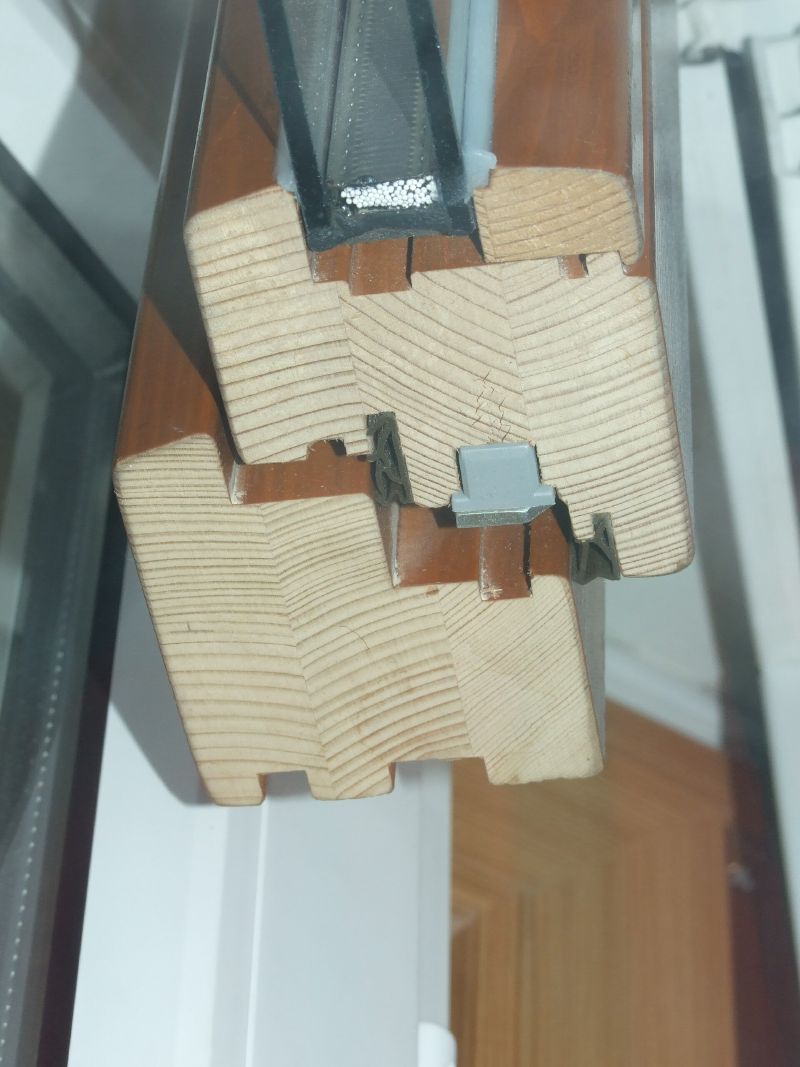
Some modern glass has a low g-value, which means less of the Sun’s heat passes through. Palmer pointed out the catch: the same glass leaves a home colder in winter. He prefers shutters outside the glass, or overhangs that shade a window in summer but let in winter light, when the Sun sits low.
A deep reveal works in a similar way. Ferreira describes recessed openings that moderate sunlight and temperature, with the masonry around them casting the shade.
Why the twentieth century built thin
For much of the twentieth century, Ferreira writes, architects chased lightness. Steel frames and curtain walls shrank the outside of a building to a thin skin, and windows became flat cuts in a smooth surface.
Older buildings worked the other way. Their walls had depth and their windows sat recessed in solid masonry. In Andrea Palladio’s villas, including Villa Rotonda and Villa Barbaro, the windows sit deep in the walls, so a visitor sees the depth between façade and room.
The idea never vanished. Louis Kahn’s Exeter Library and Carlo Scarpa’s work at Castelvecchio kept exploring thick walls and deep reveals.
Who is building heavy now
Ferreira lists recent buildings that bring the mass back, several of them for climate reasons.
- The House in Monsaraz, by Aires Mateus, sits partly in the ground inside a dense earthen structure. Its deep openings let light in slowly while the interior stays stable.
- The Ter House, by Mesura, pushes its masonry walls outwards to form shaded reveals that control sunlight.
- House 1627, by H Arquitectes, has walls thick enough to turn each window into a small recess a person can occupy, shaded between inside and out.
- Peter Zumthor’s Therme Vals uses massive walls of locally quarried stone, with light coming through narrow openings and skylights.
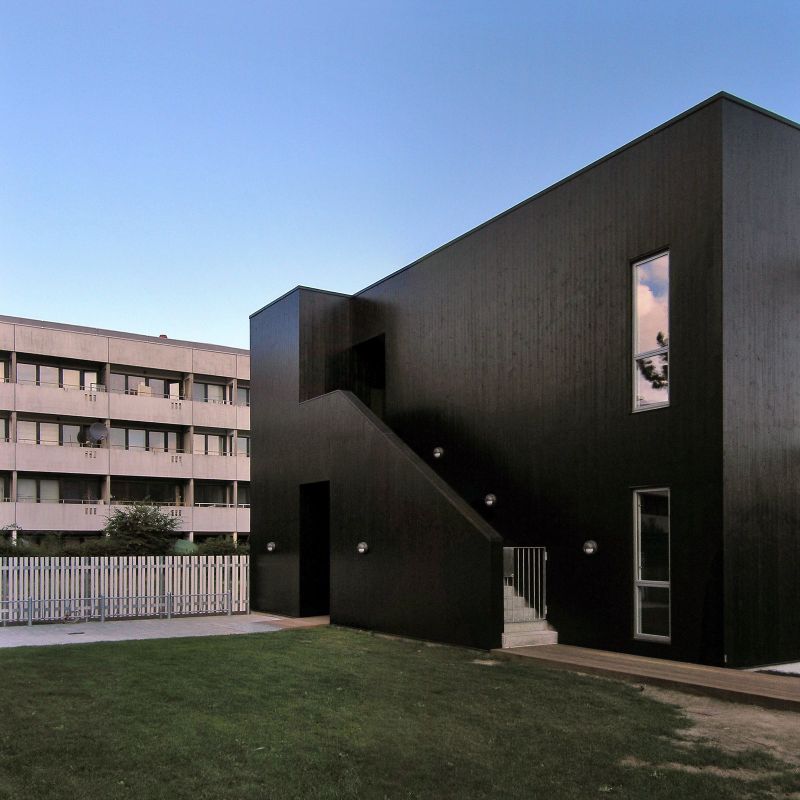
Not every example is about heat. Ludwig Godefroy’s Alférez House and Pezo von Ellrichshausen’s Poli House are concrete blocks with deep openings, and Ferreira reads them mainly as carved form.
What the thick wall cannot do alone
Mass works best with moving air. Anastasia Mylona, head of research at the Chartered Institute of Building Service Engineers, told the BBC that cross-ventilation between windows on opposite walls matters a great deal for cooling.
She worries about “single-aspect” flats, with large areas of glass on one wall only. Those flats take in heat and give it no way out.
Palmer’s method follows the day’s cycle. On the day he spoke to the BBC, his forecast was 25C by day and 15C at night. The aim in summer is to let the cool night air in and keep it inside as long as you can.
The stakes go beyond comfort. Some forecasts suggest air conditioning on its own could add as much as 0.5C to global warming by 2100, the BBC reported. A wall that keeps a room cool without a compressor is one way to avoid that.