Dwight Eisenhower’s Atoms for Peace speech led to the International Atomic Energy Agency (IAEA) because he asked for one by name. Speaking to the United Nations General Assembly on December 8, 1953, he proposed that the main nuclear powers pool uranium and fissile material in “an international atomic energy agency”. The IAEA was set up in 1957 as an autonomous body under the UN.
The speech did something else too. It launched a US programme that handed out reactors, and that part of its legacy is still argued over.
What Eisenhower offered
Eisenhower saw two sides to the atom: a weapon, and a source of energy. A danger anywhere, he told the assembly, was a danger shared by all.
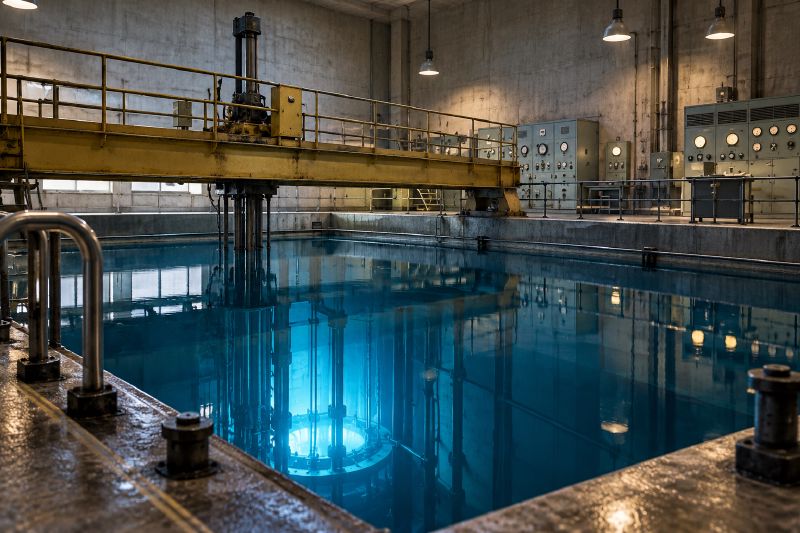
The Atoms for Peace programme that followed was a bargain. The United States supplied research reactors, fuel and scientific training to developing countries. In return, those countries promised to use them only for peaceful, civilian ends.
How the watchdog grew
The IAEA’s role sharpened when the Treaty on the Non-Proliferation of Nuclear Weapons came into force in 1970, and the agency took on the job of defining and inspecting safeguards.
It has since inspected Iraq, North Korea and Iran. In 2005 the IAEA and its director, Mohamed ElBaradei, shared the Nobel peace prize.
The case against the programme
Critics say Atoms for Peace spread dual-use technology, such as highly enriched uranium, that can serve a bomb as well as a power plant, the Brookings Institution notes.
Iran is its main example. Iran’s nuclear programme began in 1957 under the Shah, through a civil cooperation deal made under Atoms for Peace. In 1967 the United States supplied a 5 megawatt research reactor in Tehran, with highly enriched uranium to fuel it. Under safeguards, it could produce up to 600 grams of plutonium a year in spent fuel.
Training mattered as much as hardware. The Tehran reactor sat idle for nearly a decade because Iran lacked people to run it. In 1975 the Atomic Energy Organization of Iran agreed a master’s programme with MIT, which produced the country’s first professional nuclear engineers.
The United States ended its cooperation after the 1979 revolution. By then, Brookings concludes, US technology had carried Iran’s programme further than first intended.