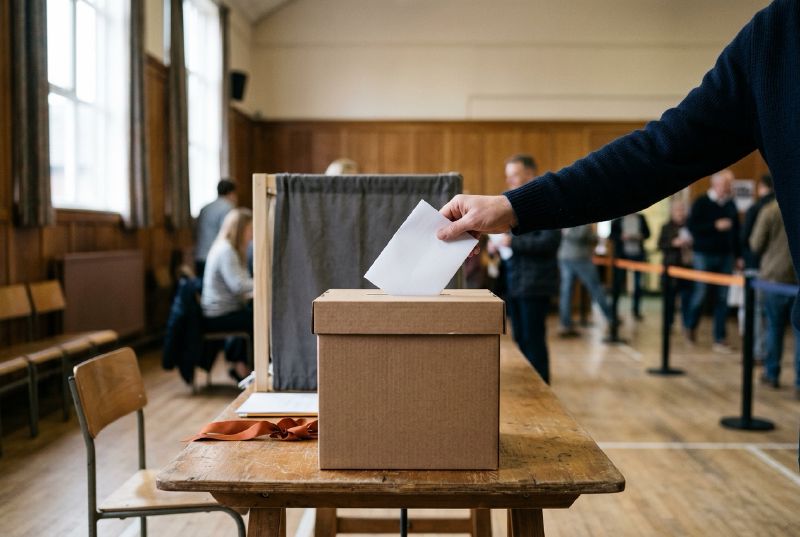
Australia requires every eligible citizen to turn up and hand in a ballot paper, and it has done so since the 1920s. What the law demands is narrower than its name suggests. A voter must place a ballot in the box, but nothing obliges them to back a party or a candidate.
Where the rule came from
The idea did not come from the left. Herbert Payne, a Nationalist senator from Tasmania sitting in a Coalition government, put forward a private member’s bill on 16 July 1924. He was reacting to the 1922 election, when a little under 60% of eligible Australians voted.
Both houses passed the bill unanimously in less than an hour, according to a 2013 Guardian column, and it became law within two weeks. Turnout has stayed above 90% ever since.
What the state owes in return
The Guardian columnist argues the obligation runs both ways. If the whole country must vote, the polls have to reach the whole country. In the column, that explains several features of Australian elections:
- enrolment that asks little of the voter
- polling days held at weekends
- postal votes that are easy to arrange
- ballot boxes in hospitals and nursing homes
- an independent electoral commission
A voter who spoils the paper faces no fine. The columnist recalls one scrutineered ballot that dismissed every candidate with a rude word and a large tick.
Does it work?
Lisa Hill, a professor of politics at the University of Adelaide, says compulsion is the only tool that can lift turnout close to 95%. Hill points out that non-voting elsewhere clusters among the poor, the young, the unemployed, new citizens and Indigenous people. In Hill’s view that tilts policy towards those who do vote.
Hill describes Australia’s system as cheap to run and easy to use, with public approval above 70%. Hill concedes that forcing people to vote limits their autonomy, and compares it with taxes and jury service.
The Guardian piece puts Australia among only 10 countries that enforce the rule. Singapore is the only other majority English-speaking one.
Opposition has not vanished. In 2004 the Liberal senator Nick Minchin wanted to remove the provision, and members of his own party stopped him. Both sources here argue for compulsion, so the case against it gets a thinner hearing than the case for.