Australia’s School of the Air reaches children on remote outback stations by putting a teacher and a class on the same call at the same time, for a lesson of about 45 minutes a day. That call ran over two-way radio at first, then moved to phone and teleconference. The rest of the school day is homework, done at the kitchen table with a parent or governess close by.
more
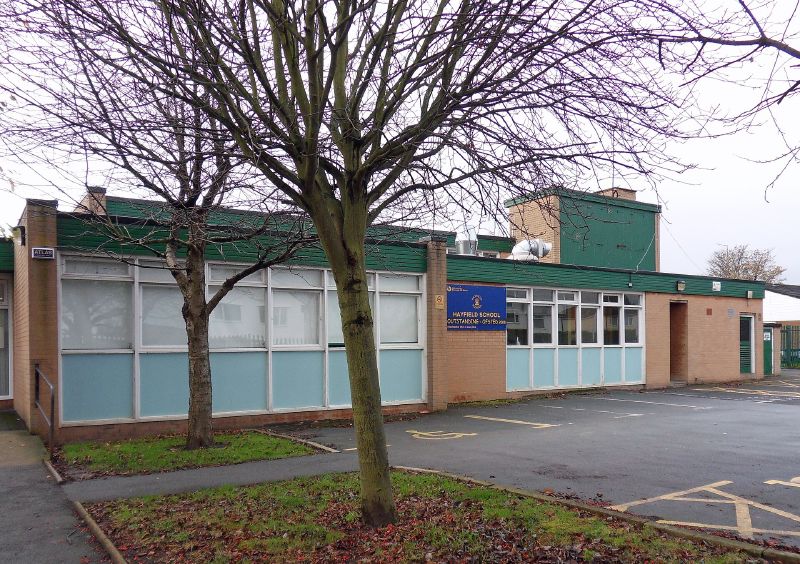
The Mount Isa branch, based in the Queensland mining town, covers roughly 800,000 square kilometres, a catchment often compared to the size of France. Its students live on cattle and sheep stations too far from any town for a daily school run, and in the wet season some properties are cut off by flooding for weeks at a time.
Where the idea started
The school’s first lesson was delivered from Cloncurry in Queensland using two-way radio, taught by Bridget “Bid” O’Sullivan to a dozen children. Robert Menzies was Australian prime minister at the time. The Mount Isa school, the second of its kind in Australia, traces its own service back to 1960. It used the same high-frequency radio the Royal Flying Doctor Service relied on to reach the same isolated properties.
O’Sullivan retired a few years later and received an MBE for her work in education. Today the school employs 20 teachers. Its pupils are spread from Burketown, near the Gulf of Carpentaria, to Birdsville, on the edge of the Simpson Desert.
How the lesson actually runs
Each child is issued a personal PIN to dial into the school and join their lesson at a set time. A teacher at Mount Isa might have 16 children enrolled in a single year group, too many to teach in one sitting, so the class splits into two smaller sessions of about eight pupils each.
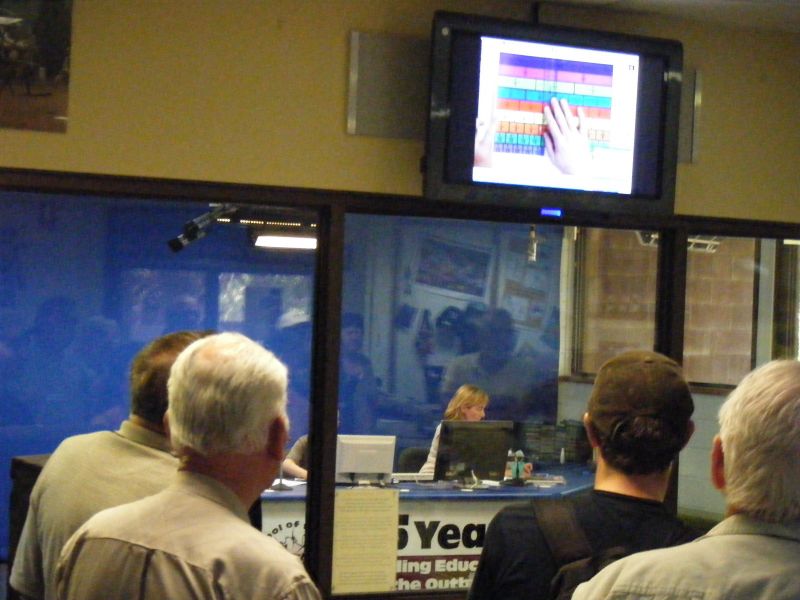
Storms and sunspot activity used to knock the old high-frequency radios out with some regularity. The school later moved to microwave-linked satellite telephones, which cut the interference from weather. Staff kept the name School of the Air anyway, because the phones still send lessons over the airwaves. A separate virtual classroom, with a shared screen for demonstrating something like long division, now runs alongside the phone link.
Subjects follow an ordinary curriculum: mathematics, reading, and science experiments built around whatever ordinary household items a family already has, since no child can nip to a shop mid-lesson for supplies. Some classes even manage music lessons over the phone line, with children holding the receiver between their knees so both hands stay free for a violin or a cello.
What the parents do
A parent or a governess supervises the hours a child spends away from the live call, coaching them through set work and keeping them on task. Naomi Douglas tutored her four children from a cattle property in Queensland’s Selwyn Ranges. She said choosing the School of the Air let her spend the time with them that a long daily drive to a distant school would otherwise have swallowed. Her daughter Sharona, then 17, said she would not have wanted to be taught any other way.
The system depends on that arrangement holding up day after day. Mount Isa’s principal, Tim Moes, said Australia is one of the few countries with distance education but the only one giving every enrolled child, down to pre-school age, daily contact with a teacher.
The one day they all meet
For most of the year, classmates know each other only as voices. The exception is an annual sports day in Mount Isa, when children scattered across the school’s 800,000-square-kilometre catchment travel in to meet their teachers and classmates in person.