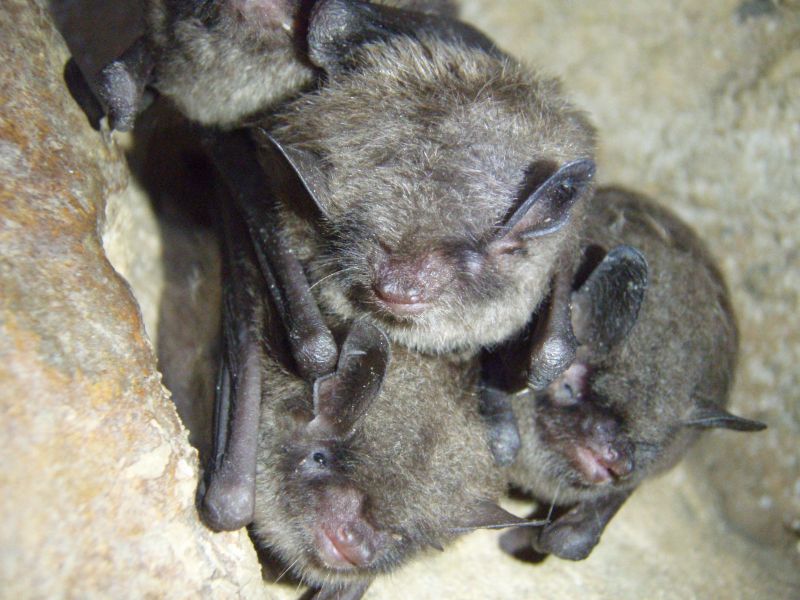
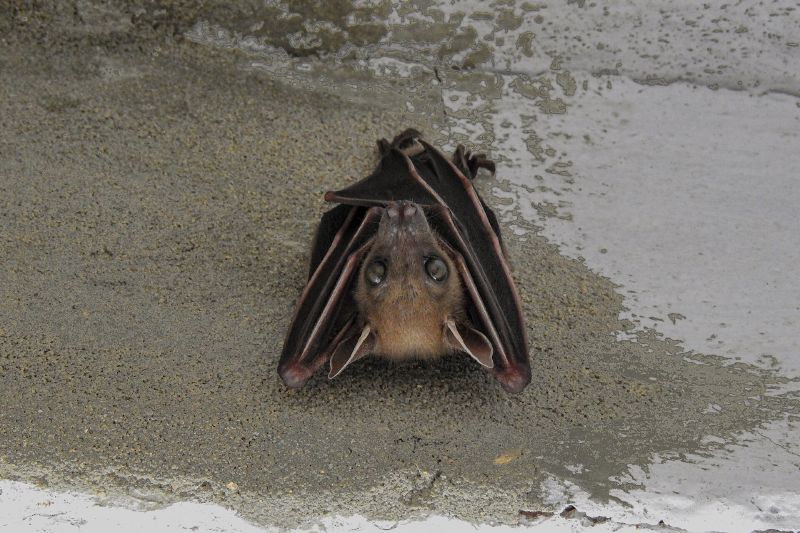
Bats are less frightening than Halloween makes them. Only three of the world’s bat species feed on blood, and they live in South and Central America. Other bats forage for insects and fruit.
more
The Natural History Museum says bats earned a ghoulish reputation partly because clawed wings wrap around them like a cape and most species fly only at night. Blood-feeding is not unique to bats either, since birds, insects and fish also do it.
Do vampire bats attack people?
Rarely. Rob Mies, executive director of the Organization for Bat Conservation, says vampire bats weigh about two ounces. They have bitten people, but they mainly feed on cattle. Mies compares the way they feed to a mosquito.
He says a vampire bat laps up about a spoonful of blood. An anticlotting enzyme in its saliva keeps the blood flowing. Researchers are using that enzyme to develop an anticlotting medicine called draculin.
Mies also calls vampire bats altruistic. He says they regurgitate blood for bats that failed to feed.
Are bats blind or rabid?
They are not blind. Mies says larger bats see three times better than humans. Many bats also echolocate, which means they use reflected sound to find objects. That lets them fly in pitch darkness. Not all do, and some rely on smell and vision to find food.
Rabies is rarer than the myth suggests. The Organization for Bat Conservation and the US Centers for Disease Control and Prevention report that only 5 to 6 percent of bats captured for testing carry it. Sick bats are more likely to be caught, so the true share is probably lower. Mies still advises against handling a wild bat unless you must.
Bats do not get tangled in your hair either. Mies says they hang upside down and must drop to gain lift before they flap, which can look like an attack on your head.
What do bats do for people?
Some bat species pollinate plants and eat large numbers of insects, according to the Natural History Museum. The Center for Biological Diversity credits them with pest control worth $3.7 billion to $53 billion a year. The US Forest Service says bats pollinate 300 fruits, plus the agave used for tequila.
The sources disagree on how many species exist. The Natural History Museum counts over 1,100, while Government Science and Engineering gives more than 1,400.
What threatens bats?
In the UK, four bat species are red listed as at imminent risk of national extinction, and two more are near threatened. Numbers appear to be falling, possibly because pesticides cut their food supply and habitats are shrinking.
In the US, white-nose syndrome has killed 5.7 million bats in the north-east since 2006, according to the Organization for Bat Conservation. The cold-loving fungus grows on bats as they hibernate. It makes them burn their fat and starve before winter ends.