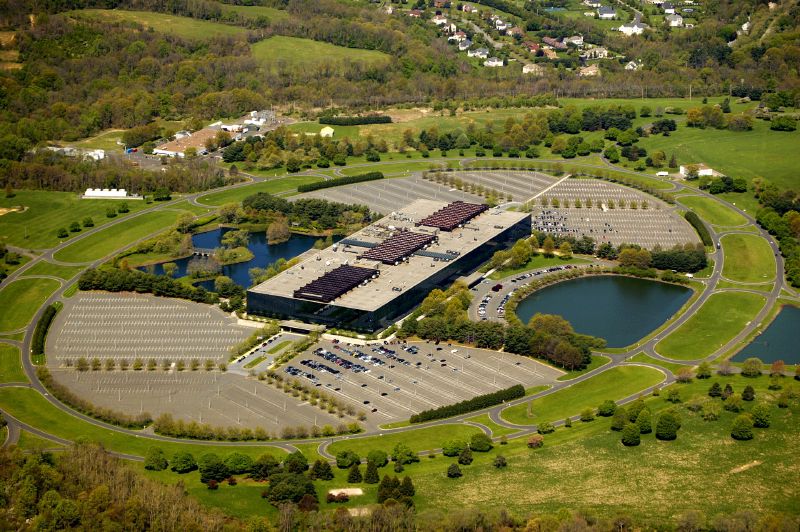
Three researchers at Bell Labs in Murray Hill, New Jersey, built the first practical solar cell in 1954, converting 6% of incoming light into usable electricity. Daryl Chapin, Calvin Fuller and Gerald Pearson made it by working thin strips of silicon, bathing the material in different elements until it became a strong conductor. When they attached an ammeter to the treated silicon and switched on a lamp, they saw at once that the cell could generate power.
more
Their device was not the first solar cell. That distinction belongs to selenium-based cells built decades earlier. The underlying physics goes back further still. French physicist Alexandre Edmond Becquerel first observed the photovoltaic effect in 1839, at age 19, while experimenting with metal sheets in a conducting liquid in his father’s laboratory. By 1884 selenium had gone into the world’s first solar array, on a New York City rooftop. Selenium cells converted only about 1% of light into electricity, which limited their practical use.
Silicon changed that. The Bell Labs cell’s 6% efficiency was roughly six times better than selenium’s best showing. The trio patented the design as US patent 2,780,765, for a “solar energy converting apparatus”, and it still underlies the solar panels sold today. Modern industrial and commercial panels now reach between 15% and 23% efficiency using the same basic silicon layering.
From a lab bench to orbit
Solar power moved fast once the silicon cell existed. Four years after Bell Labs’ breakthrough, the United States launched Vanguard 1 in March 1958, the first solar-powered spacecraft, and it kept transmitting data for six years. The Soviet Union’s Sputnik and the United States’ Explorer 1, launched earlier on battery power alone, were dead within a few weeks. Silicon-based cells still power many NASA spacecraft today, including the James Webb Space Telescope.
Solar energy historian John Perlin spent a month studying Bell Labs’ original reports at the AT&T Archives in Warren, New Jersey, for his book on the subject. There he studied the lab reports Chapin, Fuller and Pearson wrote while working on the cell.