A Bhutanese bureaucrat asks a farmer 148 questions, feeds the answers into nine weighted categories, and comes out the other end with a single number from 0 to 10. That number is a citizen’s Gross National Happiness score, and it decides which of four bands they fall into: deeply happy, extensively happy, narrowly happy, or unhappy.
more
The questions range from the direct to the oblique. One asks a person to rate their overall satisfaction with life on a scale of zero to ten. Others ask how many goats they own, or whether they feel selfish. A young woman whose cow had calved the day before answered ten. A recent widower scored seven, his grief offset by religious contentment.
Where the nine domains come from
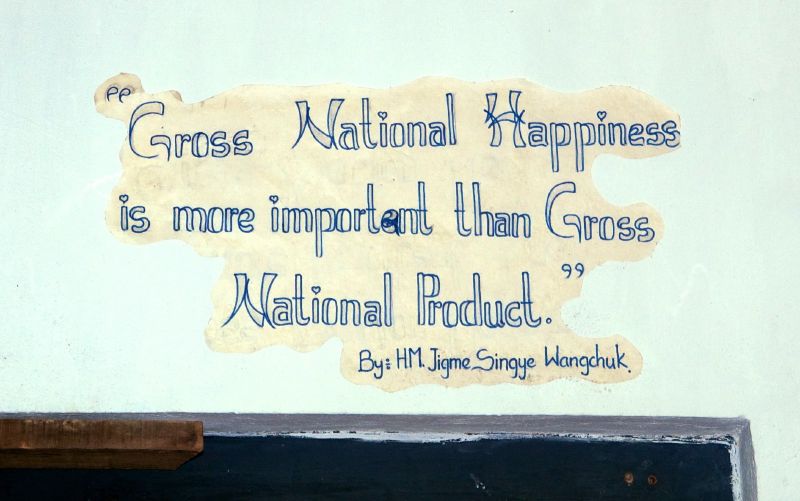
Bhutan’s pursuit of national happiness began in the 1970s, when the fourth king, Jigme Singye Wangchuck, declared that gross national happiness mattered more than gross domestic product. The idea sat as a guiding principle for decades before it became a measurement. The government did not run its first happiness survey until 2008.
That survey covers nine domains, among them psychological wellbeing, health, education, good governance, community vitality, living standards, and time use, which captures the quality of a person’s work and sleep. Bhutan weights each domain equally against the others, so a person’s score on community vitality counts for as much as their score on psychological wellbeing.
Within a domain, though, the weighting is uneven. Under psychological wellbeing, ratings of life satisfaction and spirituality carry more weight than ratings of positive or negative emotion. Robert Waldinger, a happiness researcher at Harvard University, says the approach reflects Bhutan’s status as “a very collectivist society” with different ideas from the West about what makes a life good.
What the survey has found
The most recent survey, run in 2022, sampled 1.4% of the population and put the country’s average happiness at 0.781 out of a possible 1. The government reads that as 3.3% higher than the 2015 result. Farmers score lowest of any group, with only 33% of them classified as happy, according to figures cited by the Asian Development Bank.
Outside measures tell their own story. The Oxford World Happiness Report, itself inspired by Bhutan’s approach, ranked the country 95th out of 156 nations in 2019, having placed it 84th in 2014. It has not ranked Bhutan since.
Why the model is under strain
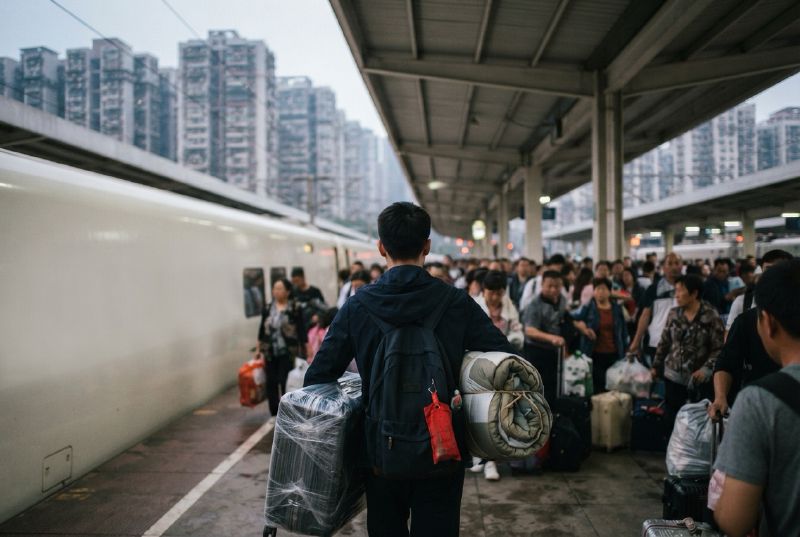
Youth unemployment reached 28.6% in 2022. The ruling party’s own 2023 manifesto called the level of emigration “unprecedented”, and in a single year 1.5% of the population moved to Australia for work and study. Prime Minister Tshering Tobgay has floated what he calls “gross national happiness 2.0”, a version that leans harder on the economy, after saying the government had “failed economically”.
Bhutan is now building a “Mindfulness City” in its south, intended to attract investment and slow the exodus of young workers.