Where the slasher came from

more
The slasher film was born twice in 1960, and only one birth was celebrated. Alfred Hitchcock’s Psycho is widely called the first modern horror film and the one that launched the slasher. The same year, a British film had done much of the same work and been dismissed for it.
more
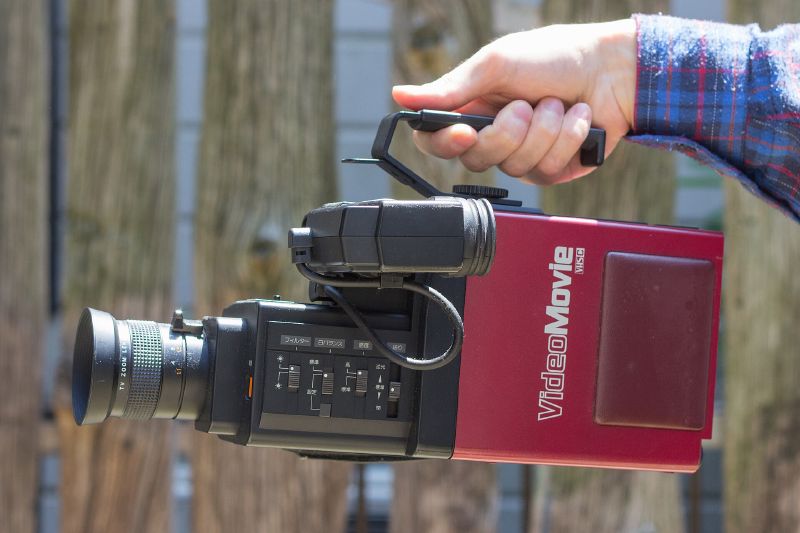
That film was Peeping Tom. Michael Powell made it after splitting from Emeric Pressburger, his writing partner of almost twenty years, and he wrote it with Leo Marks, a wartime codebreaker turned screenwriter. Its killer, Mark, films women as he murders them, and Powell makes us watch through his camera. That borrowed point of view would become the signature shot of the slasher, by way of Halloween. Powell shot it in lurid Eastmancolor, and he gave it a virtuous heroine, Anna Massey’s Helen, who survives from first scene to last.
Powell never thought he had made a horror film. He called it a “film about Freud”, played Mark’s cruel father in the home-movie scenes, and cast his own son as Mark the boy. Thelma Schoonmaker, his widow, has said he would not be happy to hear it credited with starting the slasher. Britain dismissed it. It was American filmmakers who rescued it years later, which is how a British flop became the founding text of a very American kind of film.
The older shadows
Neither film came from nowhere. Hallam, speaking to BBC Culture, traces slasher habits back to Thirteen Women (1932), with its victims whittled down to one, and to The Spiral Staircase (1946), with its glimpses through the killer’s eyes. IndieWire points to The Leopard Man and The Lodger in the 1940s, which brought the silent stalker into horror. Then came Italy. Dario Argento and Mario Bava made gialli in the late 1960s and 1970s, with black-gloved killers nobody could see and murders more elaborate than anything before. The Hollywood Reporter counts Bava’s A Bay of Blood (1971) among the proto-slashers, alongside Psycho.
Psycho handed the form its shape. The author Paul Duncan told the BBC that its shifting point of view was probably the most copied aspect of Hitchcock’s films. The British censor gave it an adults-only X certificate in 1960. Today it carries a 15.
Texas, Canada and Arkansas
The slasher turned American, and cheap, in the 1970s. Bob Clark’s Black Christmas (1974) and John Carpenter’s Halloween (1978) both borrowed from Psycho to frighten teenagers growing up in an age of loose serial killers. Tobe Hooper’s The Texas Chain Saw Massacre arrived the same year as Black Christmas. Halloween and Hooper’s film each cost under $500,000.
Some of the grammar came from a drive-in. In 1976 the Arkansas director Charles B. Pierce made The Town That Dreaded Sundown, built on the unsolved Texarkana Moonlight Murders of 1946. A girl plays her trombone at the school dance, parks with her boyfriend on Lover’s Lane, and meets a death that Film Comment calls the template for the 1980s slasher murder. Film Comment says later slashers borrowed from it, Halloween among them, and Jason’s sack-covered head in Friday the 13th Part 2 echoes Pierce’s Phantom. Pierce had a gentler second act. He moved to Carmel, befriended Clint Eastwood, and wrote “Go ahead, make my day” into Sudden Impact.
The babysitter murders
Halloween began as somebody else’s idea. The producer Irwin Yablans asked Carpenter for a film about a killer stalking babysitters, under the title The Babysitter Murders, and later suggested setting it on Halloween night. Moustapha Akkad, whose only earlier film was the 1976 biopic The Message, put up the $300,000 budget. IndieWire’s figures differ, with one piece putting the budget at $325,000 and another at about $1.3 million in 2018 money.
It opened in Kansas City on October 25, 1978, and spread town by town through local distributors, mostly after Halloween had passed. It became a hit anyway. Adjusted to 2018 prices it took $184 million, and it ranked tenth among the films of 1978.
The people who built it
The slasher’s founders were mostly outsiders, and several of them bet their homes or their reputations on a film nobody wanted.
Hitchcock mortgages the house
Nobody wanted Hitchcock to make Psycho. Paramount refused to pay for it after The Wrong Man and Vertigo had flopped, so his agent Lew Wasserman raised the money independently. That meant mortgaging the home Hitchcock shared with his wife and editor, Alma Reville. He was 60, and he called the film “a nice clean nasty piece of work”.
Then he broke every rule he could find. He killed his heroine, Janet Leigh, a third of the way in, and built the shower scene from 78 setups and 52 cuts under Bernard Herrmann’s shrieking strings. For publicity he handed the press gory photographs of the victims of the real killer Ed Gein. The BBC notes that Hitchcock had never before mixed humour with material this dark and violent. MovieMaker calls Psycho the father, or mother, of every slasher, and points out that the shower scene runs only three minutes.
Michael Powell, out of step
Peeping Tom left Powell almost unemployable. Before it he had made The Life and Death of Colonel Blimp, A Matter of Life and Death and Black Narcissus with Pressburger. He was, in his own words, “too exotic” for Britain. He later said he “felt very close to” Mark, his killer. There is a kind ending to the story. Martin Scorsese introduced him to Thelma Schoonmaker, and they were married from 1984 until his death in 1990.
Bob Clark’s two Christmases
Bob Clark gave the slasher its holiday. His Black Christmas (1974) follows sorority sisters preparing to leave for the Christmas break, unaware that a killer is living in their attic. MovieMaker says some consider it the first true slasher, and that it showed the murderer’s point of view before Halloween did. MovieMaker singles out its murder by plastic bag as proof of real originality. Nine years later Clark went back to December with the holiday classic A Christmas Story.
Carpenter, Hill and a 19-year-old
John Carpenter wrote Halloween with his producing partner Debra Hill. Hill supplied the first draft with three believable 17-year-old girls. Carpenter told his 19-year-old lead, Jamie Lee Curtis, that he wanted her so vulnerable that audiences would want to look after her. She turned Laurie Strode from a small-town dreamer into a smart survivor with a knife. The Hollywood Reporter sees Laurie as an ordinary babysitter who fights back and protects the children in her care, as a leader rather than a mother.
Carpenter also composed the score. GamesRadar+ argues that its pounding synth is still what oppressive horror sounds like.
Tobe Hooper’s Texas
Tobe Hooper’s The Texas Chain Saw Massacre (1974) carried the scars of Vietnam, The Hollywood Reporter argues. Its teenagers trespass on someone else’s land, rather than being hunted on public ground as later slashers would have it. Leatherface and his mask of flesh were inspired by Ed Gein. The film has very little blood. GamesRadar+ says your brain supplies the gore.
Sean Cunningham and the summer camp
Sean S. Cunningham’s Friday the 13th (1980) started the craze proper. Slashers soon arrived almost weekly, The Hollywood Reporter writes, with The Burning, The Prowler and Sleepaway Camp among them. Each worked as a stern warning to teenagers. Sex, drink and cigarettes got you killed.
Wes Craven, the teacher
Wes Craven rescued the form twice. A Nightmare on Elm Street (1984) followed teenagers into their dreams, and Robert Englund played Freddy Krueger with so much humour that audiences cheered for him over the heroes. Scream (1996) then sparked a slasher renaissance in the 1990s.
Craven died in 2015. The filmmakers who inherited Scream, the trio called Radio Silence, never met him. Tyler Gillett told IndieWire that Craven still felt like part of their lives, because they had come to know him through his cast and crew. “We didn’t want to fuck it up,” Matt Bettinelli-Olpin said of following him. On their 2022 film, shot during the pandemic, one veteran of the original films phoned in his lines from his own studio to play scenes with the cast in real time. Radio Silence wanted to keep what had worked so well on the first four films.
The films that wrote the rules
A handful of films set down the rules every later slasher either follows or breaks. Watch them in order and you can see each rule arrive.
Halloween teaches the audience to look at the edges
Halloween’s trick is the edge of the frame. Carpenter built the film around what might be lurking just out of shot, which was usually The Shape, played by Nick Castle. He shot it in widescreen Panavision with Steadicam, neither of which low-budget horror used at the time, and many filmmakers copied his tracking shots afterwards. MovieMaker points to the shots through the eyeholes of Michael Myers’s mask, which turn the opening into a study in voyeurism.
The BFI tells the story in two lines. As a boy, Michael stabs his teenage sister on Halloween night, and fifteen years later he escapes from a psychiatric hospital and comes home. When Laurie leaves a sleeping child and crosses the street, IndieWire recalls, audiences shouted “Do not go in there!” at the screen. Roger Ebert raved, warning readers who did not want to be truly terrified to stay away. MovieMaker credits its takings of more than $50 million with showing studios how much a slasher could earn.
The Texas Chain Saw Massacre makes you imagine it
The BFI describes it as three films at once: the shocker the title promises, the near-bloodless film Hooper actually made, and the gorefest we remember seeing. It was banned widely on release, GamesRadar+ notes, despite showing far less gore than its rivals. IndieWire’s critic singles out a moment with a daddy longlegs spider, which Hooper’s camera zooms in on until you wonder whether you are the one making it frightening.
Deep Red asks what watching does to you
IndieWire ranks Dario Argento’s Deep Red (1975) as the best slasher ever made, ahead of Psycho. The killer’s point of view is the genre’s signature, the critic argues, and Argento keeps it while making every murder hurt. The BFI calls it the supreme giallo, a puzzle whose final answer was on screen all along.
Black Christmas leaves the killer unexplained
Black Christmas fills its sorority house with a run of phone calls. IndieWire calls it as foundational as Halloween and Hooper’s film, though less celebrated. Its killer is never identified and never given a motive. That refusal is why it still frightens.
A Nightmare on Elm Street goes where you sleep
Wes Craven’s idea was frighteningly plain: a killer who comes for you in your dreams. Freddy Krueger, the BFI notes, was a monster in life who grew stronger in death, and Robert Englund made him unforgettable. Forget the wisecracking Freddy of the sequels, GamesRadar+ advises. In the original he is a child killer whose burns came from a mob of angry parents. IndieWire remembers its set pieces, from a girl dragged across the ceiling to that menacing shot in the bathtub.
Scream lets the victims see the rules
Scream opened with its biggest star, Drew Barrymore, dying before the credits had finished. From there Craven and the writer Kevin Williamson built a slasher out of film criticism, full of teenagers who had seen every horror film and still could not escape one. MovieMaker credits it with two big steps for the form. Its characters were aware of their own likely deaths, and its constant references to other slashers opened the genre to satire. Its phone call, “Do you like scary movies?”, and its Ghostface mask fuelled a run of late-1990s Halloween costumes. GamesRadar+ notes that the mask was based on Munch’s painting.
IndieWire singles out Neve Campbell. Scream gave her the chance to turn the final girl into a vessel for the dread of growing up.
The French reply
France sent back a harder answer in the following decade. GamesRadar+ calls Haute Tension (2003) a giddy, punk slasher set in the French countryside. Inside (2007), by Julien Maury and Alexandre Bustillo, follows a pregnant widow stalked at Christmas by a woman who moves through shadows the way Michael Myers did.
How the slasher kept coming back
The slasher has nearly died twice, and each time somebody found a new way in. The Hollywood Reporter’s short history runs like this. Slashers peaked in the early 1980s, slid as they began arriving almost weekly, revived with A Nightmare on Elm Street, stalled again, then came roaring back with Scream in 1996. That 1990s revival led straight into the remake era of the 2000s.

more
A family of monsters
By 1988 the slasher had a full household. When Chucky arrived in Child’s Play that year, The Hollywood Reporter writes, the family of Michael, Jason, Freddy and Chucky felt complete. The sequels grew less frightening, but the killers became something close to old friends. That closeness left fans with a sense of nostalgia and ownership, which the magazine calls both a blessing and a curse.
Everyone copies Scream
Scream set off a rush of imitators. Filmmaker Magazine lists what they borrowed: an opening murder, a cast of teen heartthrobs who might all be suspects, and knowing nods to the films of the moment. Then comes the third-act unmasking, with a long speech explaining an elaborate motive, before the Final Girl fires the shot that ends it.
The joke has an older history than most fans realise. In Scream, Ghostface himself credits Peeping Tom with giving birth to the slasher. Hallam told BBC Culture that Powell’s film was already doing in 1960 what the meta-slashers did later.
The franchise itself has lasted. By 2023 it ran to six films and a television series across 27 years, with more than $740 million at the box office. Radio Silence, who took it over, had made their names with shorts for the anthologies V/H/S and Southbound, before Ready or Not.
Carpenter’s long shadow
Carpenter’s style travelled further than his villain. The BFI calls Halloween genre-defining and traces his influence through a generation of directors who grew up on his films. Ti West’s The House of the Devil (2009) is set in 1983 and follows a babysitter who takes a strange job on the night of a lunar eclipse. Adam Wingard’s The Guest is a full homage to Halloween and The Terminator, with suburban streets and a moody score. Even the title font of Stranger Things looks like the one on Carpenter’s Christine (1983), the BFI notes.
Remakes, reboots and requels
The 2000s became the slasher’s remake era. GamesRadar+ counts plenty of clones of The Texas Chain Saw Massacre, among them a glossy remake produced by Michael Bay. Some of the second takes found new depth. The BFI rates Rob Zombie’s Halloween II (2009), in its director’s cut, as the best in the series since 1978, and a searching study of trauma.
In 2018 David Gordon Green’s Halloween threw out the messy sequels and returned to Laurie Strode as a survivor of The Shape. Scream (2022) then discussed the trend by name. Radio Silence’s film describes itself as a “requel”, a sequel and a remake at once, and the title dropped its number to prove it.
From the shower to the torture cellar
Psycho’s reach went beyond slashers. Mr Brooke, quoted by BBC News, traces its screen violence through the slow-motion deaths of Bonnie and Clyde and The Wild Bunch to Hostel and the Saw films. Its blend of shocks and laughs, the BBC adds, shows up in the films of Quentin Tarantino.
Where the slasher stands now
Today’s slashers are made by people who grew up loving the old ones, and it shows. The Academy’s A.frame dates the genre’s golden age from 1978 to 1984. A great deal of what arrives now is a letter back to those years.
The kids of the 1980s are in charge
The horror historian Johnny Walker of Northumbria University explained the trend to The Guardian in 2021. The people who grew up in the 1980s, he said, are now the ones in charge. Netflix’s Fear Street trilogy, adapted from RL Stine’s books, opens in 1994 and takes its cue from Scream and I Know What You Did Last Summer. Prano Bailey-Bond’s Censor goes back to 1985 Britain and the panic over video nasties. Walker points out that the panic was awful for the industry, yet it built a thriving community of fans swapping pirate tapes in the schoolyard.
Warmer slashers
Some of the best new slashers care about the people they put in danger. In The Final Girls, Taissa Farmiga’s Max is pulled into Camp Bloodbath, the 1980s slasher that made her late mother a scream queen. A.frame calls it heartwarming, because Max gets to spend time with her mother’s character and work through her grief while dodging a machete.
Christopher Landon’s Freaky swaps the bodies of a teenage girl, Kathryn Newton’s Millie, and Vince Vaughn’s Blissfield Butcher. Ti West’s X sends a young film crew to rural Texas in the late 1970s, with Mia Goth in a dual role. A.frame names it a great entry point for newcomers to the genre.
Voices the old films left out
Queer fans love horror, IndieWire notes, though horror has not always loved them back. Its critics write that a strong queer fandom formed around horror’s themes of otherness, its love of camp and its many shirtless young men. Being a queer fan, they add, has often meant reclaiming films that were never made for you. One 1981 rediscovery, Butcher, Baker, Nightmare Maker, ends with the homophobic police officer shot dead and the gay man alive. It has found a growing audience since the pandemic. Teenage Sex and Death at Camp Miasma is one of the openly queer films IndieWire sets against that history.
Women made slashers in the golden age too. The Slumber Party Massacre was directed by Amy Holden Jones and written by Rita Mae Brown, one of the few slashers made by women.
Meta before Scream
Nothing in the meta-slasher is quite as new as it looks. Mark Herrier’s Popcorn (1991), about film students staging a horror all-nighter, played with genre conventions five years before Scream. Bright Wall/Dark Room argues it was a cog in the postmodern machine rather than its leader. Its students mock the very genre they are living in, a joke Scream 2 would make again in its film class scene in 1997.
A.frame puts the state of things in one line. Slasher movies, like their killers, never really die.
Starter guide
Eight films, in the order they were made, each with two publications behind it. Start with Halloween on the night itself.
- Psycho (Alfred Hitchcock, 1960). IndieWire calls it the most influential slasher movie of all time, and MovieMaker counts it among five landmark slasher films.
- The Texas Chain Saw Massacre (Tobe Hooper, 1974). The BFI calls it influential, and GamesRadar+ calls it one of the greatest horror movies ever made.
- Black Christmas (Bob Clark, 1974). IndieWire calls it a cult classic, and MovieMaker counts it among five landmark slasher films.
- Deep Red (Dario Argento, 1975). IndieWire calls it the greatest slasher movie of all time, and the BFI calls it Argento’s first masterpiece.
- Halloween (John Carpenter, 1978). The BFI calls it a genre-defining slasher, and MovieMaker names it one of five landmark slasher films.
- A Nightmare on Elm Street (Wes Craven, 1984). IndieWire lists it among the 16 greatest slasher movies of all time, and GamesRadar+ among the best horror movies of all time.
- Candyman (Bernard Rose, 1992). IndieWire lists it among the 16 greatest slasher movies of all time, and GamesRadar+ among the best horror movies of all time.
- Scream (Wes Craven, 1996). GamesRadar+ calls it a modern horror classic, and MovieMaker names it one of five landmark slasher films.