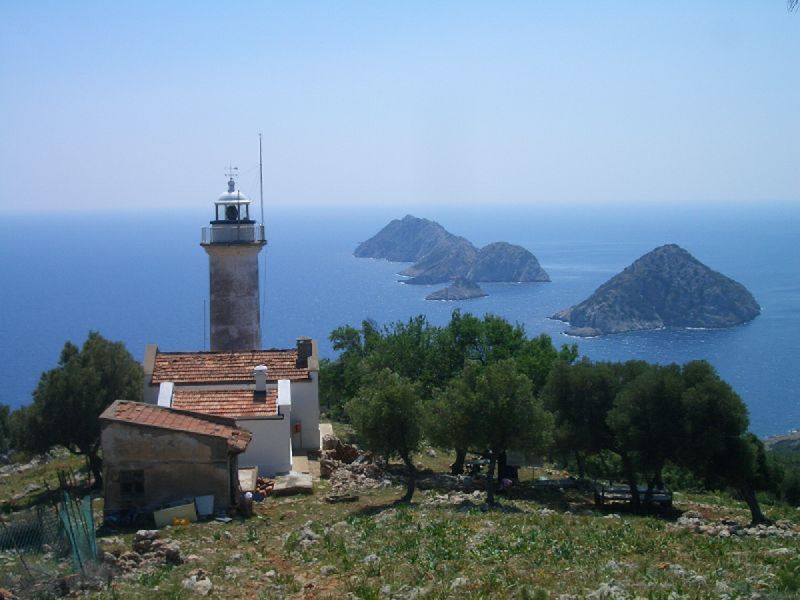
Underwater archaeology began as a discipline in 1960, when a graduate student named George Bass went down to a Bronze Age shipwreck at Cape Gelidonya, off Turkey. The Archaeological Institute of America describes it as the first excavation of an ancient wreck under the sea to be led by an archaeologist.
more
The student chosen to dive
Bass was not meant to be an archaeologist at all. Born in Columbia, South Carolina, in 1932, he was the son and grandson of English professors and planned to follow them. He enrolled at Johns Hopkins University in 1950, and then a trip to Italy and its Roman ruins changed his mind.
After two years of study at the School of Classical Studies in Athens, he served in the US Army Security Agency, leaving in 1959 as a first lieutenant. He had already worked on the Gordion dig in Turkey for the University Museum in 1957. Back at the University of Pennsylvania as a doctoral student, he was picked by Rodney Young to run the Gelidonya dig. Young chaired classical archaeology at Penn and was curator of the museum’s Mediterranean section.
What the wreck led to
The Penn Museum’s archive says Gelidonya marked the start of the discipline and of Bass’s own life’s work. In 1961 he moved on to a Byzantine wreck at Yassi Ada, working there until 1964 and returning in 1967 and 1969.
He then left Penn to found the Institute of Nautical Archaeology. The museum’s finding aid gives the year as 1972 in one passage and 1973 in another. In 1976 he moved the institute to College Station, Texas, and joined the faculty of Texas A&M University, where it trains doctoral students in the field. He wrote or edited ten books on underwater archaeology.
His wrecks reshaped what historians know about Syro-Canaanite merchant sailors and their part in Late Bronze Age trade across the Mediterranean, according to the AIA.
How the field honoured him
Bass received the National Medal of Science, and the AIA gave him its Gold Medal for Distinguished Archaeological Achievement. At the 2001 medal ceremony, President George W. Bush credited him with creating “a new branch of scholarship, nautical archaeology”. Bass died in 2021. The AIA’s lecture series in his name began in the 2010 to 2011 season.
The Penn Museum holds his papers from Gelidonya and Yassi Ada in 27 boxes of letters, dig records, photographs and drawings.