Christopher Cockerell proved that a heavy vehicle can ride on a cushion of air. He did it on his boatyard’s mud floor, with a can of cat food, a coffee tin and a vacuum cleaner run in reverse. Four years later, his design flew.
more
Cockerell had resigned from the electronics firm Marconi to build cabin cruisers, and was living in a caravan in Norfolk when the idea took hold. The idea itself was not new. For fifty years, others had tried to build such a craft. Cockerell solved the part that had beaten them, which was keeping the cushion of air in place. His tin-can rig let him test the theory on the cheap, and it proved him right.
Proving the idea on a boatyard floor was one thing. Getting anyone to pay for it was another. Cockerell spent much of the mid-1950s failing to attract an investor, and eventually built a two-foot working model with a local boatbuilder instead. Because the design had an obvious military use, he took the model to the Ministry of Supply, which promptly classified the whole project “Secret”. Years of wrangling with the ministry followed before it agreed the idea could go ahead as a commercial venture as well as a military one.
The result was the SR.N1, a one-man craft built by Saunders-Roe, which flew for the first time near the Isle of Wight on 11 June 1959. One newspaper of the day said it “huffs and puffs like a vacuum cleaner in reverse”. Weeks later, the SR.N1 crossed the English Channel.
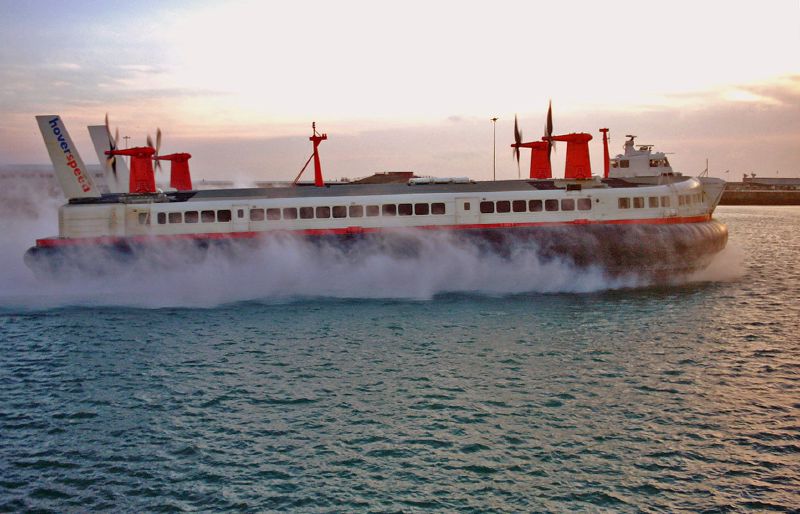
The industry it created grew fast. Vickers launched the first commercial hovercraft service across the Dee estuary in June 1962, and cross-Channel passenger services began in 1966. Over the decades that followed, more than 80 million people crossed the Channel by hovercraft before the last of those services closed in 2000. Cockerell himself fell out with the industry along the way, resigning from Hovercraft Development Ltd in protest at plans to merge the companies making the craft. The industry stayed dogged by high costs and technical problems, and by 1994 only two British-built hovercraft remained on cross-Channel routes.
He was knighted in 1969, having already been appointed CBE and elected a Fellow of the Royal Society. He turned down American job offers despite what the BBC’s obituary called very poor financial rewards for his work in Britain, and stayed angry at his country’s record of failing to capitalise on new ideas.