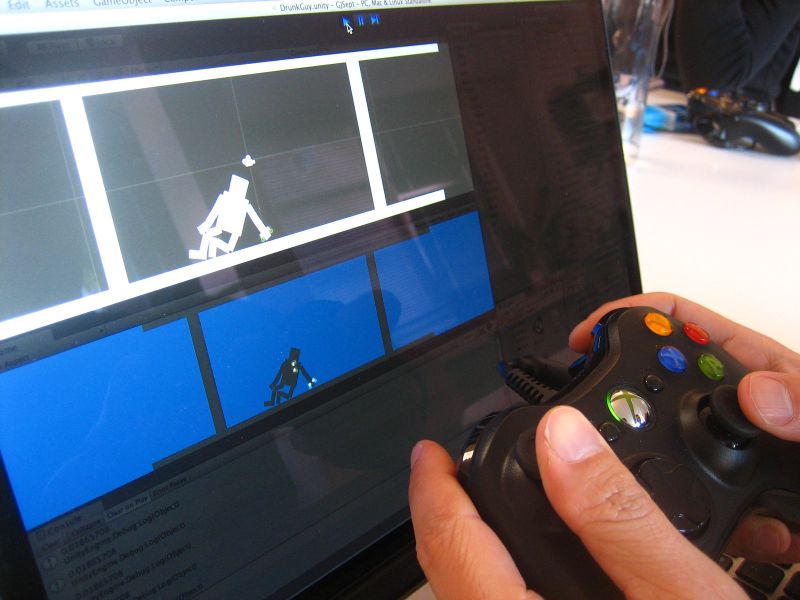
Guillaume Broche built the first version of Clair Obscur: Expedition 33 in the evenings, after his shifts at Ubisoft. He told the Guardian he put in about eight hours a day on top of his job, for years, and barely slept. The project was a technical demo called We Lost. At that point it had no studio behind it and no publisher.
The finished game went on to win Game of the Year at The Game Awards. It had gone into the show with 12 nominations, a record for the event. By then it had sold more than 5 million copies. France’s president, Emmanuel Macron, called the win a source of “great pride for Montpellier and for France.”
What the numbers came to
The game went on sale on April 23, 2025. PC Gamer reported one million sales in three days, despite launching in the shadow of Oblivion Remastered. It passed 2 million within 12 days, according to GamesIndustry.biz.
Thirty-three days after release, the studio posted on X that it had sold 3.3 million copies. “We couldn’t make that up,” the post said. Eurogamer reported that sales passed 5 million by October.
The awards brought a second wave. The analytics firm Alinea estimated almost 400,000 extra sales after the nominations were announced on November 17. Its analyst Rhys Elliott put the gain from the award show itself at more than 200,000. Elliott estimated that 76% of those sales came on Steam, 21% on PlayStation 5, and 3% on Xbox. On Steam, Sunday player numbers rose from 22,759 before the ceremony to 56,993 after it.
Where the idea came from
Broche wanted a kind of game that big studios had stopped making. François Meurisse, Sandfall’s producer and chief operating officer, told PC Gamer that Broche was “starving for new turn based RPG games” when he started in early 2019. Persona 5 had shown there was still an audience, and Broche concluded there was a market for the Japanese-style RPG he wanted to play.
His influences were Final Fantasy, Lost Odyssey, and the games of FromSoftware. He was playing Sekiro at the time, Meurisse said, and wondered whether he could bring its parrying to a turn-based party. Meurisse, a Nintendo fan, assumed the defence system came from Paper Mario: The Thousand-Year Door. Broche had never played it.
Meurisse told GamesIndustry.biz that the passion came first and the strategy later. Only afterwards did they notice that the market was not serving this kind of game. Some people warned them at the start that there might be “a curse on AA games,” he said.
A team found online
Broche found much of his team online. Tom Guillermin joined as programmer, and Meurisse as producer. The rest arrived by chance.
Lorien Testard was a guitar teacher who had never published music commercially. Broche found him on SoundCloud. “We liked the same philosophy in games,” Testard told the Guardian. Broche found his art director, Nicholas Maxson-Francombe, through personal work posted on ArtStation.
Jennifer Svedberg-Yen, who became lead writer, had worked in finance. She answered a post Broche put on Reddit, and auditioned both to write and to voice two of the prototype characters. She had never thought of writing games as a job. She joked that, for Asian parents, the approved careers are medicine, law, or finance.
With that group assembled as Sandfall Interactive, they rebuilt We Lost as Clair Obscur. Svedberg-Yen argued that a narrow vision was the point. A vision gets diluted, she said, when you try to appeal to too many people.
Testard wrote the orchestral score around the story’s beats and the idea in the title, clair obscur, the play of light and dark in painting. A month after launch, a PC Gamer writer said they were still listening to the soundtrack.
What it took to make
The studio is small, but the credits are not. Sandfall has around 30 people. Rock Paper Shotgun counted the credits and found far more contributors. They included an eight-person Korean team handling gameplay animation, dozens of outsourced testers and localisation staff, and more than 30 musicians. That count includes a nine-person choir.
Its writer argued that the “made by 30 people” story played into a habit of overlooking outsourced workers in East Asia. The Guardian’s reviewer made the same correction, while noting that the team was still tiny next to the crews behind Final Fantasy.
Tools mattered too. The game runs on Unreal Engine 5, and Broche said newer engines made much of it possible. He put its budget at “the lower end of AA.” The Guardian argued that modern tools explain how a smallish team made something that looks this expensive.
Some of it nearly went wrong. Meurisse told Polygon that the team had been sceptical about the prologue, because the city of Lumière felt empty. Broche reworked it, adding characters and small interactions, and made the character Sophie playable. Technical limits kept Lumière smaller than the team would have liked.
The game first reached the public at the Xbox Games Showcase in June 2024. Its publisher was Kepler Interactive, founded in 2021 to back original games with bold art direction. Kepler is co-owned by a group of studios that run themselves, and it offers them shared services such as legal and HR support. Shuhei Yoshida, the former head of Sony’s worldwide studios, joined it as a consultant and helped promote the game. Its portfolio director, Matthew Handrahan, said Kepler looks for games doing “something genuinely fresh.”
Where the story came from
The premise is a countdown. Every year a figure called the Paintress paints a number on a distant monolith, and everyone of that age dies. The game begins as the number falls to 33, and a new expedition sets out to stop her.
Svedberg-Yen said the story drew on something Broche’s mother told him. He asked her what the worst thing that could happen would be, and she answered that it would be losing her children. Writing from that kind of place was frightening, Svedberg-Yen said. “If people don’t like it, they don’t like you.”
The world is Paris bent out of shape. The Guardian’s reviewer described a ravaged city with an Eiffel Tower warped like a Dalí painting, and an ocean with no water in it. Its fights borrow from Japanese RPGs, with timed button presses to dodge or power up an attack. One character fights with a rapier and changes stance with each blow, and another uses sun and moon tarot cards.
Small jokes spread among players. In the opening city, a man hides in a bin to escape the Paintress, on the day he turns 33. Guillermin told Polygon he loved seeing players obsess over “the perfectly normal trash can.”
The Frenchness was deliberate, and it grew. The characters swear in French, and the enemies include mimes. “It’s not meant to be French propaganda,” Broche joked. Meurisse told Polygon that the berets and baguettes were first a marketing joke, and that some fans were annoyed there was no French dub at first. The studio answered in October 2024 with a trailer that put the whole French cast in baguette costumes.
Why it landed
Critics praised it at launch. IGN gave it 9 out of 10 and called it “a modern RPG classic.” Polygon’s reviewer called it a debut that exceeded expectations. Eurogamer warned readers that its scope was smaller than it looked. PC Gamer was cooler, arguing that its heavy focus on combat let down its world.
Length was part of its appeal. IGN’s reviewer finished the main story and a fair amount of side content in about 35 hours, and found no filler along the way. Meurisse told IGN that the team first aimed for about 20 hours in the main quest, and ended nearer 30 to 40. Meurisse named Inside, a game of about two hours, among his favourites. Handrahan argued that brevity “should be more of a virtue in gaming.”
The timing helped too. GamesIndustry.biz set its success against an industry facing layoffs, a crowded market, and rising costs. Handrahan said five times as many games are released now as a decade ago. The Guardian’s reviewer could imagine several large publishers judging the game “too French” to sell.
The story also reached people in ways the team had not planned. Svedberg-Yen said players who had lost someone wrote to say the game had helped them with grief. Others, she said, were writers who had wanted to quit and started creating again.
What came next
Meurisse told GamesIndustry.biz that there would “for sure” be another game. Many of the team were junior when they started, he said, and the studio is now five years old. At The Game Awards, Sandfall released the game’s expansion to all players.
The team’s own answer to the question of its success is modest. None of them expected the game to reach so many people, the Guardian reported. It started, after all, as one Ubisoft employee’s after-hours demo.