Clay and sand fail a garden in opposite ways. Clay holds water and drains slowly, and it can pack down hard. Sand drains freely and holds little water or food. A lawn on compacted clay shows the first problem plainly. One Guardian writer’s front lawn in Bristol sat waterlogged every winter and turned as hard as asphalt every summer.
Telling the two apart
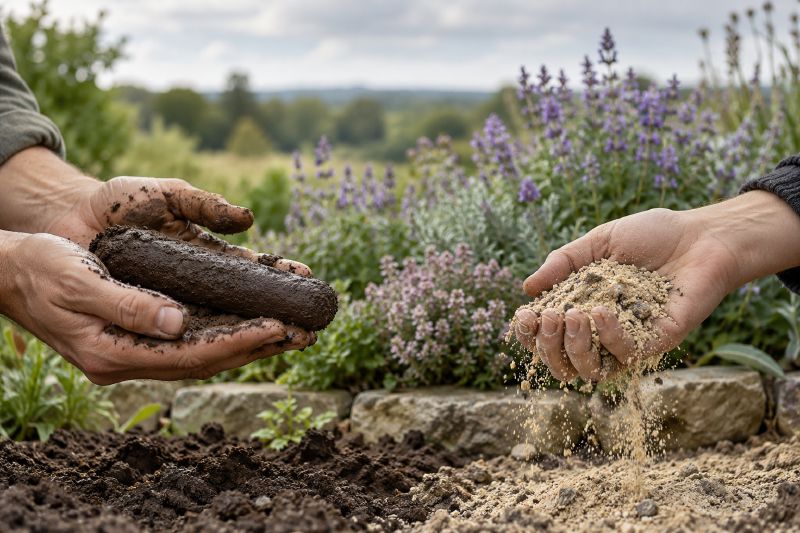
Rub a damp pinch between your fingers. Clay feels sticky and smooth, and it rolls into a ball or even a sausage without cracking, according to the gardener and author Sarah Raven. Sandy soil feels gritty, and its grains will not hold together when you squeeze them.
The difference runs deeper than texture. Clay tends to be rich in nutrients and to hold on to water. Sand warms up fast in spring but is usually short of both nutrients and moisture, House Beautiful reports. Loam, which drains well but still keeps water and food, is the soil most gardeners would choose.
Where each one turns up in Britain
Raven’s advice is to learn the local soil before you dig. Clay is common in South West England, mixed with loam in the Midlands, and found with peat in the North East. In Scotland, sandy soil is likely in the Lowlands.
Plants that cope with each
On clay, Raven suggests plants that like moisture and tolerate a dense soil, such as persicaria, veronicastrum and Alchemilla mollis. On sand she suggests a Mediterranean style, with erigeron, nepeta and thyme, plants that take drought in their stride.
The case for poor, sandy ground
The Guardian writer went further. They spread 30cm of crushed plaster and sand over the old clay lawn and planted grasses, bulbs and flowers in it. That garden has never been watered.
Their argument is that rich, fertile soil produces overfed plants that struggle in drought and gives weeds an easy home. Sand and gravel make it harder for weeds to take hold, and poor soils grow shorter, sturdier plants. Winter wet can harm perennials such as salvias, achillea and echinacea as much as summer drought, because their roots hate sitting waterlogged.
The Swedish nurseryman Peter Korn grows plants in pure sand in his Malmö garden and does not water them, even through recent summer droughts. For a gardener stuck with soggy clay, that is the other option: stop fighting the soil and change it.