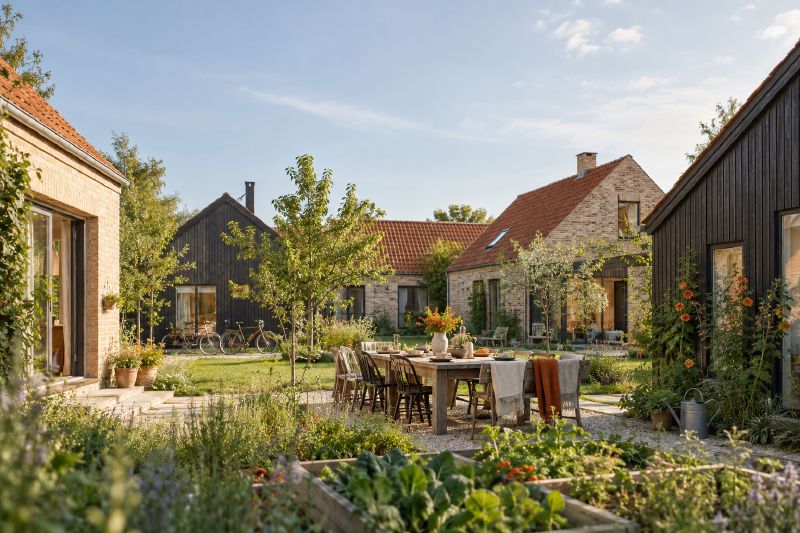
Co-housing asks residents to share more than neighbours usually do. Each household keeps a private, self-contained home. In return, members share a common house and other facilities, and run the community themselves. The model began in Denmark in the mid-1970s and spread quickly through Scandinavia, Germany and the United States.
Jo Gooding, then coordinator of the UK Co-housing Network, described such projects to the Guardian as self-managing communities governed by the people who live in them.
What residents commit to
The shared spaces are the point. Gooding listed a common house, playrooms, workspace and guest rooms, with cars kept to the edges so the shared ground stays safe. She said the design is meant to encourage residents to meet.
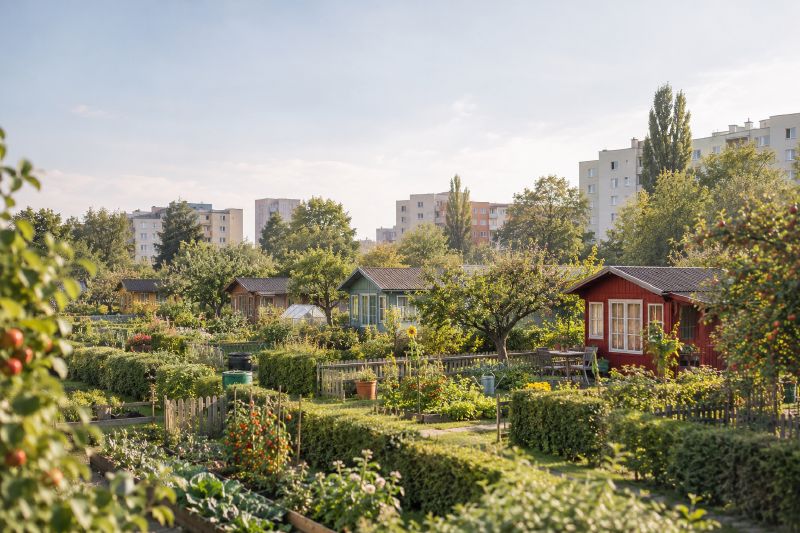
Lilac Grove in Leeds shows the commitment in practice. Its 20 private homes surround a shared garden and courtyard, with a laundry, workshop, allotments and bike sheds held in common. Residents cook and eat together in the common house twice a week, collect their post there, and govern the community from it.
The commitment starts long before anyone moves in. Lilac took around six years of planning and building.
Who it suits
The Guardian found two groups drawn to it. One is single people, particularly older ones, who want neither isolation nor conventional senior housing. The other is families who want support while they raise children and work. The architect Patrick Devlin, who designs co-housing for older people, called it an intentional community where the balance of privacy and shared life is critical.
Co-housing in Copenhagen today
Denmark is still building it. The UN17 Village in Ørestad, Copenhagen, is a five-building development by the investor Nordic Real Estate Partners, which aims to meet all 17 of the UN’s sustainable development goals.
One of its first buildings is for residents aged 45 and over, run on the co-housing model. Martin Schultz Nielsen, NREP’s head of investment, told the RICS magazine Modus that tenants get a slightly smaller flat of their own. In exchange they share a kitchen, a library and a TV room, where he expects them to spend most of their time.
The village also has a common dining area. Nielsen said a researcher and cook help residents make affordable, healthy food, and greenhouses on some of the buildings let them grow their own.
The question Modus raised is whether a developer can design a community this tightly without dictating how it lives. Nielsen’s answer was that future residents helped shape how the buildings work.