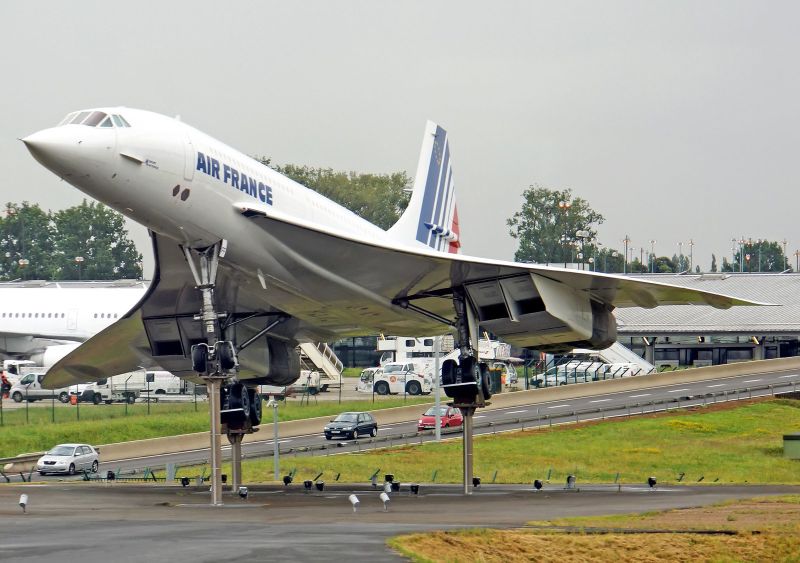
Concorde stopped flying largely for commercial reasons, and nobody has built a supersonic airliner to take its place. Its last commercial flight came on October 24, 2003. That flight, British Airways’ G-BOAG from New York, landed at Heathrow and ended passenger travel faster than sound. More than two decades on, it remains the only passenger jet ever to break the sound barrier in service.
more
Why British Airways gave up
British Airways announced the decision in April 2003. It gave commercial reasons: passenger revenue had fallen steadily while maintenance costs rose. Chief executive Rod Eddington called retiring the seven-aircraft fleet “a prudent business decision”. The airline took an £84 million write-off for the year to March 2003.
The numbers had looked poor for years. In 1998 Graham Boynton, writing in Condé Nast Traveler, counted the costs. Concorde burned 22 tons of fuel an hour, twice what a 747 used while carrying four times the passengers. Each hour in the air needed 22 hours of maintenance, against eight for a 747. A Concorde seat had to earn $1,814 to break even, Boynton reported. A 400-seat 747 seat needed $357.
Noise closed the rest of the map. Its sonic boom was so loud that regulators confined supersonic flight to routes over the sea. That hurt Air France most. Its Paris routes spent longer over land at ordinary speed, and they never turned a profit.
The crash and the slump
Two shocks brought the end forward. On July 25, 2000, Air France Flight 4590 crashed shortly after take-off from Charles de Gaulle. A tyre struck titanium debris on the runway and burst, and fragments ruptured a fuel tank. The crash killed 113 people. Air travel then fell sharply after the attacks of 9/11. Most Concorde flights were half empty, according to National Geographic.
Only 14 of the 20 aircraft built ever carried passengers. There had once been talk of 74 orders from 16 airlines. In the end only British Airways and Air France flew it.
What the last passengers saw
One passenger on the final flight was Bob van der Linden, who curates at the National Air and Space Museum. He wrote that the jet reached Mach 2 about 30 minutes out, with no bump. The windows felt warm, and the sky outside looked “a stunning dark purple”.
The Guardian’s reporter on board counted Joan Collins among the passengers. She called the retirement a “travesty of civilisation”. Captain Mike Bannister had flown Concorde for 27 years.
Who is trying again
Boom Supersonic is aiming for a first commercial flight of its Overture jet in 2030. Its XB-1 test aircraft has passed the speed of sound six times without an audible boom on the ground. NASA’s X-59 broke the sound barrier for the first time in 2026, using a long nose to soften the shockwave. Witnesses called its boom a “quiet thump”.
Both projects aim to overcome the same noise and fuel problems as Concorde. National Geographic notes that the extra speed still comes at the cost of lower fuel efficiency.