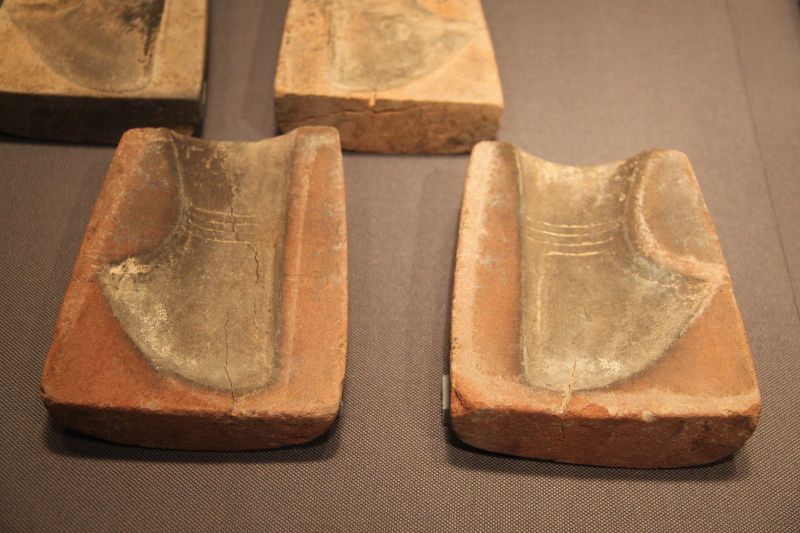
A metal detectorist in north Wales dug up two stone pieces that fit together, and a coroner has ruled that both count as treasure. They are the halves of a mould for casting axes, made about 3,400 years ago.
more
The ruling turned on one question. Is a two-part mould one object or two?
What was found
George Borrill found the pieces in 2017 on Conwy mountain. They lay about 18 inches underground in rough pasture. Each is about eight inches long, and the BBC reports that they are remarkably well preserved.
Borrill reported the find to the authorities. The question of how to classify it then went to a coroner.
Borrill has found several artefacts before. He said the pieces stood upright with a hole in the top, and he first took them for something to hold an old railing.
Experts identified them as moulds for palstaves, a type of axe used in the Middle Bronze Age.
Why the metal matters
The mould points to a known source of copper. Experts said the pieces were probably linked to the Bronze Age copper mines on the Great Orme in Llandudno.
The BBC reports that smiths mixed tin from Cornwall with molten copper to form them.
Adam Gwilt, principal curator at the National Museum Wales, dated them to about 1400 to 1275 BC. In his report to the coroner, he said similar objects have turned up at only seven other sites in Britain.
The find sat about three miles from the Great Orme mine, one of the largest in Europe. Gwilt said that distance suggested the pieces were buried in a ceremony when their working life ended.
One object or two
The argument was about whether the Treasure Act covered one find or two.
At the inquest in Ruthin, Borrill argued that each half is useless without the other. In his words, one was no good without the other. They were found touching and face to face, so he said they were a single artefact, and not treasure.
Gwilt disagreed. He told the hearing that the halves are two discrete items with different decorations on them, so the Treasure Act applies to each.
He pointed to a precedent. Separate parts of a chariot found in Pembrokeshire had already been classed as treasure.
Kate Sutherland, the assistant coroner for north Wales east and central, agreed with Gwilt. She ruled that on the balance of probabilities the pieces are two distinct items, and so treasure.
Borrill said afterwards that he did not agree with the judgment, though it did not surprise him. Had the pieces not been declared treasure, he said, he would have offered the National Museum first chance to buy them.
What happens next
Borrill did not accept the ruling. He said that without the treasure ruling he would have given the National Museum the first chance to buy the pieces. The coroner’s decision rested on the pieces being two items with separate decoration.
How such a mould is used
The BBC report does not describe the casting itself. A workshop listed by Archaeology UK shows the principle with a modern sand mould. Dr James Dilley of Ancient Craft leads participants through making a mould for an axe or dagger, and each person then casts liquid bronze into it.
The workshop draws on the Must Farm excavations, where some axes survive still fitted to their handles.
The day opens with a one-hour talk on Bronze Age metalworking, covering materials, British artefacts and manufacturing techniques. The afternoon goes on cleaning, polishing and decorating the cast pieces.
Dilley has also made replica axes, which the organisers used in their exhibition on Must Farm.