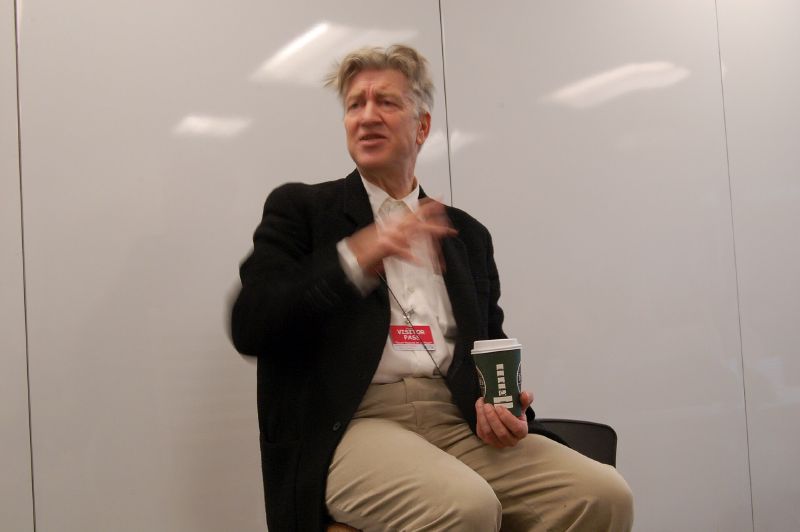
David Lynch made ten feature films and co-created Twin Peaks, and the work left such a mark that his surname became an adjective. IndieWire put it plainly in its obituary: there is Hitchcockian, and then there is Lynchian. The Guardian called Blue Velvet his masterpiece, and a Guardian critic said the same of Mulholland Drive. Those two films, and the first series of Twin Peaks, are where a newcomer should start.
more
What follows is how a painter from Montana got there, and why the people who worked with him still talk about him with such affection.
From a Montana boyhood to Eraserhead
He started with a picture that moved. Lynch said he first wanted to make films when, while painting, he heard a gust of wind and saw the canvas seem to stir.
David Keith Lynch was born in Missoula, Montana, on January 20, 1946. His father worked as a research scientist for the Department of Agriculture, and the family moved from state to state while he grew up. His parents backed his drawing early. Lynch told Rolling Stone in 1990 that his mother had “saved” him by giving him scrap paper rather than colouring books, which he thought existed to keep a child inside the lines. IndieWire’s obituary records that when Lynch was asked for a biography, he wrote only “Eagle scout. Missoula, Montana.” That detail matters later, in a body of work full of tidy small towns.
Art school, and a darker turn
He began studying art at 18, at the Boston Museum School. After a year he left to travel round Europe with his friend Jack Fisk, then came home after a fortnight. The Pennsylvania Academy of Fine Arts in Philadelphia suited him better, and his paintings there grew darker. There he met a fellow student, Peggy Lentz, who in 1967 became the first of his four wives. They had a daughter, Jennifer.
In 1967 he also had his first solo exhibition and made his first film, the one-minute loop Six Men Getting Sick. A year later came The Alphabet, in which Peggy recites the alphabet before a grim death. That short helped him win a grant from the American Film Institute. He spent it on The Grandmother (1970), a 34-minute 16mm film about a neglected child who grows an elderly companion from a seed. It mixed stop-motion animation with live action, and its sound came from Alan Splet, who would work with Lynch for years.
Five years of Eraserhead
The family moved to Los Angeles, where Lynch studied at the AFI Conservatory and started work on his first feature. Eraserhead reached cinemas in 1977. It is shot in grimy black and white, in an industrial world where a man with towering hair looks after a crying, reptile-like baby. The BBC reads it as a comment on male paranoia, and says it set the layered pattern for everything that followed.
Reviews were mixed, and critics were confused. The midnight audience was not. Eraserhead became a cult hit on the late-night circuit. A BBC reviewer in 2001 still called it unremarkable by his later standards. Nicolas Cage felt otherwise. He told the BBC World Service that he used to watch it in Santa Monica, and that Lynch was a large part of why he went into film.
People have spent decades guessing what Eraserhead means. The Guardian notes that almost as many theories tie it to the pressures of young parenthood as try to explain the film itself. Lynch, for his part, preferred not to explain his films.
From The Elephant Man to the Dune disaster
One fan in that midnight audience changed his career. The producer Stuart Cornfeld, who worked with Mel Brooks, loved Eraserhead and brought Lynch in to direct The Elephant Man. Brooks produced it. He later described the friendly young director as “Jimmy Stewart from Mars”.
The Elephant Man
The film tells the story of Joseph Merrick, a man with severe deformities, rescued from a London freak show by the surgeon Frederick Treves. John Hurt played Merrick, with Anthony Hopkins as Treves and Anne Bancroft in support. Freddie Francis shot it in black and white.
The makeup nearly sank it. Lynch’s own early attempts to design it failed, and Christopher Tucker made the version on screen. The Elephant Man earned eight Oscar nominations, two of them for Lynch, as director and for the adapted screenplay. It won none of them. The outcry over Tucker’s work going unrewarded led the Academy to create a makeup award the next year.
It remains his biggest commercial success. The Guardian found real compassion in its old-fashioned storytelling, though it also notes the film bent the facts: the real Merrick took a good share of the profits from being shown. Paste Magazine is cooler today, finding the film too sentimental and its central figure lost in the moralising.
Saying no to Star Wars
After The Elephant Man, Lynch was suddenly in demand. George Lucas offered him Return of the Jedi. IndieWire recounts the meeting: Lucas took him to a restaurant that served only salad and showed him books of concept art he had already commissioned. Lynch came away with a headache and the certainty that the film would never be his. He later said he had never much liked science fiction unless it mixed with other genres.
Dune
He said yes to Dino De Laurentiis instead, and to Frank Herbert’s novel Dune, shot in Mexico City. Ridley Scott had been attached, then left to make Blade Runner. Kyle MacLachlan, in his first screen role, played the hero Paul Atreides.
Lynch did not ask for final cut, and later told NPR that this was his mistake. He had wanted a cut of about three hours. The release was shorter, and the dense mythology came out close to incomprehensible. Dune flopped with critics and at the box office in 1984. A later extended television version displeased him so much that he took his name off it. In a 2020 YouTube Q&A he said he was proud of everything he had made except Dune.
It was not wasted. IndieWire notes that Herbert himself rather enjoyed the film, and that its Mexico set was where Lynch met MacLachlan. The Guardian’s Charles Bramesco sees early signs of Twin Peaks in it, from glowing orbs bearing messages to the hero’s whispered inner voice.
Blue Velvet
Lynch got his final cut back with Blue Velvet in 1986, a film he had been planning since before Dune. IndieWire calls it the “one for me” after the “one for them”, and notes that De Laurentiis produced this one too. Without Dune, IndieWire argues, Blue Velvet would never have happened.
MacLachlan plays a young man in a small town who finds a severed ear in a field and is drawn into violence. Isabella Rossellini plays a nightclub singer, with Laura Dern and Dennis Hopper as the villain Frank Booth. It was also Lynch’s first film with the composer Angelo Badalamenti.
The opening shot sets out the whole idea. Picket fences and roses sit under a clear blue sky, then the camera finds insects fighting under the lawn. The town is Lumberton, North Carolina. The critic David Thomson called the film “Beowulf at the International House of Pancakes”. Lynch put it more plainly, saying in the book Lynch on Lynch that this was the way America was to him.
Blue Velvet split critics. Roger Ebert’s review even suggested it exploited Rossellini, who was then Lynch’s partner. It was still a modest hit, and it earned Lynch a second Oscar nomination for best director. The novelist JG Ballard called it the best film of the 1980s.
The works that made Lynchian a word
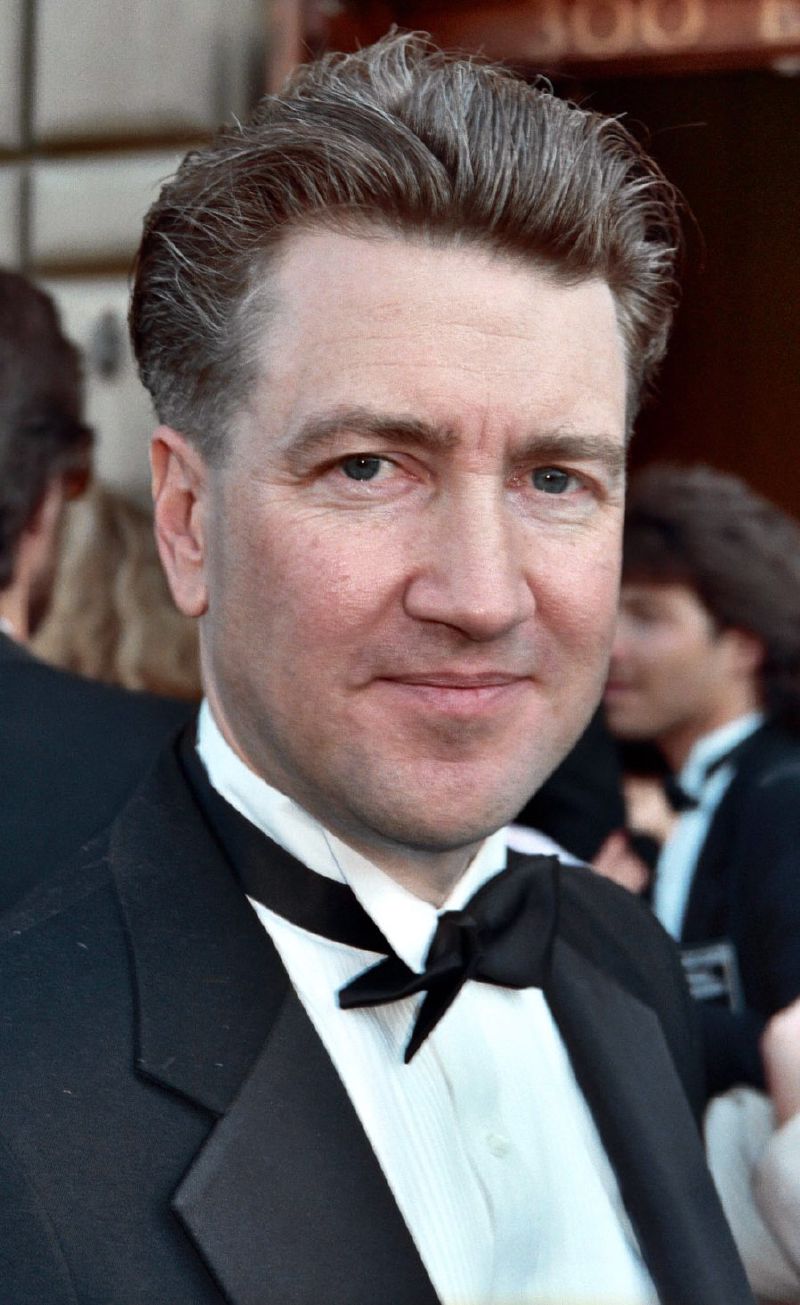
The Oxford dictionary now holds the word. It defines Lynchian as blending surreal or sinister elements with the mundane. Vanity Fair’s version was shorter: weird, creepy and slow. The works below are where both definitions came from.
more
Twin Peaks
In 1990 Lynch moved to television, creating the crime mystery Twin Peaks with Mark Frost for ABC. It opens with the body of Laura Palmer, played by Sheryl Lee, washed up and wrapped in plastic. Kyle MacLachlan returned as the FBI agent Dale Cooper, and the town came with cherry pie and coffee. Under that comfort ran a thread of abuse and murder that, the BBC notes, had no earlier place on American television.
The show won three Golden Globes in 1991, including best drama series and best actor for MacLachlan. James Parker wrote in The Atlantic that half your favourite shows would not exist without it. IndieWire goes further, arguing that television history almost splits into the years before Twin Peaks and the years after. It also credits Badalamenti’s theme music with holding the look of the show together.
It did not last. The show ran for two series, in 1990 and 1991. IndieWire blames Bob Iger, who took creative control from Lynch and then cancelled a show that had been a phenomenon.
Wild at Heart
Lynch made Wild at Heart in the same years, a road film with Nicolas Cage, Laura Dern and Willem Dafoe. It won the Palme d’Or at Cannes in 1990. It is soaked in The Wizard of Oz, and IndieWire points out that Glinda the Good Witch turns up near the end to tell the lovers not to give up. Diane Ladd, who plays Lula’s mother, earned an Oscar nomination. Not every critic rates it highly. Rotten Tomatoes’ consensus calls it one of his more uneven films, held together by his sensibilities and the work of Cage and Dern.
Lost Highway
Lost Highway (1997) gave Bill Pullman a saxophonist, and Patricia Arquette his wife, who start to receive anonymous videotapes of the outside of their house. The Guardian notes that Michael Haneke later borrowed the idea for his film Hidden. Partway through, the man in Pullman’s prison cell turns out to be someone else, a young mechanic played by Balthazar Getty. It was the last film for two of its cast, Robert Blake and Richard Pryor.
The Straight Story
Then came a gentle film. The Straight Story, in 1999, was a Disney release with a G rating. Richard Farnsworth plays Alvin Straight, an Iowa man who cannot drive a car, so he rides a lawnmower 240 miles to make peace with his brother in Wisconsin. Farnsworth earned an Oscar nomination. It also tops Rotten Tomatoes’ Tomatometer ranking of his work, at 95%.
Mulholland Drive
Mulholland Drive began as a television pilot for ABC, built round Audrey from Twin Peaks. ABC turned it down. The French producer Alain Sarde rescued it, and Lynch turned it into a feature. Naomi Watts plays a hopeful young actor whose dreams fall apart after she befriends an amnesiac car crash survivor, played by Laura Harring.
It won Lynch the best director prize at Cannes in 2001, and his third Oscar nomination for directing. The BBC adds that the film is now valued for its queer themes, centred on the two women. The Guardian’s writer calls it Lynch’s masterpiece and remembers the crowd after its first Cannes screening, dizzy and jittery at how strange and erotic it had been.
In 2016 a BBC Culture poll of 177 critics named it the best film of the 21st century so far. Watts said after Lynch’s death that he had put her on the map, after more than ten years of failed auditions.
Inland Empire
Inland Empire, in 2006, was his last feature. It was among the early features shot on digital video. Laura Dern plays an actor whose new role starts to swallow her. Rotten Tomatoes’ consensus sums up the split it caused: fans found it seductive, and everyone else found it impenetrable.
The people who built his worlds with him
Lynch worked with the same people for decades, and many of his best scenes belong to them as much as to him.
Splet, Fisk and the sound of Lynch
“Cinema is sound and picture both,” Lynch told The Guardian in 2024. “50/50 really.” Alan Splet was the first half of that sentence. He made the strange score for Eraserhead, then worked on The Elephant Man, Dune and Blue Velvet. After Splet died in 1994, Lynch built Asymmetrical Studio in Los Angeles to carry on the experiments, and some of Splet’s ashes rest there.
Jack Fisk, the friend who went with him to Europe as a student, became his production designer. The Guardian names Fisk, Splet and Badalamenti among his most vital collaborators.
Angelo Badalamenti
Badalamenti scored Lynch’s screen work across three decades, including the Twin Peaks theme. Their partnership began on Blue Velvet. Lynch often wrote lyrics and produced, as on the songs Julee Cruise sang, Mysteries of Love and Falling. Cruise also sings Questions in a World of Blue in Twin Peaks: Fire Walk with Me, in a scene The Guardian calls perhaps the film’s best use of music.
The two men made a free jazz album, Thought Gang, before Badalamenti died in 2022. When the Guardian spoke to Lynch in 2024, he had recently listened back to Badalamenti’s Fire Walk with Me score. “He was a genius,” he said. “I miss him like crazy.”
Kyle MacLachlan and Laura Dern
MacLachlan met Lynch on the Dune set in Mexico, the start of one of the most fruitful partnerships of Lynch’s career. He went on to Blue Velvet and to Dale Cooper in both runs of Twin Peaks. Laura Dern was in Blue Velvet and Wild at Heart, and led Inland Empire.
Sheryl Lee and Fire Walk with Me
Twin Peaks: Fire Walk with Me (1992) follows the last week of Laura Palmer’s life. It bombed on release, and critics savaged it. The Guardian’s 30th anniversary piece calls it an underrated masterwork, and gives most of the credit to Sheryl Lee. That writer places her performance among the greatest on screen, and compares it to Renée Falconetti’s in The Passion of Joan of Arc.
Not everyone came round. Paste Magazine still ranks it among his worst, and calls its handling of abuse blunt and even exploitative. IndieWire takes the opposite view and ranks it fourth of his works, arguing that the film shows Twin Peaks was always about more than cherry pie. Rolling Stone says the film has since been reclaimed as one of his finest. David Bowie, Kiefer Sutherland and Chris Isaak all appear.
Music of his own
Lynch was a musician too. He released solo albums, BlueBOB in 2001, Crazy Clown Time in 2011 and The Big Dream in 2013. Karen O of the Yeah Yeah Yeahs sings on one Crazy Clown Time track, and Lynch sang on Flying Lotus’s Fire Is Coming. He worked with Jocelyn Montgomery on music by the 12th-century mystic Hildegard of Bingen, and with Marek Zebrowski on Polish Night Music.
Lynch also worked with the Texan singer Chrystabell, on and off for 25 years. She also played Tammy Preston in Twin Peaks: The Return. Their album Cellophane Memories came out in 2024.
Habits and friends
The Guardian’s obituary records that for seven years, from the late 1970s, he drank a milkshake at the same diner, Bob’s Big Boy, every day. Sting, who was in Dune, called him “a madman in sheep’s clothing”. Mary Sweeney co-wrote The Straight Story with him.
What Lynch left behind
His deepest mark may be on television. The Guardian counts only four television projects in his whole career. Two were cancelled after three episodes. The other two were Twin Peaks.
more
The failures between the peaks
In 1992 Lynch and Frost tried to do for the sitcom what Twin Peaks had done for the detective show. On the Air baffled ABC’s viewers so badly that the network pulled it midway, and four episodes never reached a mainstream audience. A year later he made Hotel Room for HBO, a half-hour drama set in one room at different moments in time. Three episodes were made, interest was muted, and it went no further.
Twin Peaks: The Return
The second series of Twin Peaks had ended on a promise to return in 25 years, and in 2017 it did. Showtime’s David Nevins called it “the pure heroin version of David Lynch”. Asked what the new series was about, Lynch answered: “It’s about 18 hours.”
The Return refused nostalgia. It kept the full Agent Cooper off screen until episode 16, and filled whole minutes with a man sweeping a bar-room floor. Its eighth episode traces the evil at the heart of the show back to the original sin at Los Alamos. It trades dialogue almost entirely for music, including Penderecki’s Threnody to the Victims of Hiroshima. A Guardian writer called that hour the high-water mark of the whole medium.
Though it was made for television, the critics of Cahiers du Cinéma and Sight & Sound both voted it the best film of 2017. The Guardian argues that Twin Peaks foresaw by decades the prestige of today’s long-form streaming drama.
The shows that followed
The Guardian’s obituary lists the descendants: The X-Files, Lost, True Detective and The Killing. David Chase named Twin Peaks as an influence on The Sopranos. The BBC adds a video game, the 2023 survival horror Alan Wake II.
Dune left a different legacy. The Guardian argues that nearly every choice in Denis Villeneuve’s recent films reads as an effort to move away from Lynch’s version. Where Lynch saturated the colours, Villeneuve chose greys.
The weather reports and the last years
He never made another feature after Inland Empire. He kept busy online instead, posting short Weather Reports to YouTube about the Los Angeles skies and sharing short aphorisms. The Guardian suggests he deserves remembering as a pioneering YouTuber for those, and for his lottery-style Today’s Number Is videos.
Steven Spielberg cast him as the director John Ford in The Fabelmans, his semi-autobiographical film from 2022. Lynch never won a competitive Oscar, despite three nominations for best director. The Academy gave him an honorary Oscar in 2019.
His death
Lynch had announced that he had emphysema, and he died a few months later, aged 78. His family shared the news on Facebook, and they closed with one of his sayings: keep your eye on the doughnut and not on the hole. Cellophane Memories, made with Chrystabell, turned out to be his last record.
He left the explanations to everyone else. Rolling Stone notes that his work seldom offered easy answers. When the Guardian spoke to him in 2024, he named the big mystery as life as a human being.
Starter guide
Watch these first. Two trusted publications call each one a masterpiece, essential, or among the best or greatest of its kind.
- Eraserhead (David Lynch, 1977). Variety names it among the 100 best horror films, and IndieWire’s list of the 100 best horror movies calls it Lynch’s “surrealist masterpiece”.
- The Elephant Man (David Lynch, 1980). GamesRadar+ says it is universally regarded as a masterpiece. The BFI includes it in a list of 1980s monochrome masterpieces.
- Blue Velvet (David Lynch, 1986). The Guardian’s obituary calls it his masterpiece, and Variety’s list of the 100 best movies calls it “the essential thriller symphony of Lynch’s career”. BBC Culture’s critics’ poll also placed it among the 100 greatest American films.
- Twin Peaks (David Lynch and Mark Frost, 1990). Variety lists it among the 100 greatest TV shows of all time, and Empire lists it among the 100 best.
- Twin Peaks: Fire Walk with Me (David Lynch, 1992). Sight and Sound’s poll placed it among the greatest films of all time, and IndieWire lists it among the 100 best horror movies.
- Mulholland Drive (David Lynch, 2001). A Guardian critic calls it Lynch’s masterpiece, and Sight and Sound’s poll placed it among the greatest films of all time.
- Inland Empire (David Lynch, 2006). Sight and Sound named it among 30 key films that defined the 2000s, and Film Comment’s critics’ poll put it among the decade’s best.
- Twin Peaks: The Return (David Lynch and Mark Frost, 2017). Sight and Sound’s poll placed it among the greatest films of all time, and IndieWire lists it among the best horror TV shows of the 21st century.