Deutsche Welle is Germany’s public broadcaster for listeners and viewers outside Germany. Its own spokesman, Berthold Stevens, put it plainly to The Guardian in 2006: “Deutsche Welle is Germany’s international broadcaster.” Because its audience lives abroad, its fortunes turn on how it reaches other countries and whether their governments let it in.
Two episodes show both sides of that.
Reaching more than 100 countries
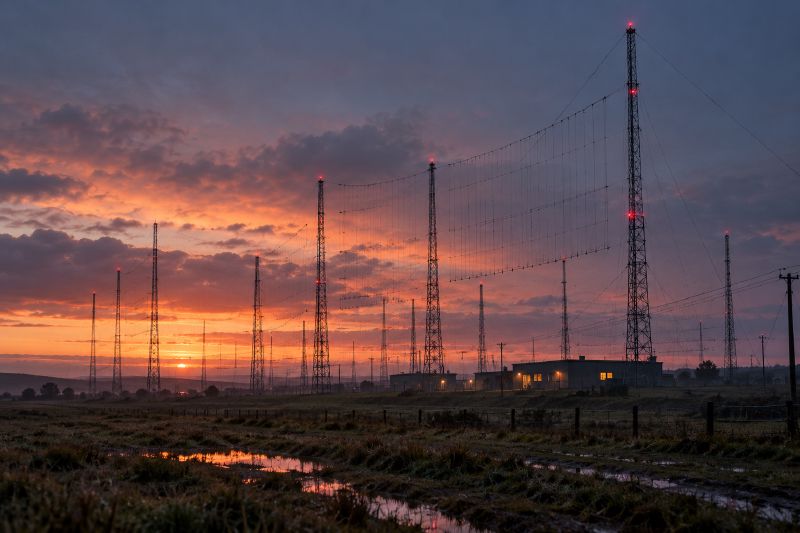
At the start of 2007, DW handed its worldwide radio transmission to VT Communications, a British firm. VTC believed it was the first time a state broadcaster had outsourced its output to a foreign contractor. The five-year deal covered broadcasts to more than 100 countries across Europe, Asia, Africa and South America.
DW started with 90 hours of programming a day in 14 languages, rising to about 150 hours. VTC beat a Deutsche Telekom subsidiary and a French bidder for the work. Guido Baumhauer, DW’s director of distribution, said the British firm offered more flexibility and lower rates.
Stevens explained why DW looked beyond Germany at all. Shopping only in the German market, he said, “would have been pretty Teutonic”.
Losing Russia
An international broadcaster depends on other states, and Russia showed how fast that can end. Moscow shut DW’s bureau there, withdrew every staff member’s press accreditation and barred the channel from broadcasting in Russia, the BBC reported. Russia’s foreign ministry also began a procedure to label DW a foreign agent.
Russia called it retaliation. German regulators had found that RT DE, a new German-language channel run by the Russian state, lacked a suitable licence. RT DE had launched in December 2021 on a licence from Serbia, outside the EU. Germany’s Zak licensing authority said it had no EU permit.
DW’s director general, Peter Limbourg, called the shutdown a sign that Russia’s government had no interest in press freedom. Culture minister Claudia Roth urged Moscow not to turn RT’s licence problems into a political response. Germany’s other public broadcasters backed DW. Latvia’s justice minister offered it a new home for the bureau in Riga.