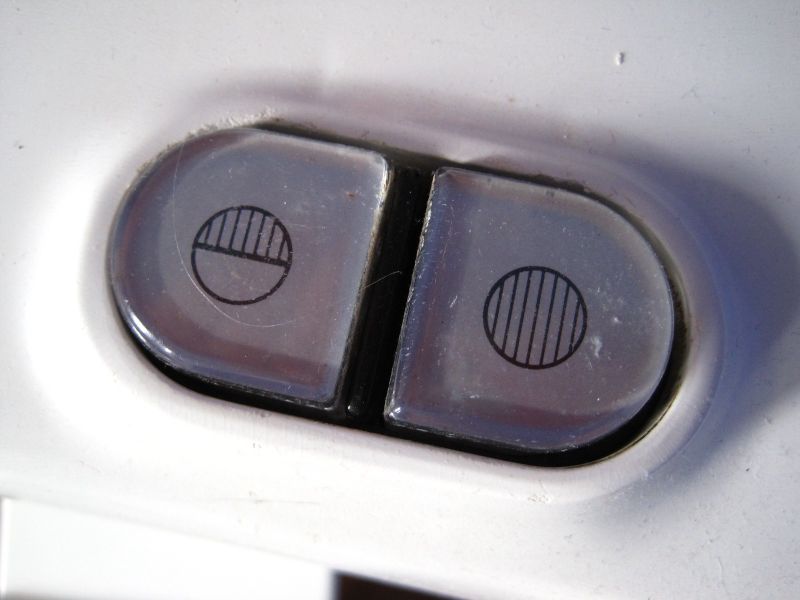
A dual-flush toilet does not keep two tanks of water for two jobs. Most models use one cistern and a single drop valve. The buttons offer a small or a large flush. Typical volumes are four litres for the short flush and six for the full one.
more
What actually opens
Most dual-flush toilets use what is called a drop valve, which sits underwater at the bottom of the cistern and opens for a flush. The drop valve reached the UK market in 2001, after a change in plumbing regulations allowed it. Before that, cisterns mostly used a siphon, which forces a set volume of water up over a lip and down a tube to the pan. Siphons are now also made in dual-flush versions.
The saving, in real numbers
An older single-flush toilet installed before 1991 uses at least nine litres on every flush, whatever is in the bowl. One installed between 1991 and 2001 uses 7.5 litres, and some older toilets exceed 13 litres a flush. A newer dual-flush model uses six litres for solid waste and four for liquid, roughly halving the volume for the flush most people use most often. The Unified Water Label Association estimates that a household chooses the short flush about 80% of the time, saving up to three litres compared with a single-flush model on each of those uses.
Retrofitting also works without buying a new toilet. Fitting a device such as an ecoBETA or a Dudley Turbo 88 converts an existing single-flush cistern to two settings, and can cut water use by 20% to 30%. A cheaper option is a displacement device dropped straight into the cistern. One example is the folding bag sold as the Hippo the Watersaver. It traps up to three litres of water, so the existing siphon has less to release on every flush. It does not add a second setting. It shrinks the one the toilet already has.
Someone who is not refurbishing a bathroom can still get most of the saving this way, and some water companies supply the devices free on request.
Where the saving leaks away
The drop valve that makes dual flush possible is also its weak point. Grit, calcium or a fragment of porcelain can lodge under the valve and stop it seating properly, and once that happens the cistern refills continuously. Waterwise estimates that between 5% and 8% of UK toilets leak this way, and most of the leaking toilets are dual flush. Andrew Tucker, water efficiency manager at Thames Water, says the water lost to those leaks is now larger nationally than the water dual-flush toilets save. Jason Parker, managing director of plumbing manufacturer Thomas Dudley, put it more bluntly: a siphon will not leak, but an outlet valve eventually will, sometimes within a week of installation.
The choice of button causes a second, smaller loss. In research for Thames Water, as many as half of customers pressed the wrong button, or pressed both. Tom Reynolds, chief executive of the Bathroom Manufacturers Association, says drop valves are more prone to leaking than siphons. He stops short of calling for them to be banned, saying manufacturers have not yet found the underlying fix.
You can check a cistern for a leak without tools. Wipe the back of the bowl dry, place a square of toilet paper against it, and leave it overnight. Paper that is wet or torn by morning means the valve is not sealing. Leak strips in the bowl, or food colouring added to the cistern between flushes, also show whether water is getting through.