Electric cars took more than 5% of India’s passenger vehicle sales earlier this year, a share analysts treat as the point where a niche product turns into an ordinary one. The market grew by a quarter in the year to March 2026, and India’s dealers’ association called the shift “no longer directional but substantive.”
Where the growth sits
The strongest demand sits at the top of the market. Among cars priced above one million rupees (about $10,481, or £7,777), one in ten sold is now electric. Smaller vehicles moved first. Electric three-wheelers already take more than 30% of their category, and electric motorbikes more than 15%.
India has also moved past a country it once trailed. An Ember report covering the first ten months of last year found that India, Mexico and Brazil have overtaken Japan on electric vehicle uptake. The same report counted 39 countries with an electric sales share above 10%, up from four in 2019. Robbie Andrew, who tracks EV sales at the Oslo research centre Cicero, said the pattern outside the rich world is largely about the arrival of cheaper Chinese-made cars. “The Chinese companies have innovated extraordinarily quickly,” he said.
Fuel prices did the immediate work
India imports close to 90% of its oil. State-run retailers raised pump prices this year after holding them steady for four years, once crude rose by half during the Middle East conflict. Prime Minister Narendra Modi asked people to share cars, use public transport, and work from home. Nomura, the Japanese brokerage, called the combination of pricier fuel and geopolitical uncertainty “an incremental driver strengthening the case for EVs.”
A rule due in April 2027
The longer-term push is a set of fuel economy standards called CAFE-3, due to run from April 2027 to March 2032. The draft would cut average car emissions from 113 to 76 grams of CO2 per kilometre, a fall of a third. Bernstein analysts Venugopal Garre and Param Shah said the rules would, for the first time, pair India’s EV incentives with penalties that stick. About a billion dollars in fines across eight manufacturers have gone uncollected under the current regime. Amitabh Kant, the former head of the government think-tank Niti Aayog, wrote in the Indian Express that the draft has stayed tentative through three years of discussion, and that the uncertainty makes manufacturers defer investment.
The charging gap
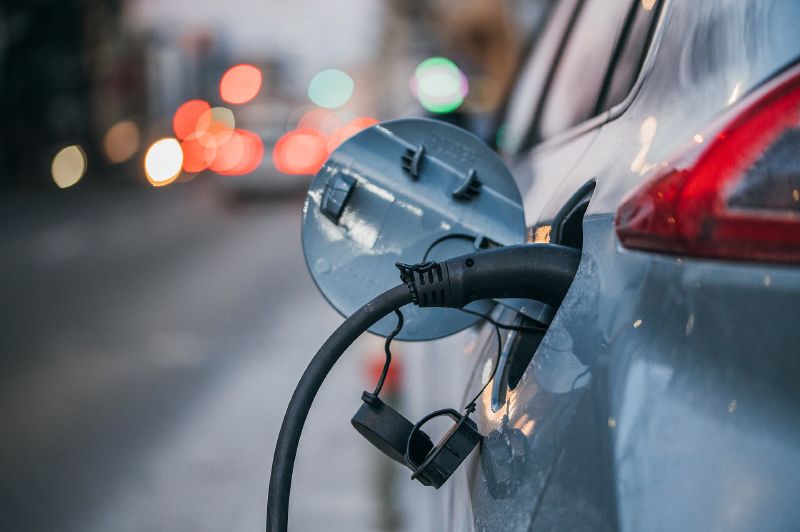
Public charging points in India grew from 2,000 to more than 10,000 in three years, and just four of the country’s 28 states hold more than half of them. China, by contrast, has about 20 million public charging points, and captured roughly two-thirds of the world’s growth in chargers since 2020. Nomura names range anxiety, the fear that a charge will not finish the trip, as one reason buyers still hold back.
Nomura expects India’s electric share of passenger cars to reach 9% by 2030, against a Chinese share that has already reached 53.3%. Getting there depends on battery materials India mostly imports. KPMG puts 70 to 80% of the world’s lithium and cobalt refining, and close to 90% of rare earth separation, in Chinese hands. Building a full local supply chain, the consultancy says, can take more than a decade.