England’s reorganisation of 1 April 1974 did not wipe out its old counties. What the Local Government Act 1972 abolished was a layer of councils and the areas they ran. It then gave the word “county” to the new council areas that replaced them, and that choice of word has confused people ever since.
So when someone says Cumberland or Huntingdonshire vanished, they are half right. Neither name is attached to a county-wide council any more. Both can now appear on boundary signs as traditional counties.
What the Act actually did
Section 1 of the Act set out the new map. From 1 April 1974, England outside Greater London and the Isles of Scilly would be split into council areas “to be known as counties”, and each of those would contain districts. Some of the new counties were metropolitan, listed in Part I of Schedule 1, and the rest were non-metropolitan, listed in Part II.
The same section cleared away what came before. On that date every administrative county, every borough outside a rural district, and every urban district, rural district and urban parish outside Greater London ceased to exist. So did the councils that ran them. The municipal corporation of every borough outside London went too.
Rural parishes were the exception. Those already in place before 1 April 1974 carried on, now called plain parishes.
Read closely, the statute is about administration. Its first words on the subject say the new areas exist for the running of local government. The Historic Counties Institute, which campaigns for the older map, argues that the Act therefore created council areas and borrowed an old name for them, rather than redrawing the counties themselves.
Why “county” now means three things
The BBC counted three kinds of county in England.
- Historic counties, some dating to the mid-Saxon period. Westmorland no longer exists for administration, but in Yorkshire, Durham and Cornwall these counties still carry real local identity.
- Administrative counties and unitary areas created under the 1972 Act, such as Oxfordshire and Surrey as county councils, and Northumberland as a single-tier council.
- Ceremonial counties, set up under the Lieutenancies Act 1997, each with a Lord Lieutenant.
The names overlap, but the borders often do not. Bedfordshire and Cheshire survive as ceremonial counties with no county council behind either name. Berkshire has no county council at all, so its districts are the only local authorities there.
The Office for National Statistics, according to the Historic Counties Institute, now says in its place-names guidance that the 1972 Act abolished administrative counties and county councils, and not the historic counties.
What it looks like on the ground
The tangle shows best in single towns. Scunthorpe sat in Humberside, a county the 1974 map created, until 1996. Today it falls in the ceremonial county of Lincolnshire and the unitary area of North Lincolnshire, yet Humberside Police lived on, the BBC noted.
more
Birkenhead belongs to the historic county of Cheshire. It also sits in the ceremonial county of Merseyside and the Metropolitan Borough of Wirral, even though Merseyside County Council closed in 1986.
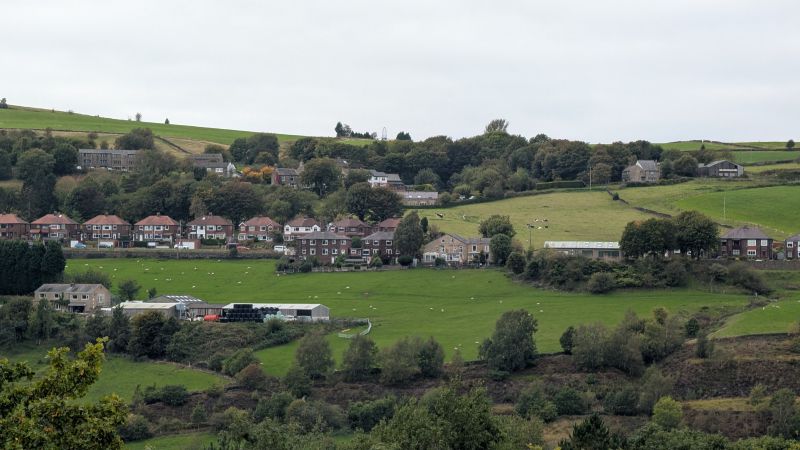
Barrow-in-Furness is historic Lancashire. Its ceremonial county is Cumbria, and Cumbria County Council also covered the historic counties of Cumberland and Westmorland. Saddleworth was once in the West Riding of Yorkshire and now sits in Oldham and Greater Manchester. Many people there still fly the white rose.
Catherine Staite, then director of the Institute of Local Government at Birmingham University, told the BBC the overlapping lines followed no consistent plan. She called the result “a patchwork of arrangements for which there is no logic”.
Why the old names keep coming back
The metropolitan counties the Act created did not last long as councils. Their county councils went in the 1980s, though groups of councillors still run some shared services, such as transport and police, within the old borders.
Meanwhile the older names never left. The government changed its rules to let councils put up signs marking traditional counties, Cumberland and Huntingdonshire among them. Eric Pickles, then Communities Secretary, said earlier governments had tried “to wipe the counties off the map”. The Association of British Counties, which promotes the 92 historic counties, welcomed the move.
Andy Strangeway, a campaigner for county recognition, told the BBC that more of the historic East Riding of Yorkshire lies outside today’s East Riding council than inside it. He called that “cultural vandalism”.
So which county do you live in? Since 1974 the right reply is another question: which kind do you mean?