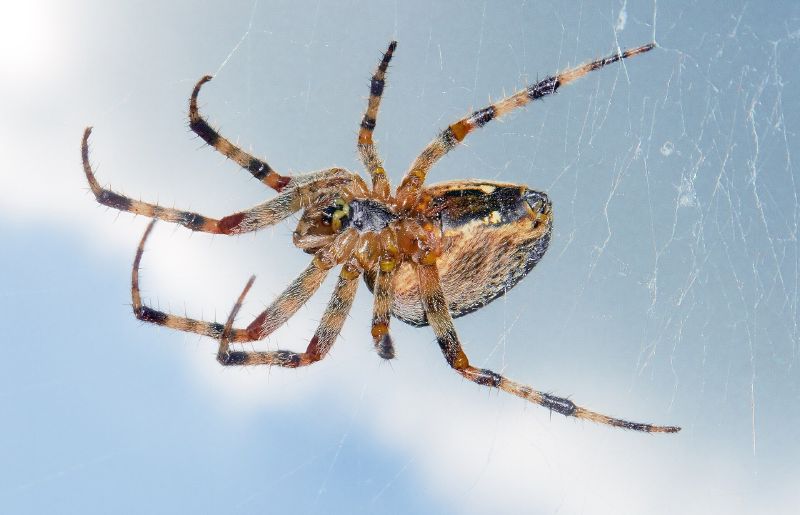
People who fear spiders are usually not afraid of a bite. Psychologists have found that the way a spider moves, and its long legs, matter more, and that the fear can pass down through families.
more
An estimated 6% of the general population suffers from full-blown arachnophobia. Spiders are also the thing children name most often when researchers ask what they fear. The question is why a small animal, nearly always harmless, gets that reaction.
Does a bad experience cause it?
The oldest idea is conditioning. A person meets a spider in a frightening moment and the fear sticks.
In 1991, Graham Davey of City University London interviewed 118 undergraduates about spiders. About 75% of them were mildly or severely afraid, and most of those were women. Davey found no link to a specific spider trauma, so the study gave conditioning no support.
Critics replied that a childhood event could lie buried in memory. In 1997, Peter Muris and colleagues at the University of Maastricht asked children what they feared most. Spiders came first, ahead of being kidnapped, predators and the dark. This time the most fearful children could link their fear to specific events.
How much is in the genes?
A 2003 study by John Hettema and colleagues at the Virginia Institute for Psychiatric and Behavioural Genetics used twins. They compared how twins reacted to spiders and snakes with how they reacted to circles and triangles. The analysis found that genetic influences were substantial, so arachnophobia is inheritable.
That means a person need not have met a spider to fear one. Davey’s study could not separate inherited factors from shared surroundings.
Why would humans evolve to fear spiders?
The leading explanation is that our ancestors evolved a fear of spiders and handed it on. It has two weak points, according to the authors of a paper in Scientific Reports. Only 0.5% of spider species can be dangerous to people. Those species mostly live in Australia and South America, the continents people settled most recently, and not in Africa, where modern humans evolved.
Daniel Frynta of Charles University in Prague and colleagues proposed another target: scorpions. They suggested that our brains may over-generalise from a dangerous relative to a harmless one.
What the scorpion study did
The team gathered live specimens of 62 arthropod species, including 15 spiders and 10 scorpions. They placed each in a transparent box and asked 329 participants to rate it for fear, disgust and beauty.
Spiders, scorpions and other arachnids scored highest for fear. Centipedes and their relatives scored lower, and insects and crustaceans lowest. Fear and disgust ratings were highly correlated. Bigger animals drew stronger reactions.
Scorpions, unlike nearly all spiders, pose a real threat. They kill an estimated 2,600 people a year. Species with venom suited to mammals live in Africa and the Middle East, so early humans and dangerous scorpions could have shared ground.
The team admits a big limitation. The data do not show that people carry fear of scorpions over to spiders.
Can the fear shrink?
Researchers have tried to reduce it, and one experiment gives a hint of what might work. In 2013, Paul Siegel at the State University of New York and a colleague tested volunteers who were phobic and who were not. Both groups saw images of flowers or spiders, shown too briefly to register consciously. When the spider-fear tests ran again, the phobic volunteers were less afraid.
The literature leaves few firm general conclusions about arachnophobia, says the spider expert who wrote the Conversation explainer. Their hope is modest. Sharing pictures of spiders, they suggest, may help reduce the fear.