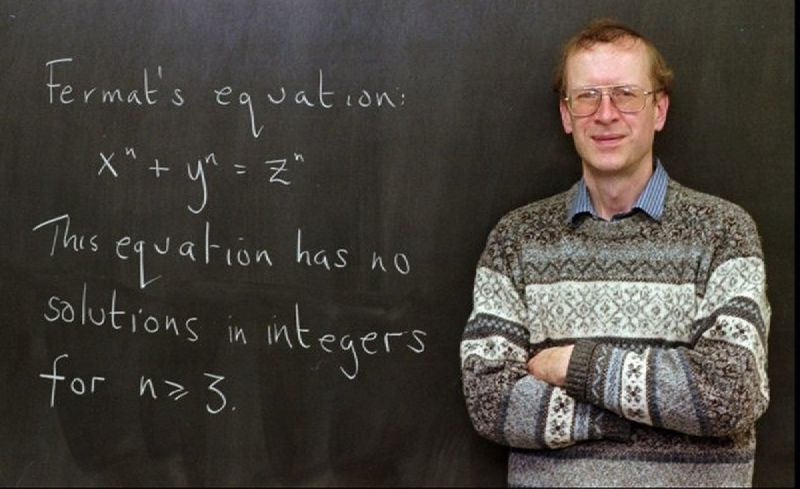
Four mathematicians under 40 won the 2026 Fields Medals: Yu Deng of the University of Chicago, John Pardon of Stony Brook University, Jacob Tsimerman of the University of Toronto, and Hong Wang of New York University and the Institut des Hautes Études Scientifiques. The prize, widely treated as the highest honour in mathematics, goes only to mathematicians under that age.

more
What it rewards is written into the award itself. The London Mathematical Society notes that the medal recognises outstanding achievement for existing work and for the promise of future achievement. Two of this year’s winners show what both halves of that sentence look like.
Who won, and who said what
The medals were presented at the International Congress of Mathematicians, which awards them every four years. Hiraku Nakajima, president of the International Mathematical Union, said the four “exemplify the depth, originality and vitality of contemporary mathematics”.
Wang, 35, is only the third woman to win in the prize’s 90-year history.
Hong Wang and the tubes that cannot overlap much
In February 2025, Wang and her collaborator Joshua Zahl posted a 127-page proof of the three-dimensional Kakeya conjecture. Put plainly, it shows that long, thin tubes pointing in every direction in three-dimensional space cannot overlap very much. They had spent months checking it, and had sent it to chosen colleagues, before they were willing to make it public.
The problem sits where harmonic analysis, geometric measure theory and partial differential equations meet, with links out to number theory and combinatorics. Pablo Shmerkin of the University of British Columbia told Quanta that those connections are why the area is “considered so central”.
The Fields Medal capped a long run of awards. Quanta lists the Salem and Ostrowski prizes in 2025, then the Clay Research Award and the New Horizons in Mathematics Prize in the first half of 2026. The attention has a cost. Speaking invitations, travel and interview requests now eat into the time she has for research.
Her taste for this kind of problem started early. Growing up in Guilin, China, she worked through every exercise in a new textbook before term began. At six she solved a puzzle about planting seven trees in as many rows of three as possible, and she got there before her father, a maths teacher. Shukun Wu of Indiana University, one of her collaborators, called her “one of the most dedicated people I’ve seen”. She told Quanta that she values theorems because nobody can later declare them untrue.
Yu Deng and a question from 1900
Deng works on partial differential equations, which describe how quantities change. “I’m very, very happy,” he told Plus Magazine, adding that he was glad for his field as well as himself.
His work reaches back to the Paris congress of 1900, where David Hilbert set out the problems that went on to shape much of modern mathematics. The sixth asked for physics to rest on clear axioms. One part of it is how to get from particles colliding like billiard balls to the equations that describe a fluid as a continuous substance.
Plus Magazine breaks that route into two steps. The second, from the Boltzmann equation to the Navier-Stokes and Euler equations, is now well understood. The first proved harder. In 1975 Oscar Lanford derived the Boltzmann equation from particle physics, but only for very short times, when hardly any particles had yet collided. In that regime, Deng explains, only about one particle in a million is expected to have collided once. Later attempts ran into the same limit.
What the other two won for
The sources in this brief say less about Pardon and Tsimerman. The London Mathematical Society points readers to the full citations for all four.