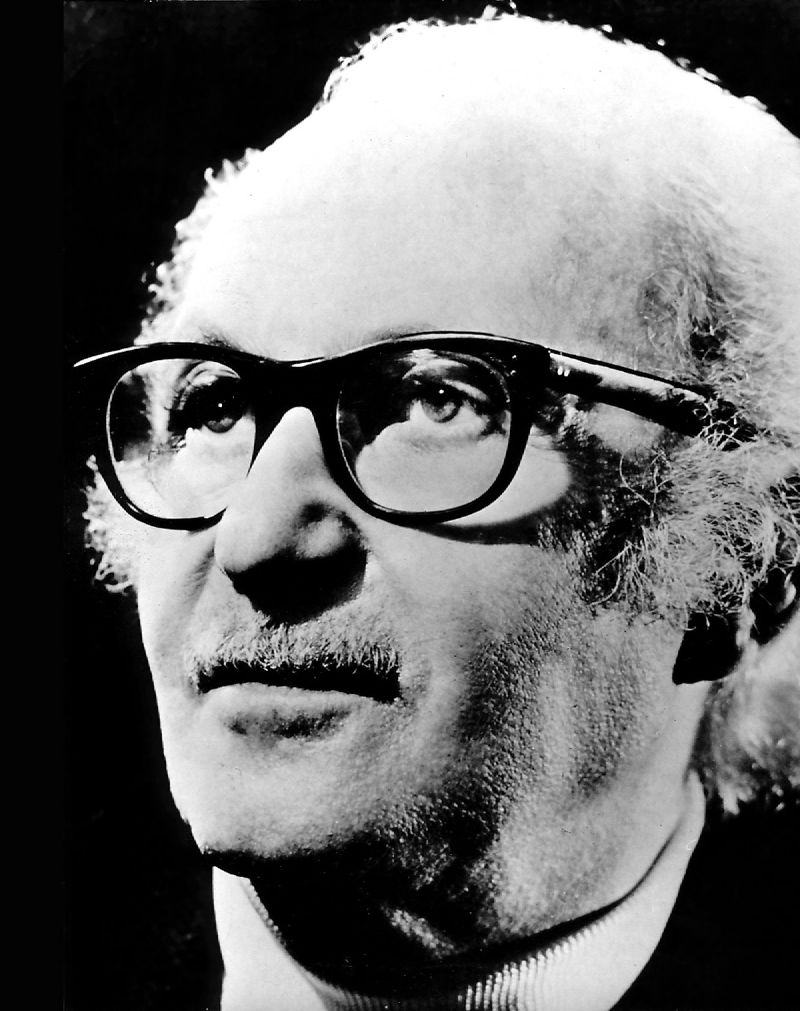
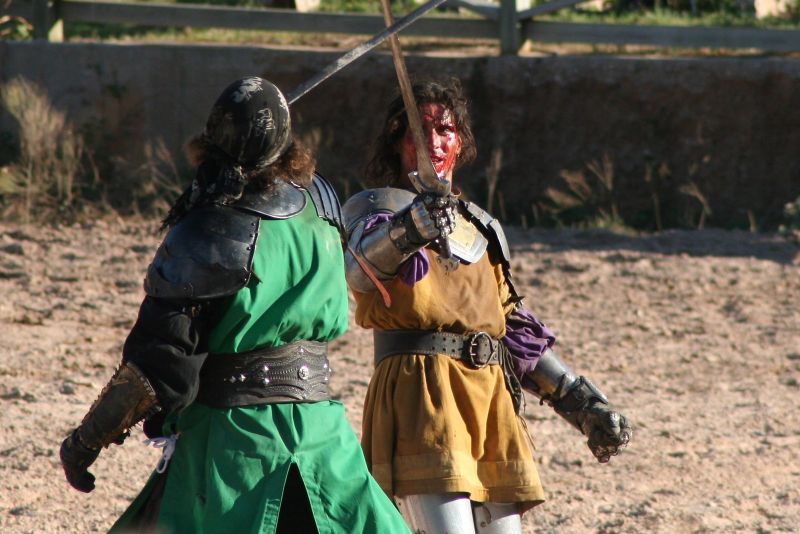
A stage sword fight is safe because every move is choreographed, even when it looks wild. Fight director Terry King says the aim is a fight that looks disorganised and erratic but is “absolutely choreographed”.
more
That is the craft in one line. The audience should see danger, and the performers should never face it.
What the script gives you
Shakespeare gives a fight director very little. King, who has worked as a fight director for the best part of 30 years, says the stage direction “they fight” is usually all Shakespeare writes. The text says nothing about how long the fight lasts or how violent it is.
So the first job is to find the story. King asks who fights honourably and who fights dirty, who is brave and who is cowardly, and why one person wins. He says the answer may be skill, strength or plain refusal to give up.
The BBC’s making-of page on its Hamlet shows the same logic. The duel between Laertes and Hamlet has to follow the text, and King choreographed that swordfight to tell the story.
Safe and believable at once
King describes the trade-off as an eternal balance. The fight must look chaotic, yet every step has to be fixed beforehand so nobody is hurt.
Safety also helps the performance. King says actors who feel confident they will not get hurt put in an extra ounce of effort, and that effort makes the fight look more convincing.
He thinks Shakespeare’s own company faced the same problem. Men of the period carried swords as a matter of course, so actors and audiences were probably more familiar with fighting. Even so, the fights could not be too dangerous, or people would have got hurt. King adds that he doubts they filled in a risk-assessment form.
Fitting the fight to the stage
King says he has choreographed hundreds of Shakespearean fight scenes. They turn up outside the history plays and tragedies. As You Like It has a wrestling scene in which the young lover Orlando defeats Charles, a professional fighter.
Twelfth Night has a fencing match between Sir Andrew Aguecheek and Viola, who is disguised as a young man. The match is called off at the last minute and is meant to be funny because neither character wants to fight, King says. Some directors have still asked him to choreograph it.
The method changes with the room. King says how you animate the space depends on the number of people, the shape of the stage and the weapons in use. For a battle he aims for dynamic movement, with the actors kept on the move and the engagement shifting. That avoids half a dozen separate fights breaking out and gives a mass of people moving around each other.
A battle that is mostly absence
Henry V shows how much a fight director can leave out. The play follows soldiers almost throughout, yet the audience sees only two conflicts, the siege of Harfleur and Agincourt. Harfleur happens mainly off stage, with the script calling for trumpet noises and scaling ladders.
For the recent Royal Shakespeare Company production, director Gregory Doran wanted Harfleur to focus on Henry, who appeared almost alone on stage. Agincourt was as much about the costs of war as about war itself.
Henry IV Part I asked for the opposite. The whole play moves towards the fight between Hal and Hotspur at the Battle of Shrewsbury. King says the battle raged in the background with smoke and mirrors, and then the two men tumbled out of it. Alex Hassell as Hal and Trevor White as Hotspur were both fighting for their lives, so he worked with them to make it as believable as possible.
Who trains for this
Stage combat has its own professional bodies. Geoffrey Alm, a University of Washington School of Drama instructor, is a Fight Master with the Society of American Fight Directors. He has directed fights for over 300 Equity productions since 1986.
A panel of stage combat experts led by Alm was set to discuss and demonstrate how to choreograph dynamic, suspenseful stage fights while protecting the actors from harm. Alm and his fellow panellists belong to the Society of American Fight Directors, and Alm is also a member of the British Society of Fight Directors.