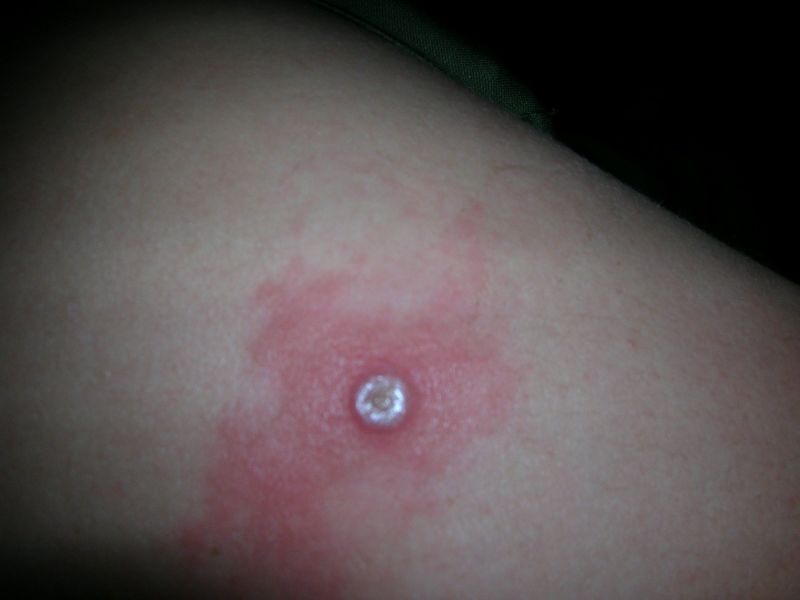
In May 1796, Edward Jenner drew matter from a cowpox sore on the hand of a milkmaid named Sarah Nelmes, then worked it into a cut on the arm of eight-year-old James Phipps. Phipps developed a mild reaction and felt unwell for a few days, then recovered. Two months later, Jenner exposed him to matter from a human smallpox sore, to see whether the boy could still catch the disease. Phipps stayed well, and became the first person ever vaccinated against smallpox.
more
Smallpox killed a fifth to three-fifths of the people it infected, and blinded roughly a third of those who survived. Doctors’ main defence before Jenner was variolation: spreading pus from a smallpox sore into a cut in a healthy person’s skin, hoping they caught a mild version of the disease rather than a fatal one. It worked, but it gambled with the real disease. Arthur Boylston, professor emeritus of pathology at the University of Leeds, has calculated that natural smallpox killed roughly one victim in five or six, against about one in fifty for someone deliberately inoculated. Cowpox promised the same protection without wagering on smallpox at all, because cowpox itself almost never killed anyone.
How Jenner tested the idea further
Jenner did not stop at Phipps. He repeated the test on other children, including his own eleven-month-old son. His former teacher, the London anatomist John Hunter, had pushed him toward the experiment in the first place. Jenner published his results in 1798, in a book he called An Inquiry into the Causes and Effects of the Variolae Vaccinae, and coined a new word for the practice: vaccination, from vacca, the Latin for cow.
The idea met resistance. In 1802, the satirist James Gillray drew a cartoon showing vaccinated patients growing cattle from their bodies, mocking the fear that the treatment turned people part cow. Governments moved faster than the public did. In 1807, Bavaria required all its army recruits to be vaccinated, the first state to make it compulsory. The World Health Organization declared the world free of smallpox on 8 May 1980.
The milkmaid story is probably not how it happened
The tale usually told is that a milkmaid’s remark first gave young Jenner the idea years before he tested it. Arthur Boylston challenged that account in a commentary titled “The Myth of the Milkmaid.” His research turned up another storyline instead. It involves John Fewster, a country doctor, and it unfolded in 1768.
Mary Fissell, a historian of medicine at Johns Hopkins, still calls the milkmaid story the standard narrative.