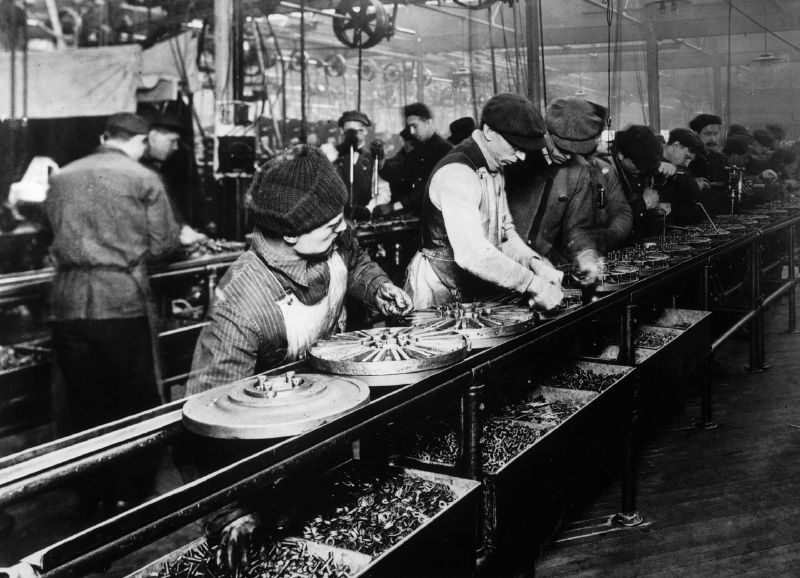
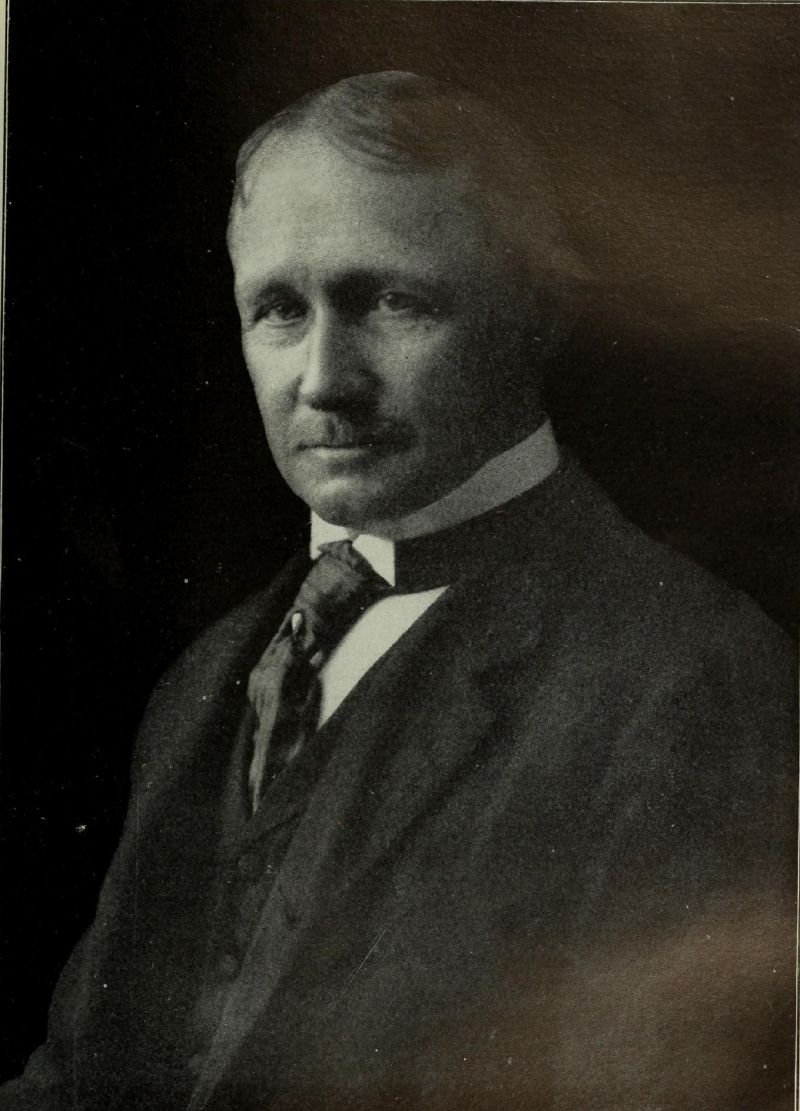
Frederick Winslow Taylor broke factory work into tasks small enough to time, and then timed them. His stopwatches had dials marked in tenths and hundredths of a minute, and he cared less about a 10-hour shift than about 10 seconds of it. Those measurements became scientific management, the doctrine of a “one best way” to do every job.
more
A rich boy on the shop floor
Taylor lived from 1856 to 1915 and came from a wealthy family near Philadelphia. At 13, touring Europe with his parents, he watched his father pay reluctant local labourers to mend a bridge. George F. Will, reviewing Robert Kanigel’s biography of Taylor in The New York Times, calls the lesson practical. Money can make working men move faster.
He passed the Harvard entrance exam with distinction at Phillips Exeter Academy. He went to work in a factory making iron castings instead. He later worked at the Midvale Steel Company as a labourer, clerk, foreman, engineer, and manager. There he saw that workers were not always efficient, and the waste cost the company money.
Will says the factory floor taught him one idea. Productivity comes from knowledge, not muscle, and part of that knowledge is how to organise muscle. As Taylor rose into management, he had the power to act on it.
What the stopwatch measured
The questions were small ones. How long did a properly analysed task take: filling a wheelbarrow, driving a nail, shovelling coal? Time-and-motion studies answered them by splitting a blur of activity into elements with a clear start and end.
Taylor reasoned that metals had a science and machines had one, so work should obey laws too, found by watching and testing. The time-and-motion study sat at the centre of that science, according to American Heritage magazine. It ended in an instruction sheet. The sheet fixed the order of every step and the time, to the second, for each one.
The best-known test came at Bethlehem Steel in 1898, where 600 men shovelled for the company. Taylor timed men moving dirt from a pile, then cut down the shovel and timed them again.
Why owners and workers listened
The results drew attention. In factories that adopted the system, output doubled or tripled and profits rose, American Heritage reports. Wages rose as well. Taylor held that men who met the new standards had earned bonuses of 30 to 60 per cent or more.
A 2004 Observer column, published by the Guardian, credits Taylor with giving industry a systematic way to study method, meaning how the work actually works. The price was a split. Managers had the ideas, and workers carried them out.
The day it went national
In November 1910 Louis Brandeis, later a Supreme Court justice, was fighting railroad rate increases. He claimed the railroads could save $1 million a day through scientific management. The claim made Taylor famous for the last five years of his life.
Fame brought a fight. In 1912 Taylor faced a hostile committee of the US House of Representatives. Congressmen with trade union backgrounds saw him as a slave driver squeezing workers too hard, according to the Observer column. Taylor had said he did not want his men’s initiative, only their obedience. He left feeling misunderstood and died three years later.
Where the stopwatch went next
Union leaders called Taylorism a new speed-up that turned men into machines. Within a few years of his death, the unions had mostly stopped opposing it. In 1918 the French premier Georges Clemenceau ordered factories under the Ministry of War to adopt it.
Peter Drucker, the management writer, ranked Taylor with Darwin and Freud as a maker of the modern world. The Observer column traces modern command-and-control management to him. It points to call centres that time each call and argues Taylor would be appalled. Taylor taught that efficiency follows from method, while those managers chase the numbers and ignore the method.