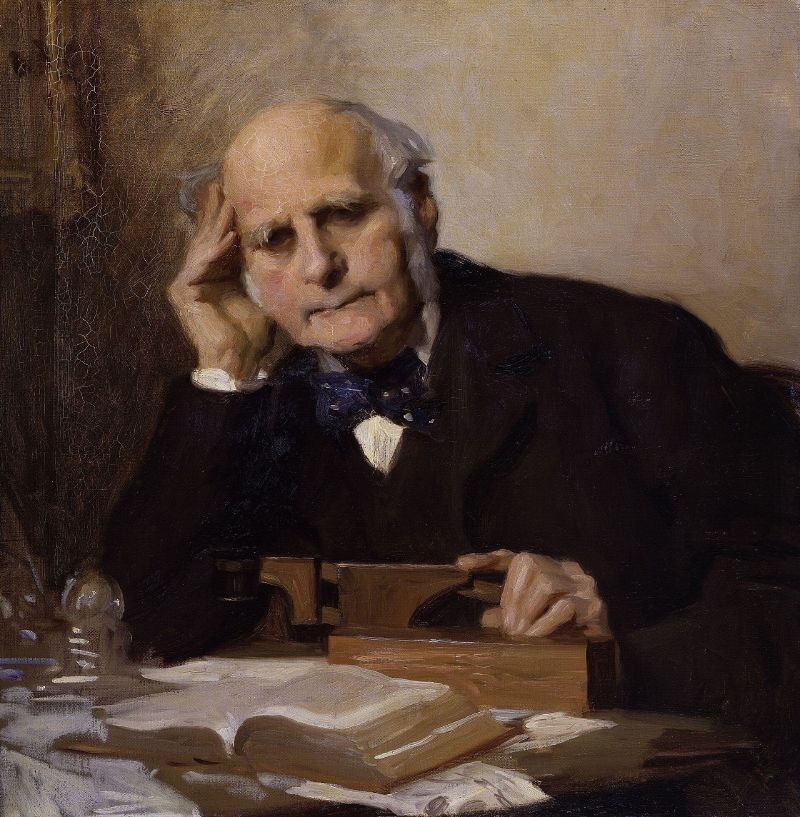
Francis Galton’s ox showed that a crowd of poor guessers can, taken together, be almost exactly right. At a livestock show, 787 people paid to guess one animal’s weight. Many guesses were far off, but their average came within one per cent of what the ox actually weighed.
more
Where did the contest happen?
The contest ran in Plymouth in 1906, at the West of England Fat Stock and Poultry Exhibition. A guess cost sixpence, and prizes went to whoever came closest. Galton wrote the result up in the journal Nature in 1907.
The Conversation’s account of Galton adds a second detail. The middle guess, as well as the average, sat almost exactly on the true weight, even though nearly every single entry missed.
Why did it matter to Galton?
Galton was an innovator in statistics, and he was the first to recognise what is now called the wisdom of the crowd. Observations like the ox helped him develop the ideas of the mean and of variation. Those led him to the standard deviation, still one of the basic tools of statistics.
His record is not only a scientific one. The same Conversation article notes that Galton also founded eugenics, the racist pseudoscience behind forced sterilisation laws in the US.
Where did the idea go next?
The name came much later. James Surowiecki called the effect the wisdom of crowds in his book of that title. Works in Progress gives a naval example. In 1968 the US submarine Scorpion went missing, and officer John Craven had experts bet on where it lay without conferring. Using Bayes’s theorem, he combined their guesses into one estimate that fell only 220 yards from the wreck.
The same article argues that betting markets are the purest form of the idea, because each person’s say is weighted by their confidence. Its authors want such markets used to test claims made online, a long way from a fat-stock show in Plymouth.