George de Mestral came home from a walk with his dog in the Alps and found the dog covered in burrs. He put a few under a microscope, saw how their tiny hooks grabbed onto loops of thread and fur, and set out to build a fastener that worked the same way.
more
A holiday that would not let go
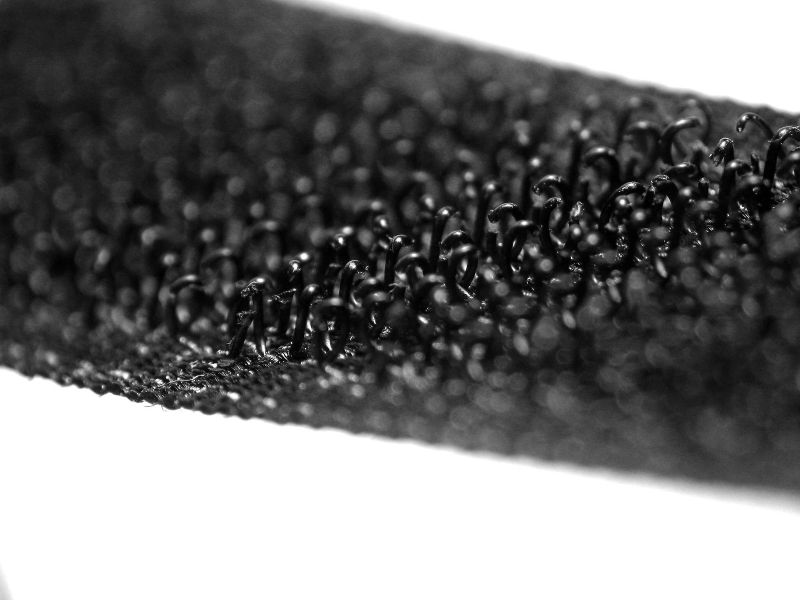
Accounts differ on exactly when the walk happened. Smithsonian Magazine dates it to a skiing trip in 1941. Ars Technica dates it to a game-bird hunting holiday in the Jura Mountains in 1948, with de Mestral’s Irish pointer as the dog that came back covered in burdock seeds. Both agree on what followed: de Mestral examined the burrs and found each one studded with hundreds of tiny hooks that caught on anything looped, whether thread or fur.
He took the idea to weavers in Lyon, then the centre of the French cloth trade. Most told him it would not work. One agreed to try, and on a small hand loom wove two cotton tapes that fastened as strongly as the burrs had. De Mestral named the result Velcro, from the French words for velvet and hook, and registered the trademark on May 13, 1958.
A product nobody wanted to wear
De Mestral quit his engineering job, borrowed $150,000, and built a company to make the fastener at scale. He had pictured it on clothes, but when Velcro reached shops it was, in the words of one writer who has covered the story, “extremely useful but also extremely ugly.” High-end designers turned it down.
The customer who took it up first was the aerospace industry. Astronauts needed a way to fasten bulky spacesuits and stop loose items drifting away in zero gravity, and zippers and laces did not suit either job. The product also had reliability problems. “We had petticoats falling off of gals and brassieres popping open,” the company’s chief executive told The Washington Post in 1983, describing the product’s early unreliability.
The patent ran out, and the market opened
De Mestral’s patent expired on April 2, 1978. Rather than coast, the company pushed to get Velcro into every niche it could reach, spurred by rivals now free to copy the design. Velcro USA’s chairman, William A. Krivsky, put the shift plainly: a firm runs harder once “someone is chasing you”.
By the 1980s, Velcro held together blood pressure cuffs, the seatback pockets on airliners and, increasingly, sneakers. The company was soon selling more than 60 million yards of it a year. De Mestral died in 1990, and the National Inventors Hall of Fame added him to its ranks in 1999.