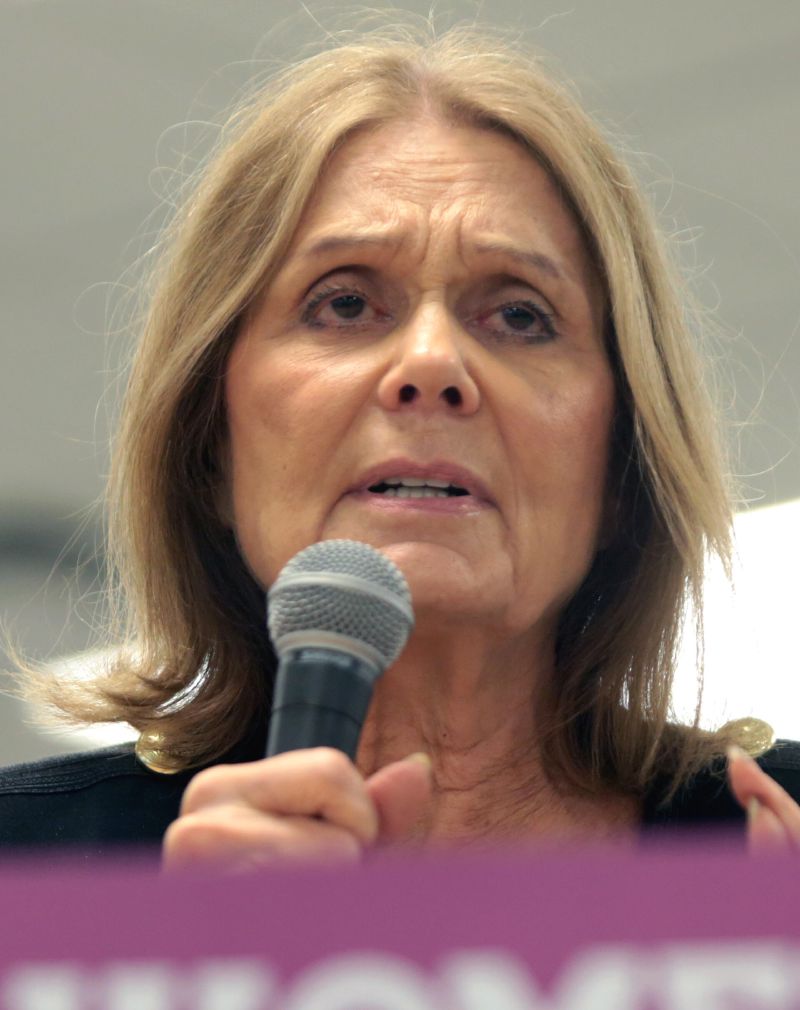
Gloria Steinem died on a Wednesday at the start of September 2026, aged 92, in the Manhattan brownstone she had bought part of years before. Her second memoir, An Unexpected Life, was due out on 22 September, and it now does a job nobody planned for it. A New York women’s lunch late that month had her down as a speaker, and October held more dates.
more
The book follows My Life on the Road, which came out in 2015. Kirkus calls it a mostly grateful and sometimes rueful account of the people and places behind her 92 years. The Guardian’s reviewer, writing the day after her death, found that its opening pages had taken on a new weight.
Toledo, a condemned farmhouse, and a rat
Steinem’s childhood was poor and unsettled, and it began in Toledo, Ohio. Her father toured the country with a dance pavilion, and she spent long spells on the road with him. He also owned a racially mixed dance club on a lake in southern Michigan, which Kirkus counts among the things that formed her politics.
At home she cared for her mother, who was mentally ill, after her parents divorced. For a time the two lived in a condemned farmhouse in East Toledo, and a rat bit Gloria there as she slept. The memoir files that period under a chapter called “Bad Things I’m Glad Happened to Me”.
The neighbourhood called her mother the Crazy Lady. Steinem writes that she learned she could survive almost anything, and that we are all one human family, responsible for each other.
Moods at Smith, then two years in India
Smith College taught her something her upbringing had not. At home you were not allowed to be unhappy unless disaster had struck, and at Smith she found that a mood was allowed. “I immediately began to have moods,” she writes.
After college she spent two years in India on a fellowship. BookBrowse’s summary says she learned from the nonviolent movement there. The Guardian’s reviewer reckons that stretch shaped her outlook to the very end.
She came home to work as a campaigning journalist. The two trusted reviews part company on what came next: The Guardian dates her co-founding of Ms. magazine to 1971, while Kirkus puts it in 1972.
The bag lady she was sure she would become
The Guardian’s reviewer was most struck by Steinem on what her choices cost. She did not save money until she was past fifty, she writes, and was sure she would end up sleeping in a subway station. She handled the fear with a joke that held a plan: she would organise the other bag ladies.
Security came late, mostly through the share of the Upper East Side brownstone where she died. A passing line near the end of the book suggests she was still paying off the mortgage well into her 80s.
Years after Smith, she wrote to her classmates in an alumni newsletter that she was quite broke, not who she had thought she would be, and consciously happy.
Baldwin, Mankiller, and the two she could not stand
The memoir names its influences. James Baldwin, Wilma Mankiller and Simone de Beauvoir all get stories. Kirkus notes that Andy Warhol and Hugh Hefner are among the few she despises.
Steinem ran “talking circles” in her home until the end, for women famous and otherwise. Kirkus traces the habit from the gatherings that led to Ms. to a 2025 circle on artificial intelligence. Her reason for all of it is the plainest line in the book: nothing is more basic or radical than telling the truth and hearing others do so.
The book also counts. In the 1960s, it records, Columbia Law School held a 5% quota for women, and American women earned on average 59 cents for every dollar a man earned.
Is it worth reading
Kirkus called it down to earth and heartfelt, and warned that she can get a little preachy. Publishers Weekly, quoted by BookBrowse, called it an engrossing self-portrait and a useful political handbook. The book runs to 256 pages, and Kirkus found its photographs and artifacts added charm.
The Guardian draws one theme out of the whole: just keep going.