Where Gothic horror fiction came from
more
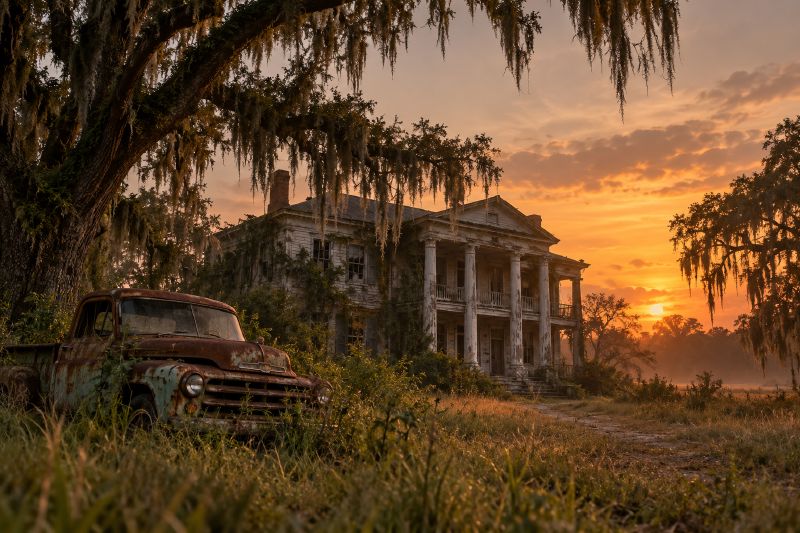
Gothic horror began with one book and one man’s taste for fake ruins. Horace Walpole published The Castle of Otranto in 1764, and the BBC and the British Library both call it the first Gothic novel. Its first page still delivers. A young prince is crushed under a gigantic plumed helmet that seems to drop from nowhere, and his father, Manfred, stares at the helmet rather than at his dead son. A writer for The Paris Review admits the book is not quite “good”, then recommends it anyway for exactly that kind of opening.
Walpole knew what he was selling. He gave the novel the subtitle “a Gothic story”, and the novelist Sarah Perry argues he chose the word on purpose. The same urge to revive the medieval led him to build a mock castle as his home, Strawberry Hill in Twickenham.
Why a book borrowed the name of a tribe
“Gothic” started life as an insult. The word comes from the Goths, the Germanic people blamed for helping to bring down Rome, and it was later pinned on a style of architecture as a sneer. Perry traces the scorn to Giorgio Vasari, the Renaissance scholar who stood inside a vaulted cathedral and called it a “deformed malediction” that “polluted the world”. Gargoyles, pointed arches and vaulted ceilings were the features that earned the name.
Walpole’s book took that sneer and made it a selling point. Perry describes Otranto as too large and too ill-mannered in the way the cathedrals were, offering a crushing helmet followed by ghosts, cruelty and endless chases.
A fake manuscript and an instant hit
Otranto arrived in disguise. Walpole published it anonymously as a real medieval story, supposedly translated from an old manuscript. Perry gives the invented author’s name: Onuphrio Muralto, Canon of St Nicholas at Otranto. The book was an instant success, and Walpole owned up to writing it with the second edition. The critics turned on him once they learned an Englishman had imagined it. The British Library still keeps Walpole’s own copy.
The BBC lists the devices Otranto handed down: a foreign setting, a menacing castle, and an innocent young woman running from a cruel man. Walpole even borrowed from Shakespearean tragedy, letting comic scenes break the tension.
The appetite for terror
The timing mattered. The BBC places the shift in the middle of the 18th century, when readers moved from romance and adventure towards a hunger for terror. Aaron Worth, writing in The Paris Review, ties the early Gothic to a wider fascination with the deep past, the same interest that helped give rise to archaeology. That curiosity ran ahead of the knowledge to match it. Sir Thomas Browne’s Urn Burial of 1658 grew out of Anglo-Saxon urns he took to be Roman, and Worth says little had improved by the time Walpole joined the Society of Antiquaries of London.
Edmund Burke supplied the theory. In his essay on the sublime he argued that whatever raises ideas of pain and danger produces the strongest emotion the mind can feel. Perry reads that as the reason Gothic villains thrill readers instead of only repelling them.
Not everyone approved. In 1797 an anonymous essayist warned, in a piece called “Terrorist Novel Writing”, that the Gothic exposed readers to a confusion of terrors that must do harm. Readers kept buying the books anyway.
The writers who built the haunted house
Ann Radcliffe, the shy queen of terror
more
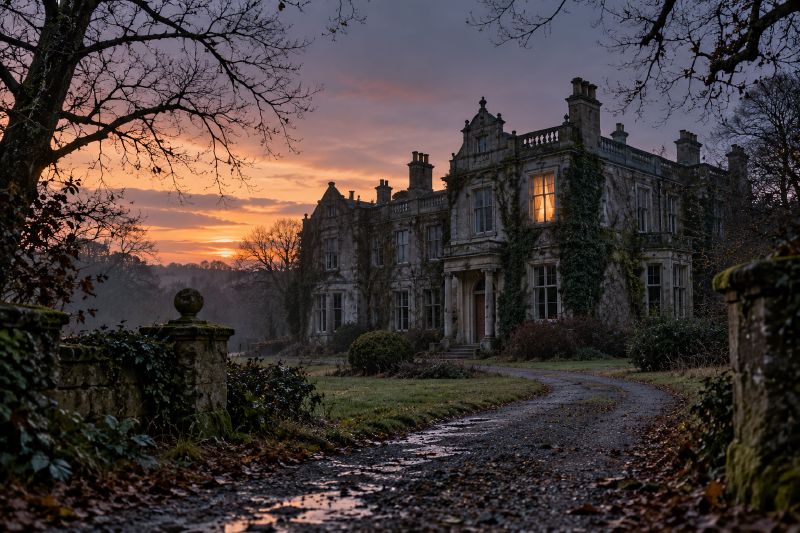
Walpole’s heirs, from Clara Reeve and Ann Radcliffe onwards, filled their books with ancestral curses, restless spirits and ruined abbeys.
If Walpole built the house, Ann Radcliffe furnished it. The BBC credits her with helping to define the Gothic novel and with huge commercial success. Walter Scott called her a “mighty enchantress”. Her signature move was “the explained supernatural”: terrors that look ghostly turn out to have a rational cause. Over several novels she refined what became known as “the female Gothic”, a formula Sophia Lee first tried in The Recess. The Mysteries of Udolpho perfected it, and its heroine Emily is an example of the young woman in peril.
Radcliffe herself stayed almost invisible. After her death in 1823 the Edinburgh Review wrote that she never appeared in public. Rumours claimed she had gone mad from her own writing, or ate raw meat at night to summon nightmares. Christina Rossetti gave up on a biography because so little was known.
Then, in 2014, a British Library curator named Greg Buzwell found a letter from Radcliffe to her mother-in-law, Deborah. It shows a measured, slightly exasperated woman. Money she and her husband William had sent north to Yorkshire had gone astray, and she offered to have Deborah come to live with them in London instead. She signed it “Your affectionate, A Radcliffe”. Buzwell said the find brought a tear to his eye, and he praised her novels as some of the most elegant of the Gothic’s golden age.
Matthew Lewis and the scandal of The Monk
Matthew Lewis went the other way. Where Radcliffe explained her ghosts, The Monk delivered a gory finale about a corrupt priest. What shocked readers most was a character censoring the Bible, and the fact that its teenage author sat in Parliament. Perry describes a man of God sliding into gleeful wickedness, and suggests the novel helped provoke that 1797 essay against “terrorist” fiction. The BBC notes that critics later filed The Monk under “Male Gothic”, with its lone, exiled outsider.
A summer night on Lake Geneva
The next great leap came from a party game. On the shores of Lake Geneva, Lord Byron challenged his friends to write a ghost story. John Polidori answered with The Vampyre, the first vampire story written in English. It was wrongly credited to Byron on publication, which annoyed both men, but it sold well and set off a craze for vampire tales.
Mary Shelley answered the same challenge with Frankenstein. The British Library says she hoped the story would make readers dread to look around them. Victor Frankenstein spends two years assembling his creature from the dissecting room and the slaughterhouse. Elizabeth Brooks, picking the creepiest Gothic novels for Publishers Weekly, notes how far the green, bolt-necked film monster strays from Shelley’s serious book.
Maturin, and a great-nephew’s borrowed name
Charles Maturin was an Irish clergyman, and he wrote Melmoth the Wanderer in 1820. His hero sells his soul for an extra 150 years on earth. Baudelaire adored the book and Balzac wrote a sequel. The tenderest story attached to it belongs to Maturin’s great-nephew, Oscar Wilde. After his release from Reading Gaol, Wilde renamed himself Sebastian Melmoth, after the hero of his great-uncle’s novel.
Edgar Allan Poe takes terror inside the head
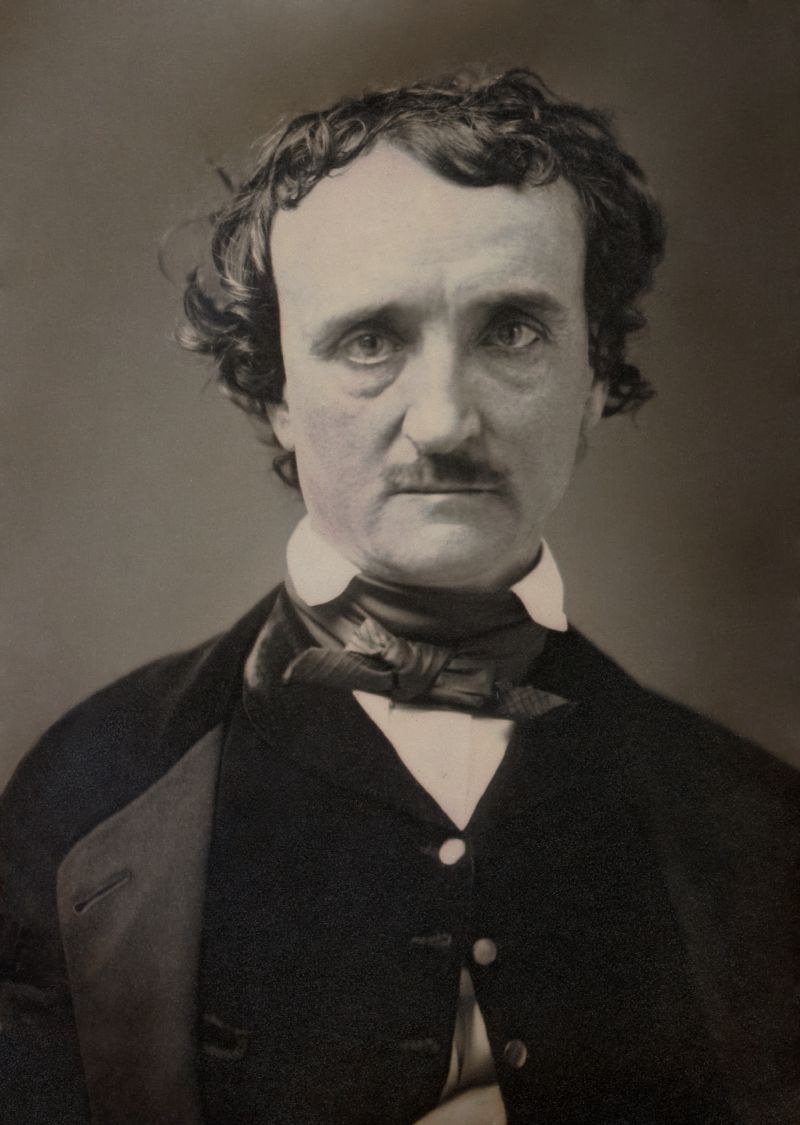
Poe took the Gothic into the mind. His collection Tales of the Grotesque and Arabesque gave its characters what the BBC calls “terror of the soul”, alongside the familiar frights. It includes The Fall of the House of Usher, in which Roderick Usher is frightened into madness.
The books that set the rules
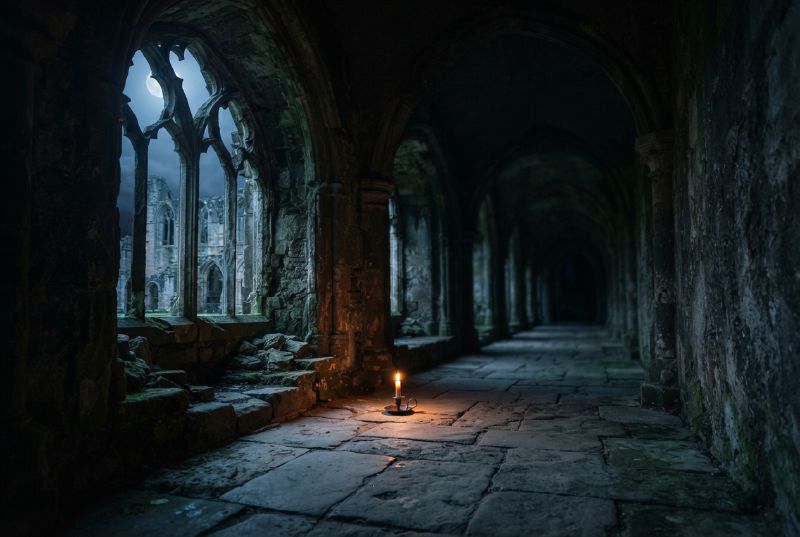
A handful of novels fixed what readers still expect when they open a Gothic book. Each one added something the next writer could steal.
more
Frankenstein makes the monster sympathetic
Frankenstein came out in 1818, and the British Library now counts it among the most influential English novels ever written. The BBC points out that it is often called the first science fiction novel as well, and many readers take it as a warning about the science of Shelley’s day. Shelley told her own origin story in 1831: the Guardian’s archive records how the “hideous phantasm of a man” reached her in a waking dream after Byron’s challenge.
Udolpho, and the parody that proved its power
Radcliffe’s formula for the female Gothic reached its finished form in The Mysteries of Udolpho, and the BBC says it has been a Gothic norm ever since. Jane Austen mocked it. Northanger Abbey follows a young girl obsessed with Gothic novels, with direct nods to Udolpho and The Monk. Austen was not first. The New Monk of 1798 and The Heroine of 1813 got there earlier, but hers is perhaps the most memorable parody.
The moors, and the Byronic hero
Emily Brontë moved the Gothic onto the Yorkshire moors. Wuthering Heights packs in stories within stories, a hint of the supernatural, a tyrant and a looming house. The BBC calls Heathcliff the ultimate Byronic hero, the dangerous and melancholy outsider Polidori first brought into the Gothic.
Carmilla, Jekyll and the double
Joseph Sheridan Le Fanu’s Carmilla set the template for the female vampire. It owes something to Coleridge’s unfinished poem Christabel, and its lesbian undertones were strikingly open for a Victorian book. Hammer’s horror films later borrowed versions of the character.
Robert Louis Stevenson’s Strange Case of Dr Jekyll and Mr Hyde gave the Gothic its fullest study of the double, good and evil sharing one body. The BBC notes that Freud’s first psychoanalytic studies followed only five years later. Like Frankenstein and Dracula, its characters escaped the book and became modern myth.
Penny dreadfuls and the first fangs
The Gothic also sold for a penny. Victorian penny dreadfuls came out in weekly parts, full of crime, gore, ghosts and highwaymen, with lurid pictures and cliffhangers. A stage performer, Barry Ono, gave his collection of them to the British Museum in 1948. It holds the first appearance of Sweeney Todd, in The String of Pearls, published anonymously in 1850. Varney the Vampyre, serialised in the 1840s about 50 years before Dracula, was the first vampire story to give its monster fangs.
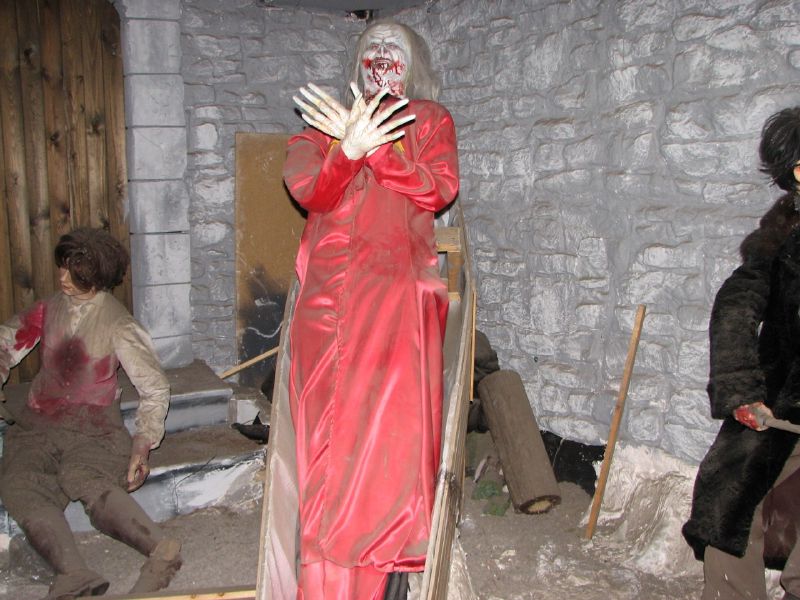
Dracula lands at Whitby
Bram Stoker’s Dracula was not even the bestselling horror novel of 1897. Richard Marsh’s The Beetle outsold it that year. Yet Stoker’s count is the one that stuck, and the BBC says the film versions helped shape how male vampires look and act. Aaron Worth sets Dracula and The Beetle side by side as the fresh terrors the reading public devoured at the end of the century.
Machen and the horror of deep time
In that same fin-de-siècle crowd stood Arthur Machen, whose story The Great God Pan made his name. Worth describes him as a foundational figure in modern horror, and H. P. Lovecraft’s essay “Supernatural Horror in Literature” helped canonise him. Stephen King, Ramsey Campbell, Clive Barker and Guillermo del Toro have all drawn on Machen. Machen himself was modest about it. Pressed to write more tales in the Pan line, he produced four he was glad to forget.
Melmoth the Wanderer belongs on this shelf too. Its plot follows Faust, the bargain that bars a soul from heaven. Lovecraft found in it a “pulse of power” missing from earlier Gothic novels, according to the essayist in The Paris Review. One outraged critic of the day complained that its stupidity came mixed with something more disgusting. Perry argues that every prediction of the Gothic’s death has only added to its appeal.
How the Gothic crossed oceans and changed shape
Over time the Gothic stopped being one kind of book. A good map of how far it travelled is the Gale critical companion to Gothic literature, whose contents the Library of Congress holds. It gives separate chapters to American Gothic and European Gothic. Its author entries run from Charles Brockden Brown, Washington Irving and Nathaniel Hawthorne to E. T. A. Hoffmann, Isak Dinesen and William Faulkner. Toni Morrison and Margaret Atwood have entries of their own.
From the page to the screen
The same companion has chapters on drama, film, television and music. Its sidebars include Boris Karloff and Frankenstein, Bela Lugosi and Dracula, and F. W. Murnau and Nosferatu. Alfred Hitchcock and Shirley Jackson get sidebars there too. The BBC’s timeline makes the same point from the other side: Dracula transferred so well to film that the screen version shaped how audiences picture a male vampire.
Castles turn baroque, and then go suburban
Mervyn Peake pushed the castle as far as it would go. His Titus Groan, followed by Gormenghast and Titus Alone, built a baroque castle-kingdom that blends the Gothic with fantasy, and the BBC says it inspired later children’s writers.
Other writers took the castle away entirely. Sarah Perry argues that the Gothic is a feeling rather than a checklist of crypts and candles. Her proof is Hilary Mantel’s Beyond Black, set in the drab streets of suburban England, which unsettles from its first line: “Teatime in Enfield, night falling on Potters Bar”. Perry’s counter-example is The Hound of the Baskervilles. It has moors, curses and a monster, but Sherlock Holmes’s calm reason cancels the dread.
King, Rice and the American blockbuster
Stephen King turned Gothic horror into the blockbuster. The BBC credits ‘Salem’s Lot with modernising the vampire story through realistic settings and present-day fears. The Shining followed two years later, and its film became a classic of Hollywood horror.
Anne Rice then made the vampire someone readers could pity. Interview with the Vampire gave the world Louis, the guilt-ridden narrator, and Lestat, his charismatic and amoral companion. The BBC traces a line from them to Buffy the Vampire Slayer, True Blood and Stephenie Meyer’s Twilight novels.
Feminist fairy tales and a labyrinth of footnotes
Angela Carter’s The Bloody Chamber retold fairy tales from a feminist angle, and the BBC calls it perhaps the best-known feminist Gothic. Mark Z. Danielewski’s House of Leaves went further still. The 700-page novel turns reading into a maze of footnotes, mirror writing, musical notation and Braille.
New houses, new fears
Writers today keep finding new buildings to haunt. Publishers Weekly’s survey of 2025 Gothic novels found the genre stretching into suspense thrillers, mysteries, science fiction and fantasy. Arkady Martine, a Hugo Award winner with a background in urban planning, sums it up: “Gothic is a romance between a girl and an evil house.” Christina Li based the decaying mansion in The Manor of Dreams on the origin story of Stanford University, whose founder, she recalls learning, grew rich exploiting Chinese railway labourers. Publishers Weekly’s starred review said Martine’s prose summons Shirley Jackson’s Hill House as Frank Gehry might have designed it. Emily Carpenter’s Gothictown moves the Southern Gothic into the pandemic, luring a New York restaurateur to small-town Georgia.
Why the Gothic still has us in its grip
Gothic novels have been frightening readers for around 250 years, by the BBC’s count, and the success of books such as Twilight keeps it popular. The British Library says the genre that began in the 18th century is still popular, and its reach now runs from Charles Dickens to Gotham City.
A school subject and a scholar’s subject
Children meet the Gothic early. BBC Bitesize teaches it to 11 to 14 year olds, with lessons on isolated settings, dark forests and houses full of corridors. It singles out what separates Gothic from plain horror: suspense built through the mind rather than through gore.
Scholars have come back to it too. Worth reports an explosion of critical work on Arthur Machen in recent years, which may be drawing readers back to the source. Oxford University Press published a new edition of The Great God Pan and Other Horror Stories in 2018.
Crisis, and the house that won’t let go
Writers keep reaching for the Gothic in bad times. Several authors Publishers Weekly interviewed for its 2025 preview began their books during lockdown. “We often see the gothic emerge after times of crisis,” the novelist Emily Critchley told the magazine. January Gilchrist says the overturning of Roe v. Wade inspired the themes of powerlessness in her debut, My Sister’s Shadow.
The Gothic is not only gloom, though. Cynthia Pelayo, author of Vanishing Daughters, told Publishers Weekly that the genre takes readers through something horrible and then usually into a place of hope. Some of it is outright fun. Publishers Weekly’s starred review praised Hache Pueyo’s novella But Not Too Bold as a delightful mash-up of Gothic horror and monster romance. Nick Newman thinks there is usually a secret at the heart of a Gothic book, along with a fascination with death.
Why we keep falling for the villain
Part of the pleasure is the company. Writing about Melmoth, the Paris Review essayist argues that the genre’s best gift is a central character vague and strange enough for readers to step inside. Perry agrees from another angle. The black-clad teenager watching horror films at noon, she writes, shares something with the tribes that sacked Rome: a refusal of everything polite.
The Guardian’s archive shows how long that appetite has run. In 1977 it predicted that Stephen King’s new novel, after Carrie and ‘Salem’s Lot, would cement his place as America’s favourite horror writer. The British Library keeps Walpole’s personal copy of Otranto on its shelves today, and it still opens with a falling helmet.
And Radcliffe, the most private of the founders, is still surprising us. The letter found in 2014 suggests that the author of The Italian may have drawn its frosty mother-in-law from life. The Gale critical companion gives her, Poe and Anne Rice entries of their own.
Starter guide
Eight books to read by lamplight this Halloween, oldest first. Two trusted publications call each one a classic, a masterpiece, influential, or one of the best.
- The Monk (Matthew Lewis, 1796). The London Review of Books says its notoriety did not stop it becoming one of the most influential works of its generation. Lynne Truss counts it among the classic gothic novels she read in her twenties.
- Frankenstein (Mary Shelley, 1818). Robert McCrum’s Guardian list of the 100 best novels in English says it has been hailed as a masterpiece of horror and the macabre. Critics polled by BBC Culture voted it one of the 100 greatest British novels.
- Wuthering Heights (Emily Brontë, 1847). The BBC’s Gothic timeline says Brontë took the Gothic to the Yorkshire moors. McCrum calls it a windswept masterpiece, and BBC Culture’s critics voted it one of the 100 greatest British novels.
- Strange Case of Dr Jekyll and Mr Hyde (Robert Louis Stevenson, 1886). The Conversation calls it Stevenson’s classic novella. The Guardian calls it the enduring classic of a man’s transformation into a monster.
- Dracula (Bram Stoker, 1897). McCrum’s Guardian list calls it Stoker’s classic vampire story. The Conversation includes it in five classics to catch up on, and says it invented a whole new mode of horror.
- The Turn of the Screw (Henry James, 1898). Louise Doughty’s Guardian list of the best ghost books calls it a Victorian classic. Lauren Oliver includes it in her Publishers Weekly list of the 10 best ghost stories.
- Rebecca (Daphne du Maurier, 1938). A Guardian writer calls it a masterpiece and one of the underrated classics of the 20th century. An NPR reviewer calls it Daphne du Maurier’s 1938 masterpiece and its opening sentence immortal. The Conversation covers it in its Guide to the Classics series.
- The Haunting of Hill House (Shirley Jackson, 1959). Kirkus Reviews says it has become “particularly acclaimed, considered a classic ghost story”. It is on Oliver’s list of the 10 best ghost stories too.