Grameen Bank began with an economics professor handing small sums of his own money to villagers during the Bangladeshi famine of 1974 and 1975. Muhammad Yunus drew one lesson from it: the poor needed access to capital to become self-sufficient. In 1983 he turned that lesson into a bank and called it Grameen, the Bengali for “of the village”.
The idea that a bank could lend to the poorest people without asking for collateral sounded unrealistic at the start. Yunus told the New York Times in 2013 that people asked him exactly that, and that Grameen had shown it could be done.
Who borrows, and who owns it
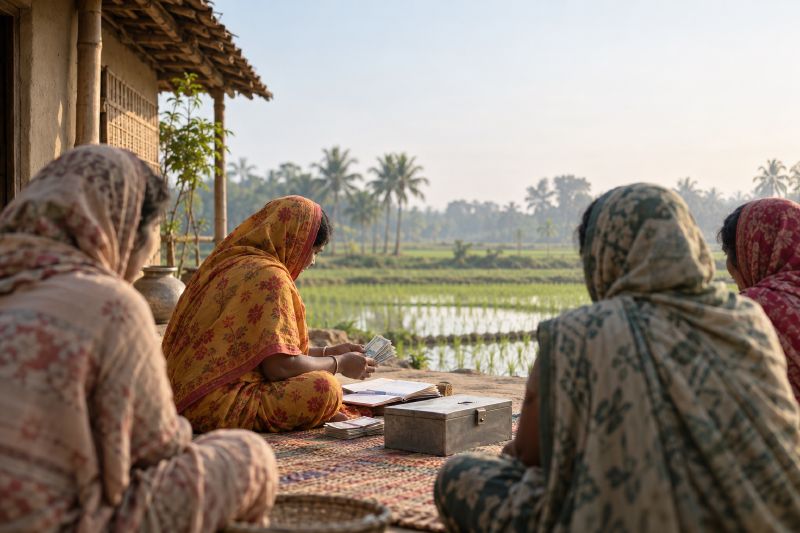
Women. By 2013 Grameen had 8.4 million borrowers in Bangladesh, and 96 percent of them were women, according to the New York Times. Prospect also described the bank’s small loans as going mainly to women, with more than $500m lent each year and a staff of 25,000.
The borrowers also own the bank. Yunus said it was 97 percent owned by its borrowers, who held nearly $1 billion in savings accounts with it.
How a professor came to banking
Yunus was born in Chittagong in 1940, the son of a goldsmith. He studied economics at Dhaka University, then took a PhD at Vanderbilt University in Tennessee on a Fulbright scholarship, finishing in 1970. He came home to a newly independent Bangladesh in 1972 and was soon running the economics department at the university in Chittagong. The famine reached him there.
A model copied, and argued over
Lenders across the developing world copied the Grameen model, and in 2006 Yunus and the bank shared the Nobel peace prize. By 2013 microfinance providers worldwide reached about 200 million clients, the New York Times reported.
Not every copy kept the original purpose. Yunus conceded that some lenders had drifted from the aim of getting people out of poverty. He argued that a flawed imitation did not prove that lending without collateral to the poorest was itself flawed.
His own government was less sure of him. The New York Times reported that his work had come under attack from the government of Bangladesh in the two years before its interview. In the same year, the US Congress gave him its Congressional Gold Medal for his efforts against global poverty.
Yunus has since pushed the idea further, into what he calls social business: companies that make a profit but pay no dividends, returning investors only what they put in. Grameen Danone, a yoghurt venture for rural children, made its first pots in January 2007.