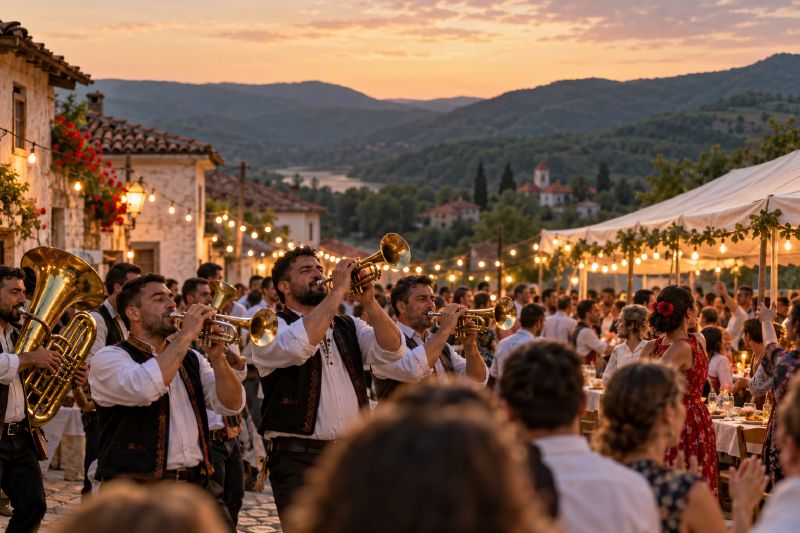
Guča is a contest as well as a party. Bands from across Serbia compete for the Golden Trumpet, and the BBC reported that winning usually brings a recording contract and months of wedding bookings. Around that contest, a village of a few thousand people fills with brass for the best part of a week.
The numbers are the first surprise. The festival’s organiser, Adam Tadic, told the BBC he expected about half a million people, in a village normally home to 3,000. The Guardian gave the crowd as more than 300,000 and the population as 2,500.
A folk contest the state set up
The festival’s official name is the Dragačevo Trumpet Festival, and the BBC called it the biggest of its kind in the world. Sources disagree on its age. The BBC said it had run every year since 1961, while the Guardian dated it to the late 1960s.
The Guardian gave the motive. It reported that Tito’s Yugoslavia, keen on folklore, saw people leaving the countryside for the cities and the village brass tradition thinning out. An annual competition, with a prize for best orchestra and a Golden Trumpet, was the answer.
The sound, and who plays it
Balkan brass grew out of the meeting of the Ottoman and Austro-Hungarian empires, and the region’s Roma musicians gave it its drive, according to the Guardian. The BBC named Roma bands as the festival’s most popular performers.
These bands are not festival acts first. Across the southern Balkans they play christenings, weddings and funerals. The Guardian traced the music’s wider fame to Emir Kusturica’s films of the 1990s, including Time of the Gypsies, Underground and Arizona Dream.
The contest has a clear shape. Friday brings an opening concert by past winners, Saturday the official celebrations, and Sunday the Golden Trumpet final, with heats held earlier in the year around Serbia. The Guardian described Boban Marković as the bandleader who had won the trumpet more often than anyone.
Where the money is
The main stage is only part of it. The BBC found the real business in the bars and catering tents, where bands play straight at the diners. Listeners show approval by pressing dinar notes onto the musicians’ foreheads.
That pays. Members of the Vruc Vetar Orchestra made about $600 each at one festival, the BBC reported, double the average monthly wage in Serbia and Montenegro at the time. Rumoured consumption over a few days runs to three tons of bread and three million litres of beer.
What the regulars worry about
Not everyone thinks the growth has helped. Dragan Antic of the Vruc Vetar Orchestra told the BBC that many players now come only for the money and that standards had fallen.
Serbia’s tourism officials, meanwhile, had begun putting Guča in their brochures beside monasteries and icons. The BBC read it as a lighter image of Serbs than the one the 1990s wars had left behind. The Guardian’s description of the party was less diplomatic: no curfew, few rules and dancing on tables until midnight on Sunday.