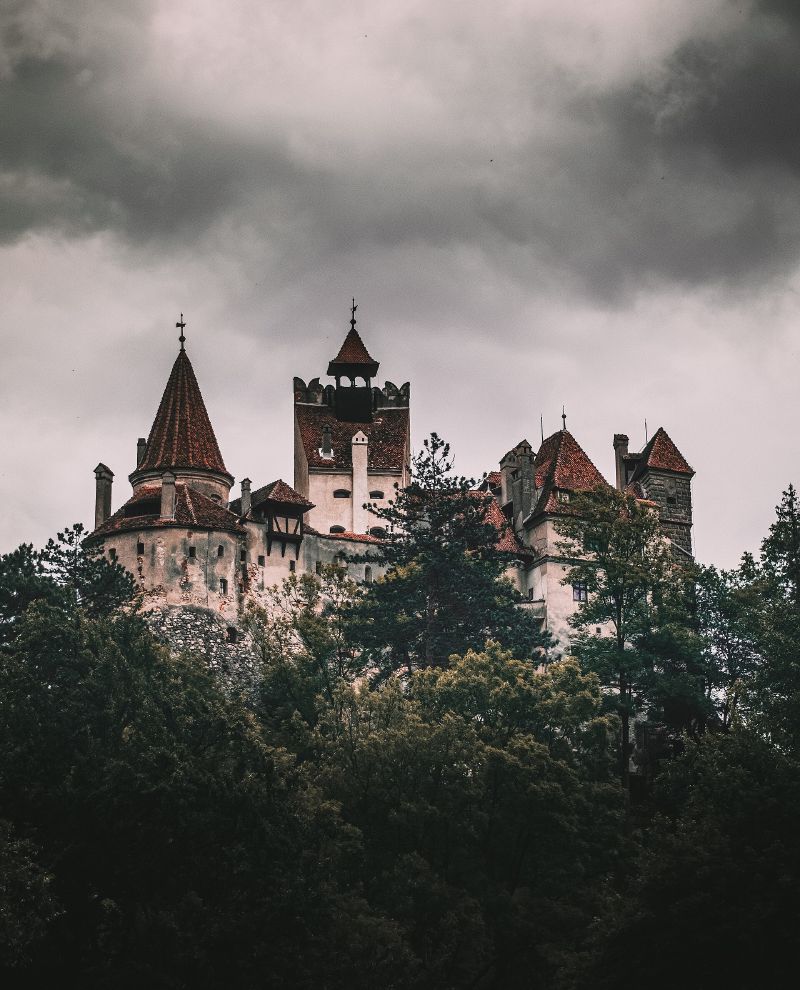
A weird boy in Guadalajara
more
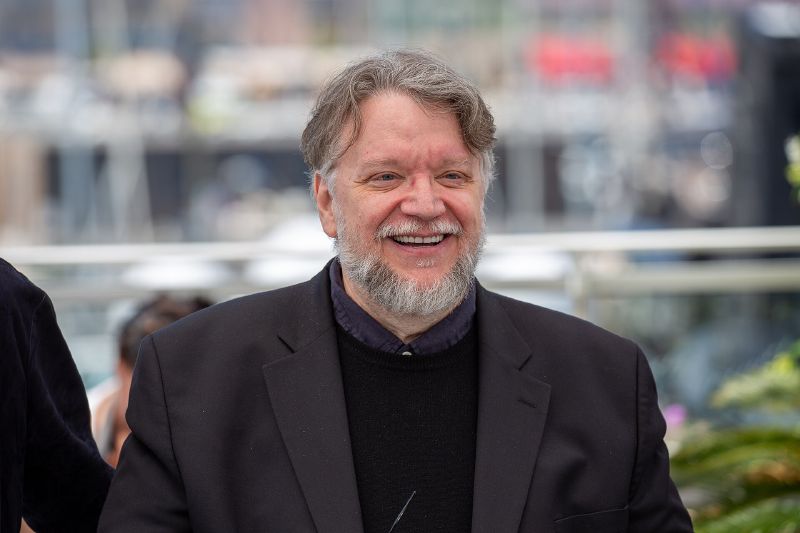
Guillermo del Toro is a Mexican director with 13 feature films behind him, Oscars for Best Picture and Best Director, and one novel he spent more than 50 years trying to film. The novel is Mary Shelley’s Frankenstein. He finally made it for Netflix in 2025, and he says pieces of it sit inside all 13 of his films.
That claim makes more sense once you meet the boy. Del Toro was born in 1964 and grew up in Guadalajara, where he says he started experiencing life through books. He describes himself as a “strange, pale creature that liked to read.” At seven he was a hypochondriac who studied medical manuals and told his mother he had terminal cancer.
His father’s library held books sold as children’s classics, among them Dr Jekyll and Mr Hyde and The Picture of Dorian Gray. Del Toro points out that Stevenson and Wilde were writing about profound subjects all the same. At eight he began making films on his father’s Super 8 camera. Three years later, at 11, he found Frankenstein.
He had met the monster first on screen. He saw James Whale’s 1931 film before he read the book, and he credits Whale’s version with making him want to be a filmmaker. In the novel, the part that held him was the creature’s path through the world. He later said the story gave him a vehicle for talking about himself and his dad.
Television supplied the rest of his education. Del Toro says the Universal monster films, James Cagney, Humphrey Bogart and the Mexican cinema of the golden era all reached him on a TV set. He was raised Catholic, and that shows up on screen too. His Frankenstein is rich in Catholic imagery.
Monsters gave him a kind of permission. “Monsters tell you, look, it’s okay to be you,” he told CBS News. He named Boris Karloff, Godzilla and the Creature from the Black Lagoon as the figures who told him so, and he called monsters “patron saints of imperfection.”
The theme that grew out of that shelf is fathers and sons. On The Hollywood Reporter’s Awards Chatter podcast, he said Shelley’s myth articulates what he believes about fathers and sons, the Bible, forgiveness and acceptance. His own father won the Mexican lottery. In 1998 kidnappers took him and held him for more than two months until a ransom was paid, and he did not speak about it until close to the end of his life. Del Toro has said that parts of Frankenstein are direct moments from his life as a son and as a father, including things he worked out during that time.
Del Toro came up in the business alongside Alfonso Cuarón and Alejandro González Iñárritu, and the three are known as “The Three Amigos.” On the same podcast he also talked about his attraction to stop-motion animation.
From Cronos to Hollywood and back
Del Toro’s first feature, Cronos (1992), arrived when he was 28. Variety calls it the blueprint for everything he made afterwards, and Empire says he earned his auteur spurs with it.

more
The film follows an elderly antiques dealer, played by Federico Luppi, who finds a golden device with a living creature inside it. The device gives its owner a thirst for blood. A terminally ill industrialist wants it too, and he sends his nephew after it. The nephew was Ron Perlman, who became the first of many repeat collaborators and has since appeared in nearly all of del Toro’s films. Empire reads the film as a Gothic tragedy in the Frankenstein mould, with a tender bond between the old man and his granddaughter at its centre.
Hollywood came next, and it went badly. Mimic (1997) was a creature feature from Miramax about genetically modified insects loose in the New York subway. Del Toro clashed with the studio heads Harvey and Bob Weinstein, nearly lost the job, and never got final cut on the theatrical release. He later called it “a horrible, horrible, horrible experience.” A Director’s Cut largely restored what he had intended. Indiewire’s verdict is that its storytelling is bog standard.
He recovered with a Spanish-language film. Consequence reports that del Toro jokes about The Devil’s Backbone (2001), a Spanish-language ghost story, as his real first film. It is set in an orphanage during the Spanish Civil War. Pedro Almodóvar produced it. An unexploded bomb sits in the courtyard with a ribbon tied to it. The ghost is a murdered boy whose head wound leaks, and The Wrap calls the image one of the most iconic in modern horror. Variety adds that you could make a convincing case for putting the film much higher in a ranking of his work.
Del Toro says it changed how he shoots. He told Dazed that he has tried never to use a static camera since The Devil’s Backbone, because the camera should be curious, like another character trying to look at things. He puts his last tripod at about 2001.
Blade II (2002) followed, from a script by David S. Goyer and with Wesley Snipes as the vampire hunter. Del Toro gave the sequel baroque monster mayhem and a new mutated enemy, the Reapers, whose jaws open into tentacled mouths. Variety says it could only ever be as good as its script, and that both Blade II and Mimic show less of their director than they might have.
Consequence argues that the two films together show him finding his voice. Del Toro says they are so different because one is very personal and minimal, and the other is “a six-pack and a pizza.” Consequence reads his later career as the work of joining that pious side to the pop side.
Next came Hellboy (2004), an adaptation of Mike Mignola’s comic about a monster who fights monsters. The Wrap sees del Toro conceding to studio notes, and points to the invented character Myers as a sore thumb. The film’s biggest triumph, in that review’s view, is Perlman. Hellboy II: The Golden Army (2008) gave del Toro more creative control. It was his first film after the success of Pan’s Labyrinth, and Variety says it was the first Hollywood production of his to feel fully like his own.
The films that define him
Two big rankings of del Toro’s work agree on the winner. Empire ranks Pan’s Labyrinth (2006) first, and Gold Derby calls it the crowning achievement of his career. It is a fable and a war chronicle at once. Ofelia is a bookish girl who escapes into a magical realm to avoid her stepfather, a sadistic army officer in the falangist Spain of 1944. The faun and the Pale Man are both played by Doug Jones. Gold Derby argues that neither creature is as frightening as the fascism Ofelia hopes to break away from.
The film won Oscars for art direction, cinematography and makeup. In the races for original screenplay and foreign language film, it lost to Little Miss Sunshine and The Lives of Others. Variety counts it among the “deserved Oscar winners” that came after del Toro’s independent horror films.
The Shape of Water (2017) took the Academy’s top prizes. Gold Derby counts 13 nominations and four wins, including Best Picture and Best Director for del Toro. The idea began with his wish to remake Creature from the Black Lagoon, with one change. In his version the creature gets the girl. Sally Hawkins plays a mute cleaner in an early 1960s facility in Baltimore, and Doug Jones plays the aquatic man the government has captured. The Wrap calls it a film about love, and especially del Toro’s love of monsters and of cinema.
Not everyone agrees. Indiewire finds the film weightless and the creature “more of an idea than an actual character,” and it ranks the film among his lesser works. The Wrap says the film’s chief aim was to make you swoon, while Indiewire wanted something stranger.
Indiewire says Crimson Peak (2015) is the only time del Toro made a truly gothic film. It was marketed as horror, but he always pitched it as a gothic romance, and Empire describes it as Jane Eyre with actual ghosts. Tom Hiddleston plays a baronet who takes Mia Wasikowska’s young American writer to his decaying home, Allerdale Hall, where his sister, played by Jessica Chastain, waits. Red clay oozes through the floorboards. An earlier version of the film had Benedict Cumberbatch and Emma Stone attached. Gold Derby calls it his most underrated film and says it was largely ignored on release before it found a second life. Indiewire says it might be his most visually stunning.
Nightmare Alley (2021) might be the first del Toro film with no actual monsters, as Empire puts it, although it is full of beasts. It reworks the 1947 neo-noir about a carnival con man who rises to a mind-reading act in New York, with Bradley Cooper in the lead and Cate Blanchett as a psychologist. The Academy nominated it for four Oscars, including Best Picture, which gave del Toro his fifth nomination. The visuals were striking enough that a black-and-white version was released in January 2022. Variety found the ending near-perfect.
Guillermo del Toro’s Pinocchio (2022) is an animated adventure. When del Toro first talked to Netflix, he named it and Frankenstein as his two dream projects. He set the story in Mussolini’s Italy so that viewers would see it was not the Pinocchio they knew. Empire ranks it fourth among his films. The Wrap lists it among the Oscar winners.
The thread that runs through his films
Critics who write about del Toro keep finding the same few ideas. TheWrap lists them: the tension between creator and creation, outsiders shunned as freaks, beauty in what society finds ugly, and strained fathers and sons. Del Toro agrees about the last of these, and Consequence reports that Frankenstein is where he is done with father figures.
The fathers are easy to spot once you look. Consequence names Blade II, The Devil’s Backbone, Hellboy and Pinocchio as father stories, and del Toro adds Pacific Rim, with its bond between Pentecost and Mako Mori. He calls Pinocchio the story of a prodigal father asking forgiveness of his child. In Blade II, he says, he practised on the monster Nomak, who meets the man who made him and asks why he was made this way and then cast aside.
The monsters are the other constant. Del Toro says he has been giving the Creature life through makeup design since Cronos, and he names The Devil’s Backbone and Blade II as later steps. His own list is longer. He says all 13 of his films hold elements of Frankenstein. Cronos deals with eternal life, and the creature in The Shape of Water shares the same essence as the woman who recognises herself in it. Dazed also spots a “mad scientist” surgeon in Cronos and a quip about Frankenstein in Mimic.
The line behind his Frankenstein, he says, comes from Crimson Peak, where Jessica Chastain’s character says that love makes monsters of us all. He calls Crimson Peak the Apollo 11 to Frankenstein’s moon landing, and says he thinks The Shape of Water was a big rehearsal.
Monsters, in his view, are for everyone. “We are all creatures,” he told CBS News, adding that the world tells you not to be one, but in reality everybody is weird in some way. Gold Derby’s reading of his Oscar winner agrees. It says del Toro has often used monsters as a metaphor for misfits, and that The Shape of Water is an ode to society’s outcasts.
The collaborators who build his worlds
Del Toro makes his films with a repertory company. Ron Perlman has been in nearly all of them since Cronos, and Variety says the pair’s collaboration began a decade before Hellboy and continues. The Wrap credits Perlman with the best thing in Hellboy, a mix of gruff determination and the heartache of being an outsider. Doug Jones, who plays the faun and the Pale Man in Pan’s Labyrinth and the fish man in The Shape of Water, is another regular.

more
Behind the camera, the loyalty runs just as deep. For Frankenstein, del Toro gathered costume designer Kate Hawley, production designer Tamara Deverell, prosthetics artist Mike Hill and composer Alexandre Desplat. Cinematographer Dan Laustsen has shot his films for the past decade.
The Hollywood Reporter describes the way they work together. Del Toro says there is no eye candy, only “eye protein,” and that each department should tell the story through pictures rather than build a look. Laustsen says del Toro draws loose but specific concept sketches of colour palettes while he writes the screenplay, so everyone starts at the same level. Del Toro told Mike Hill that he would not make Frankenstein without him. In his opinion, Hill is one of the top three monster makers alive.
The practical work is part of the pitch. Consequence describes an early scene in which a half-rebuilt corpse plays catch with Victor Frankenstein. It was a real puppet worked by several puppeteers, with radio control for the eyes and mouth, and the ball was thrown and caught in camera. Oscar Isaac and Jacob Elordi found a full-size 19th-century Royal Danish Navy ship in a car park on their first visit to the set, mounted on gimbals. CBS News watched him hover over a model of the creature. He says he thinks the team made the most extensive anatomical assembly of a monster in the history of cinema.
Actors bond with him. Isaac says the two spoke only in Spanish, and he came to see the sets and costumes as Victor’s mind. Elordi says he and del Toro shared a language right away. Del Toro cast Elordi nine weeks before production started, after Andrew Garfield, his first choice for the creature, left the project. “Andrew left and everybody panicked,” he says, and he calls Elordi the miracle that followed.
Friends in the trade matter as well. Pedro Almodóvar produced The Devil’s Backbone. David Cronenberg is a good friend, and del Toro still quotes his advice.
Sometimes the partners are studios. Del Toro told Dazed that Netflix’s Ted Sarandos asked for his bucket list, and he said Pinocchio and Frankenstein. Sarandos said yes to both. An earlier attempt at Frankenstein came after Hellboy II, with a proof-of-concept video for Universal, but the creature in that version was asymmetric, closer to the figure in the illustrated book.
Frankenstein and what comes next
Frankenstein is the film del Toro spent half a century preparing, and its release in 2025 brought rave reviews, a huge audience and at least one sharp dissent. It played in cinemas for three weeks and then arrived on Netflix on 7 November. It topped the streamer’s global chart on debut. In its first three days in America it was watched for 1.26 billion minutes. It cost around $120 million.
Del Toro moved the story to Victorian London and split it in two. The first half follows Victor Frankenstein, played by Oscar Isaac, a surgeon who reanimates dead body parts. The second follows the Creature, played by Jacob Elordi, as he discovers emotions and learns he cannot die. Victor’s childhood is abusive, and del Toro says the film is a tool for talking about how people pass on pain without noticing and how the cycle can stop. Consequence quotes him calling Victor and the Creature “a single person.”
The look changes with each part of the story. Del Toro told Dazed that the Frozen North sequences use blue, white and gold, the childhood section uses black, white and red, and Victor’s story uses every colour except red. The Creature’s section turns to straw, moss and wood, and the camera becomes contemplative. There is not a single static shot in the film, he says.
He also took care to honour the book. Del Toro says an adaptation has to let a reader feel the spirit of the novel while still surprising them with something new. The Hollywood Reporter notes that he set out to put on film many moments in the book that had never been filmed. He wrote the script in chapters, to match the structure of Shelley’s novel.
Reviews were strong. The Hollywood Reporter says it earned 85 percent on Rotten Tomatoes and that some feel it is his greatest film. Del Toro received best director nominations from the Critics Choice, Golden Globe and Directors Guild awards. Consequence named him its 2025 Filmmaker of the Year. Indiewire disagrees. It calls the film emotionally inert and the most disappointing of his career, though it praises Elordi’s performance.
What does a director do after the work of a lifetime? Del Toro says he has had a massive postpartum period after the film, almost a year of it, where a film normally gives you a week. His friend David Cronenberg’s advice is to scare yourself into being young again by making something very different.
Del Toro told Consequence that he is now interested in the other things he has been in life: married, divorced, a friend and a brother. He will not promise a completely different next film. He quotes Hitchcock’s line that repetition is style, and adds that you can still try to move away from it.
Cinema itself is the other open question. Netflix funded Frankenstein and gave it a theatrical run, and del Toro still believes viewers should have the option of seeing films in a theatre. Asked about Netflix winning the bidding war for Warner Bros., he said it was above his paygrade and too early to speculate. He points out that many of the films he discovered as a boy were on TV, but he says nobody should try to see Vertigo or Lawrence of Arabia on one.
Variety once measured his place in the trade by counting on one hand the foreign-born directors who started with independent horror at home, reached Hollywood blockbusters and Oscar winners, and kept their sensibility intact.
Starter guide
Watch Pan’s Labyrinth first, then work through the rest in any order. Two trusted publications put each of these films on a list of the best or greatest.
- Pan’s Labyrinth (Guillermo del Toro, 2006). GamesRadar+ calls it a dark fantasy classic on its list of the greatest monster movies, and The Hollywood Reporter’s critics name it among the 50 best films of the 21st century.
- The Devil’s Backbone (Guillermo del Toro, 2001). Variety names it among the 100 best horror films, and IndieWire’s list of the 100 best horror movies calls it “a pivotal piece” of his work.
- The Shape of Water (Guillermo del Toro, 2017). GamesRadar+ puts it among the greatest monster movies, and The Hollywood Reporter’s critics put it on their lists of the best films of 2017.
- Cronos (Guillermo del Toro, 1992). Empire and GamesRadar+ both put his first feature on their lists of the best vampire films.
- Blade II (Guillermo del Toro, 2002). GamesRadar+ calls it undoubtedly the best of the Blade trilogy and lists it among the best vampire films. IndieWire also lists it among the best vampire movies ever made.
- Hellboy II: The Golden Army (Guillermo del Toro, 2008). Empire lists it among the greatest superhero movies, and IndieWire’s list of the best monster movies of the 21st century calls it his best and most beautiful film.
- Guillermo del Toro’s Pinocchio (Guillermo del Toro, 2022). Sight and Sound named it among the 50 best films of 2022, and Empire put it on its list of the year’s best.
- Frankenstein (Guillermo del Toro, 2025). Empire put it on its list of the best films of 2025, and IndieWire’s critics survey named it among the 50 best films of the year.