Nobody on a 1940s Hollywood set thought they were making a “film noir”. Little White Lies points out that no film was produced under that label, which critics pinned on a run of similar pictures after the fact. Edward Dmytryk, one of the directors who made them, once had a student tell him he had invented film noir. He replied that he hadn’t the faintest idea what it was.
more
This guide covers where the style came from, who built it, the films that fixed its rules, how it travelled and where it stands now. It ends with eight films to watch first.
Where film noir came from
The name is French. Nino Frank, an Italian-born critic writing in France, was the first to describe these American crime pictures as film noir.
The dates are still argued over. Purists, as Slant Magazine puts it, start the cycle in 1941 with John Huston’s The Maltese Falcon and close it in 1958, as Marlene Dietrich walks away down a dark road at the end of Orson Welles’s Touch of Evil. Slant itself thinks the borders are softer than that, because the form kept adapting to whatever time and culture made it.
The American Society of Cinematographers dates the first full noir a year earlier. Noir touches had turned up in older films, it says, but RKO’s Stranger on the Third Floor (1940), shot by Nicholas Musuraca, was the first to build a complete grammar for the style out of expressionist vocabulary.
Why then? MovieMaker starts with the decade before. In the 1930s, when American films first came to dominate world screens, gangster films, horror, historical romance and thrillers led the field. In the 1940s the war soaked into everyday life, and a mix of urban cynicism, bleak stories and heavy shadow arrived on screen with it. The ASC reads noir as a record of social discontent on both sides of the Second World War.
The books came first
If the style has one literary parent, MovieMaker argues, it is the detective fiction of Dashiell Hammett and Raymond Chandler. Both writers leaned left at a time when Hollywood’s politics leaned hard the other way.
James M. Cain supplied the plots that frightened the censors. He wrote Double Indemnity in 1936, and Hollywood judged it unfilmable under the Hays Code, as they had his The Postman Always Rings Twice. Both stories turn on a man and a married woman who plot to kill her husband.
The look came from Europe
Many noir filmmakers, from Fritz Lang to Robert Siodmak, had roots in German Expressionism. They carried its engulfing shadows and menacing cityscapes to Hollywood and used them to show urban anxiety.
Little White Lies goes further. It calls noir an unexpected consequence of the Holocaust, made by Jewish émigrés such as Billy Wilder, Otto Preminger and Siodmak who fled Europe for Los Angeles. Their expressionist habits met the hardboiled American pulp fiction of the day, and the result carried a heavy fatalism. While Wilder was making Double Indemnity, he did not know what had become of his mother, his stepfather or his grandfather.
Money shaped it too
Dmytryk gave MovieMaker a blunter account. The style, he said, grew out of practical limits on time and money, though the crews were also chasing a mood.
When Film Forum ran a six-week season of “B noir” between May 5 and June 15, it showed 70 films from the 1940s and 1950s. Slant’s guide to the season argued that the Poverty Row studios were a richer and more dangerous place to spend an evening than Casablanca.
A genre, or something else?
Paul Schrader’s essay “Notes on Film Noir”, published in Film Comment in 1972, argued that noir belonged only to wartime and postwar Hollywood. He also argued that it was not a genre at all. The question has stayed open since. Some critics prefer to call noir a style, a movement or a discourse, though most agree on its features. Schrader put the weight on how the films looked, at a time when criticism was split between auteur theory and social value.
Because the label arrived afterwards, its edges are loose. Little White Lies counts George Cukor’s Gaslight (1944) as noir for its low-key lighting and brooding score. Its crime is no heist or contract killing. It is a husband’s slow emotional abuse of his wife.
Who made the first noirs
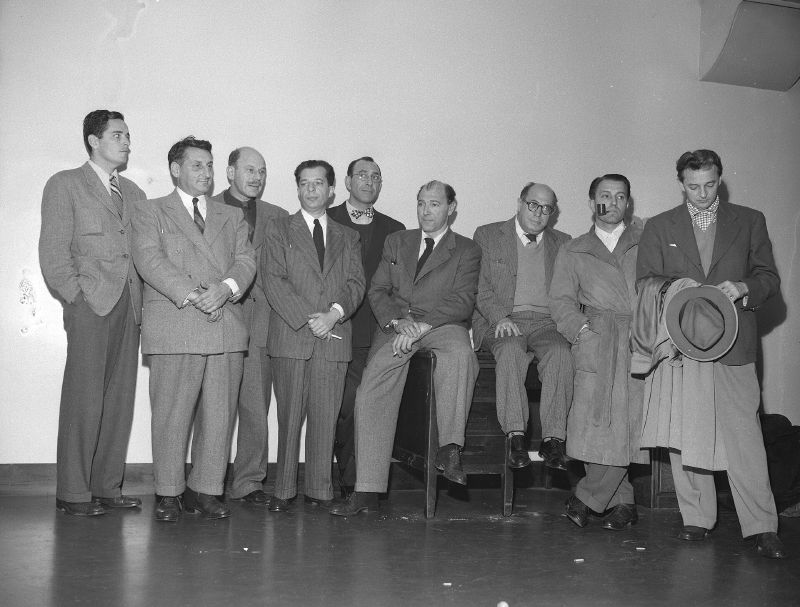
Eddie Muller, the founder of the Film Noir Foundation, has a one-line definition. Noir, he says, is the flip side of the all-American success story.
more
The directors who set the tone
John Huston made his directing debut in 1941 with The Maltese Falcon, which MovieMaker calls stunning. Humphrey Bogart played its detective, Sam Spade. MovieMaker groups it with Frank Tuttle’s This Gun for Hire (1942) as Hollywood’s first steps into the paranoid mood that later got the noir name.
Billy Wilder followed in 1944 with Double Indemnity, his third American film. He wrote it with Raymond Chandler, and he insisted that its insurance-salesman killer should not look like a villain, so he cast an everyman in the part. Little White Lies calls the result the Platonic ideal of a film noir.
Edward Dmytryk’s route in ran through the cutting room. He started in 1923 as a messenger boy at Famous Players-Lasky, the company that became Paramount, and worked as an editor for Leo McCarey and George Cukor before he directed. His Murder, My Sweet came out the same year as Double Indemnity. Then came Crossfire (1947), shot entirely at night and recognised as the first Hollywood film to take on racial bigotry. It earned five Academy Award nominations, including best picture and best director.
Dmytryk’s own story turned noir that same year. He was one of the Hollywood Ten, the writers and directors who refused to answer the House Committee on Un-American Activities in 1947, and he went to jail for contempt of Congress. In 1951 he came back from England and testified in a second round of hearings, incriminating some former colleagues. The industry then took him off its blacklist. He directed 57 features before he left to teach at the University of Southern California’s film school in the 1970s.
Howard Hawks made The Big Sleep, which MovieMaker treats as one of the foundations of the genre. Bogart played Chandler’s detective Philip Marlowe. After the first cut was screened in 1945, the producers reshot scenes to play up the chemistry between Bogart and Lauren Bacall, and cut a long stretch of exposition to make room.
Robert Siodmak made The Killers, a Hemingway adaptation that Muller calls the Citizen Kane of the genre. Charlton Heston hired Orson Welles for Touch of Evil, and Welles spent ten days rewriting Whit Masterson’s novel Badge of Evil. He then lost control of the final edit, as he had on many of his films.
The cameramen who made it dark
The look owed as much to cinematographers as to directors. Nicholas Musuraca lit Jacques Tourneur’s Out of the Past with what IndieWire calls smoky shadow play, after shooting Tourneur’s Cat People.
John Alton is the name critics return to. In his 1972 essay, Paul Schrader called Alton “the greatest master of noir”, a cameraman who could re-light Times Square at noon if he had to. Schrader compared him with the German cameramen Fritz Arno Wagner and Karl Freund, and argued that Alton adapted their Expressionist methods for an audience that wanted realism.
Alton worked fast and cheap. His run of low-budget films at Republic Pictures gave him, by his own admission, a reputation for speed. Many of his films came from small studios long since closed, such as Eagle-Lion, Monogram and Republic. The Pacific Film Archive in Berkeley hunted out prints of them three years after Schrader’s essay, and its touring retrospectives spread his name. Haskell Wexler said Alton’s book Painting with Light gave him his first visual comprehension of what Hollywood cameramen did.
The B-movie crews
Many noirs were made at the bottom of the bill. Slant’s guide to Film Forum’s “B noir” season named the directors who worked there, among them Joseph H. Lewis, Phil Karlson, André de Toth, Edgar G. Ulmer, Robert Wise and Richard Fleischer. The critic Manny Farber praised the “unspectacular, unpolished ‘B’” picture made by a few people with skill and conviction, and Slant counts Samuel Fuller as one of them.
Anthony Mann worked there too. His The Tall Target (1951) turned the 1861 plot to kill Abraham Lincoln on a train into a noir, and Slant says it gave the next year’s The Narrow Margin its blueprint.
The heirs in Paris
The French took the form up next. Jean-Luc Godard’s Alphaville (1965) sends Eddie Constantine’s trench-coated detective Lemmy Caution into a city run by a computer. Bright Wall/Dark Room argues that the film looks forward rather than back, and that it laid down the template for cyberpunk.
The films that set the rules
Mark A. Vieira’s book Into the Dark offers a useful map of the classic run. It covers 82 films from 1941 to 1950 and sorts them into five moods: Shadowed (1941 to 1943), Cynical (1944 to 1945), Alienated (1946 to 1947), Obsessed (1948 to 1949) and Doomed (1950).
Shadowed, then cynical
In the early 1940s Hollywood mined the hardboiled bestsellers of Dashiell Hammett and Graham Greene, and Humphrey Bogart and Alan Ladd became the faces of the new tough talk.
Then the crime picture climbed the bill. Vieira traces its rise from the lower half of a double feature to the status it reached with Double Indemnity. In that film Barbara Stanwyck’s wife draws Fred MacMurray’s insurance man into a plan to kill her husband, while his sharp-eyed boss, played by Edward G. Robinson, closes in. Neff later wonders how he could have known that murder would smell of honeysuckle.
Otto Preminger’s Laura came out the same year, with a detective who falls in love with a dead woman. At the cheap end, Edgar G. Ulmer’s Detour cost about a tenth of an average studio crime thriller. Ulmer joked that he was looking for absolution for all he had done for money.
Alienated
The postwar films grew stranger. Lady in the Lake shot its murder mystery through a first-person camera, and audiences did not take to it. Edmund Goulding later admitted he had no idea what he was going to shoot when he walked onto the set of Nightmare Alley, yet critics hailed his film about a carnival con man as a masterpiece of bleakness.
Robert Siodmak’s The Killers (1946) borrows the shape of Citizen Kane. Burt Lancaster’s character dies in the opening minutes, saying “Once I did something wrong”, and an insurance investigator played by Edmond O’Brien rebuilds his life from other people’s memories.
Out of the Past (1947) appears on both of IndieWire’s noir lists. Robert Mitchum plays a former private eye running a petrol station in a small Northern California town until a gangster’s thug recognises him. In flashback he recalls being hired by Kirk Douglas to find Jane Greer, who had shot Douglas and taken $40,000 to Mexico. Daniel Mainwaring adapted it from his own novel, Build My Gallows High.
Obsessed
By the late 1940s the femme fatales grew more alluring: Yvonne De Carlo in Criss Cross, Rita Hayworth in The Lady from Shanghai. The villains grew more extreme too, from James Cagney’s psychotic gangster in White Heat to Raymond Burr’s sadistic pyromaniac in Raw Deal. MovieMaker’s reviewer calls Raw Deal’s prison escape and doomed love triangle a forgotten precursor to John Boorman’s Point Blank (1967).
Joseph H. Lewis’s Gun Crazy (1949) is the outlaw-lovers version, with John Dall and Peggy Cummins on a crime spree. Its best-known sequence is a robbery filmed in a single take from the back seat of the getaway car.
Doomed
Vieira closes on 1950, and on a shift few accounts of noir mention. A box-office report from that year found that actresses had made up half of the Herald’s top 25 money-making stars during the war. By 1950 there were four, and only two in the top 10.
Sunset Boulevard, which MovieMaker’s reviewer calls the most self-reflexive noir of all, turned the style on Hollywood itself through Gloria Swanson’s faded silent star. John Huston’s The Asphalt Jungle, from the same year, follows a last heist that goes wrong, and ends with Sterling Hayden leaving the city for the impossible ideal of a farm.
The studios and the last word
The critic Imogen Sara Smith argues that Columbia’s noirs stood out for avoiding cookie-cutter plots. Irving Lerner’s Murder by Contract (1958) carries a score for solo guitar by Perry Botkin, and Richard Wallace’s Framed (1947) opens on Glenn Ford careering downhill in a truck whose brakes have failed.
Most critics close the classic period in 1958. The film that closes it, Touch of Evil, opens with a three-and-a-half-minute single take of newlyweds crossing the border between the US and Mexico. Reviews were mixed on release, but it won best film at the Brussels World Film Festival.
How noir left Hollywood
Schrader’s claim that noir belonged to Hollywood alone has long since faded, and the study of noir made elsewhere has grown fast. One case is Argentina.

more
Buenos Aires
Argentine noir drew on talent from abroad. The Beast Must Die (1952) adapted a detective novel by Nicholas Blake, the pen name of the poet Cecil Day-Lewis, and was directed by the Uruguayan Román Viñoly Barreto. Viñoly Barreto went on to make The Black Vampire, a noir reworking of Fritz Lang’s M. The Bitter Stems (1956) came from a prize-winning 1954 bestseller by the Argentine journalist Adolfo Jasca.
Few English-speaking viewers saw these films for decades. New York’s Museum of Modern Art ran a retrospective of postwar Argentine noir in 2016, and Flicker Alley and the Film Noir Foundation have since released both films on disc.
Paris
French filmmakers took noir and set it to jazz. Bright Wall/Dark Room names Jules Dassin’s Rififi, Louis Malle’s Elevator to the Gallows, François Truffaut’s Shoot the Piano Player and Jean-Luc Godard’s Breathless as French noirs that put the music at the front. Godard’s Breathless (1960) also scrambled the old conventions, with jump cuts where a Hollywood noir would have used voiceover. Jean-Pierre Melville steeped his films in American imagery while keeping his characters unmistakably French.
Black American writers used the same frame to different ends. In Walter Mosley’s novel Devil in a Blue Dress, and in its film adaptation, the detective Easy Rawlins untangles a conspiracy that exposes the segregation of California in 1948.
Neo-noir
Back in America, the first neo-noir wave arrived in the 1970s. The Long Goodbye (1973) recast Philip Marlowe as a mumbling drifter in a hazy California, and Chinatown (1974) revived the form outright. These films often carried more explicit violence and sex than the originals.
Ridley Scott’s Blade Runner (1982) moved noir into the future, and the Coen brothers’ Blood Simple (1984) and Curtis Hanson’s L.A. Confidential (1997) stripped it back down.
Television, animation and games
Noir reached television early. John Alton’s He Walked by Night ends with a chase through the Los Angeles sewers that prefigured the one in Carol Reed’s The Third Man. The film also helped inspire the Dragnet series. Little White Lies argues that Double Indemnity, by making villains its protagonists, shaped crime cinema and prestige television for decades.
Animation came later. The French director Alain Gagnol says animated films did not exist in the film noir era, which made his project more interesting. He and Jean-Loup Felicioli built two hand-painted features on noir, A Cat in Paris and Phantom Boy. Gagnol names Raoul Walsh’s White Heat, Charles Laughton’s The Night of the Hunter and Robert Aldrich’s Kiss Me Deadly as influences.
Rockstar’s Grand Theft Auto games borrowed noir’s women along with its look. GTA 3’s Misty is thought to take her name from Clint Eastwood’s 1971 neo-noir Play Misty for Me, and Vice City’s Mercedes recalls Kathleen Turner in Body Heat (1981). GamesRadar+ argues that the series inherited noir’s limits as well, leaving its women as accessories in stories about men. Those limits date from the classic era, when strict censorship required that a woman who broke the rules be punished.
Where noir stands now
Noir keeps being declared revived. In 1995 MovieMaker pointed to Red Rock West, Leaving Las Vegas, Seven and Things to Do in Denver When You’re Dead as a fresh noir wave. That wave put Edward Dmytryk back in demand after 20 years out of the spotlight. “I guess they think I’m going to die any minute,” he joked about the flood of interviewers.
more
Back on the big screen
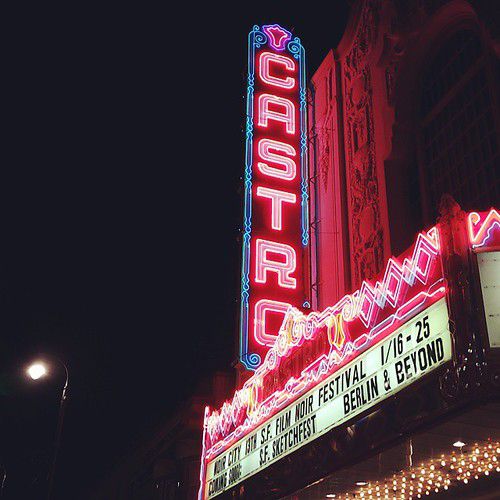
The old films have kept finding audiences in repertory cinemas. More than half the films in Film Forum’s “B noir” season could not be found on video at the time. Nearly all screened in freshly struck 35mm prints, including Lew Landers’s Man in the Dark in 3D and Joseph Losey’s remake of Fritz Lang’s M. San Francisco’s annual Noir City festival screens the classics alongside new films that borrow from them. At home, the Criterion Channel and Turner Classic Movies keep the back catalogue in reach.
The canon is still being argued over in print. Slant Magazine’s ranking of 100 noirs stretches past the classic cut-off to Samuel Fuller’s The Crimson Kimono (1959). IndieWire’s 30-film list puts Touch of Evil eighth.
Some films are still hard to see. Ida Lupino became the first woman to direct a film noir with The Hitch-Hiker in 1953. Her low-budget Outrage, a film about a woman’s life after an assault, still has no DVD or UK streaming release, though it can be found on YouTube.
Neon, rain and live streams
Recent neo-noir has swapped black-and-white shadow for colour. In Drive (2011), Nicolas Winding Refn replaced chiaroscuro with pink and blue neon and electronic music, and gave Ryan Gosling’s driver a white satin jacket that stands beside the classic fedora. Nightcrawler (2014) made its antihero a freelance videographer, played by Jake Gyllenhaal, who films crime across Los Angeles at night. Matt Reeves’s The Batman recast its hero as a detective in a rain-soaked Gotham, and gave the Riddler a live stream to broadcast his crimes.
The femme fatale changed too. Rosamund Pike’s Amy Dunne in Gone Girl (2014) manipulates the story itself, and controls what everyone else perceives. Noir has crossed into other genres along the way, from the science fiction of Ex Machina to the horror of Under the Skin and the animation of Spider-Man: Into the Spider-Verse. On television, True Detective and Fargo carry its despair and its flawed heroes over whole series.
What comes next
A recent arrival is Ray Gunn, Brad Bird’s animated noir for Netflix. The idea came from a misheard song. Bird thought the B-52s’ “Planet Claire” was a cover of Henry Mancini’s Peter Gunn theme, then decided it sounded more like a 1950s science fiction film. He wanted to picture the future as someone in 1939 might have imagined it.
Bird knows the word can put people off. Say noir, he argues, and people expect something serious, because the form has traditionally been about losers who end up losing everything.
Starter guide
Each film below appears on a trusted critics’ list or programme and has a second trusted source vouching for it. Start at the top.
- Out of the Past (Jacques Tourneur, 1947). Slant Magazine names it among the 100 best film noir movies of all time, and IndieWire among the 30 best.
- Gun Crazy (Joseph H. Lewis, 1949). Slant Magazine names it among the 100 best film noir movies of all time, and IndieWire picks it among its top 15 classic noir films.
- Double Indemnity (Billy Wilder, 1944). Little White Lies calls it the Platonic ideal of a film noir, and IndieWire names it among the 30 best film noir movies of all time.
- The Maltese Falcon (John Huston, 1941). Slant Magazine names it among the 100 best film noir movies of all time, and IndieWire among the 30 best.
- Laura (Otto Preminger, 1944). Slant Magazine names it among the 100 best film noir movies of all time, and IndieWire among the 30 best.
- Detour (Edgar G. Ulmer, 1945). Slant Magazine names it among the 100 best film noir movies of all time, and IndieWire picks it among its top 15 classic noir films.
- The Big Sleep (Howard Hawks, 1946). MovieMaker calls it one of the cornerstones of the noir genre, and Slant Magazine names it among the 100 best film noir movies of all time.
- In a Lonely Place (Nicholas Ray, 1950). Slant Magazine names it among the 100 best film noir movies of all time, and IndieWire among the 30 best.