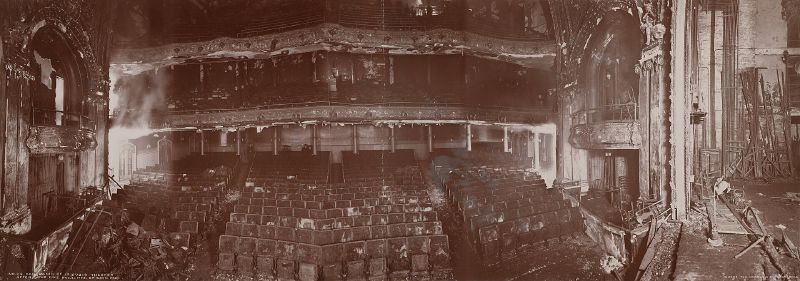
On the afternoon of December 30, 1903, fire swept through the Iroquois Theatre in Chicago and killed more than 500 people. The Library of Congress records that it caused national horror and outrage, and led to widespread reform of fire codes. The building was five weeks old and had been sold to the public as “absolutely fireproof”.
more
Firefighters reached the theatre about 15 minutes after the fire began. By then, the Library of Congress guide says, nobody inside was left to save.
A holiday matinee
The audience was mostly teachers, mothers and children on their holiday break, Smithsonian Magazine reports. They had come to see Mr. Bluebeard, a lavish musical comedy starring the Chicago-born comedian Eddie Foy. Smithsonian puts the crowd at more than 1,700, with standing ticket holders packing the aisles, and says almost a third of them died. The Library of Congress gives a lower figure of over 1,300 people inside.
The second act began at 3:15. A spark from a stage light caught nearby drapery, and a basic fire retardant did nothing to stop the flames spreading across the painted backdrops.
Why so few got out
Stagehands tried to lower a curtain meant to hold back fire, and it snagged. The Library of Congress guide describes the asbestos curtain as malfunctioning. Foy, in costume for his next scene, told the orchestra to keep playing and tried to calm the crowd.
The exits failed next. Curtains hid most of the doors, according to Smithsonian. Metal accordion gates, locked to stop people in the cheap upper seats from slipping down to dearer ones at the interval, blocked the stairs. The Library of Congress adds that several doors were barred and that others opened inward, so the crowd soon jammed them shut.
Then the cast opened a rear stage door to escape. The rush of air drove a ball of flame through the auditorium, killing many people in the balconies at once. Some who reached an upper fire escape found it had no ladder to the ground. Workmen in the building across the alley pushed planks over to make a bridge. A handful of people crossed it, but the first two who tried slipped and fell to their deaths.
A diner next door became both a morgue and a hospital.
Why the deaths drew so much anger
Many of the dead came from Chicago’s prosperous families. Robert Solomon of the National Fire Protection Association told Smithsonian that deaths among wealthier, well-connected people tend to draw more attention than the same toll among ordinary families.
Days after the fire, the Chicago Tribune listed the rules the theatre had broken. It had no adequate fire alarm or automatic sprinklers. Its exits were unmarked, and it lacked proper fire extinguishing equipment. Even the two large rooftop flues that could have vented the smoke and flame had been boarded shut. The paper demanded that every theatre in Chicago be made safe.
Blame proved harder to fix than the failures were to list. An official inquest looked at the owners, the architect and city officials, but so many people had failed in their duties that no one could be held solely responsible.
What changed afterwards
The lasting result was in the rules, not the courts. The Library of Congress says the tragedy led to widespread fire code reforms. Smithsonian says it changed how public buildings took responsibility for the safety of the people inside.
Missed History, a smaller history site, lists what those new laws required. Within months, cities made exit doors open outwards and required lit exit signs and fire suppression systems. Buildings had to cap how many people could be inside, and regular safety inspections became standard.
The death toll itself is still quoted differently. Missed History gives 602, while the Library of Congress says over five hundred.