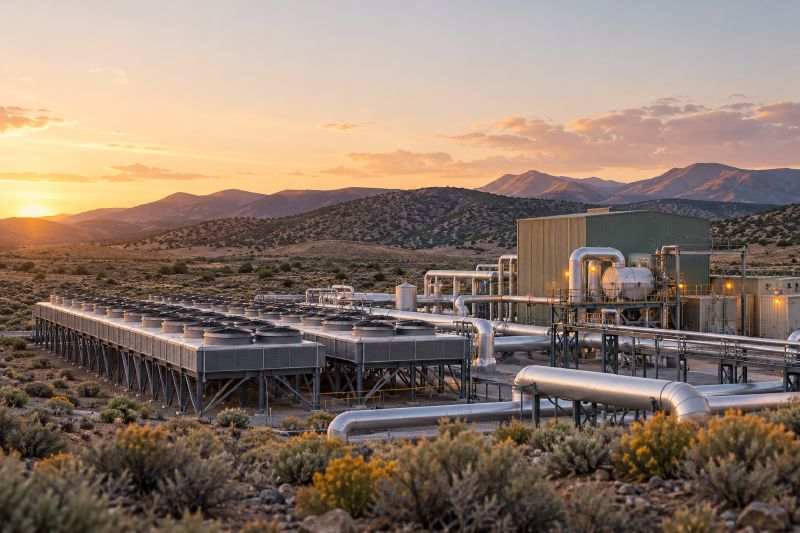
A binary-cycle plant never lets the underground water touch its turbine. It pumps hot water up from the reservoir through a heat exchanger, where the heat passes to a second working fluid with a much lower boiling point than water. That fluid turns to vapour, drives the turbine and generates electricity, and the water goes back underground.
The second fluid is the “binary” in the name, and it is what makes moderate heat useful. The modest heat of the geothermal water is enough to flash the working fluid to vapour.
How hot is moderate
The US Energy Information Administration puts binary plants on reservoirs of 200°F to 330°F, roughly 93°C to 166°C. Steam plants need far more. Dry steam and flash plants typically draw on reservoirs of 400°F to 650°F, between 3,000 and 10,000 feet down.
The US Department of Energy counts anything below about 150°C as a low-temperature resource. Under the right conditions, it says, a growing number of those can now generate power through binary-cycle technology.
How steam plants differ
A steam plant uses the reservoir’s own steam. A dry steam plant sends steam from the well straight to the turbine blades, then reinjects it as water once it cools. A flash plant separates the steam from hot water, then flashes the remaining water into more steam in low-pressure tanks.
Both need hot, shallow reservoirs, which are rarer. In return they produce more power and are more economically efficient than binary plants. The average US steam generator has a capacity of 23 megawatts, against 8 megawatts for a binary one.
Where binary plants are winning
Binary plants can work at cooler reservoirs, which gives them more places to go. That has shaped what America builds.
Of the 2,558 megawatts of geothermal capacity operating in the United States, 1,826 come from steam plants and 731 from binary plants, the EIA reported. More than 70% of it predates 2000, mostly steam. Of the 735 megawatts built since, nearly 90% is binary.
Every US geothermal plant sits in the West. California holds 91% of the steam capacity, and Nevada 65% of the binary.
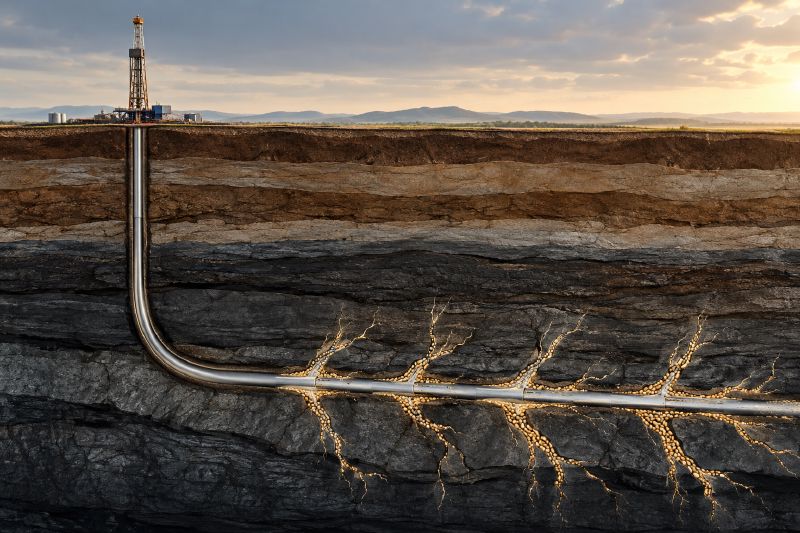
The next step is further out. Enhanced geothermal systems and closed-loop geothermal could open sites neither design can use now, with room for up to 500 gigawatts more capacity, though both are still experimental.