A breeder reactor leaves the fuel rod with more usable fuel in it than it started with. It does this with fast-moving neutrons, left unslowed, which convert the uranium an ordinary reactor cannot burn into new plutonium that can. Around 20 fast reactors have been built worldwide since the 1950s.
more
Most reactors running today cool their core with water, which also slows the neutrons released by fission. That slowing, called moderation, keeps the chain reaction going in low-enriched fuel. A fast reactor skips it. It cools the core with a liquid metal such as sodium or lead, sometimes gas or molten salt. The neutrons keep their speed.
Why the leftover uranium matters
About 95% of the fuel loaded into a water-cooled reactor is unused uranium.
In a fast reactor, the extra neutrons released by fission strike that leftover uranium. They convert it into new plutonium atoms that fission easily. Recycle the plutonium back into the core, and the reactor has bred new fuel out of what would otherwise have been waste. The US Department of Energy says a fast reactor recycling its fuel continuously could need 100 times less uranium than a water-cooled reactor for the same energy output.
What it does to the waste pile
The same neutrons that make new plutonium are also better at breaking apart the long-lived actinides that make spent fuel so hard to store. Left alone, those actinides can take hundreds of thousands of years to decay to natural background levels. A fast reactor tuned for the job can cut that to around 300 years, according to the Department of Energy. Recycling fuel this way could also cut the volume of nuclear waste by 90%.
GE Hitachi wanted to try the idea first at Sellafield, on the northwest coast of England. Britain holds close to 120 tonnes of plutonium there. That is more than the United States and Russia combined. Most of the world’s civilian plutonium stays locked inside highly radioactive spent fuel. Britain’s is different. Much of it was extracted decades ago as plutonium dioxide powder, intended for fast reactors that were never built. The Royal Society has said that form of the material “poses a serious security risk”.
Plutonium’s half-life is 24,100 years. A typical 1,000-megawatt reactor produces 27 tonnes of spent fuel a year, and none of it yet has a permanent home. David MacKay, then chief scientist at Britain’s Department of Energy and Climate Change, put a number on what the stockpile represents as fuel rather than as a liability. He said the stockpile held enough energy to power Britain’s grid for five centuries.
Not one machine, but one choice of settings
A fast reactor is not built to do only one job. Depending on how it is run, the same design can be tuned to destroy plutonium, to maximise the electricity it produces, or to produce more plutonium than it consumes. GE Hitachi Nuclear Energy proposed its PRISM reactor for Sellafield with plutonium destruction as the priority, according to Eric Loewen, the company’s chief consulting engineer at the time. Loewen said the design could “deal with the plutonium stockpile in Britain” inside five years. He added that the same design could generate power at the same time. The plant GE Hitachi proposed had a theoretical capacity of 600 megawatts.
The safety case rests on the fuel itself
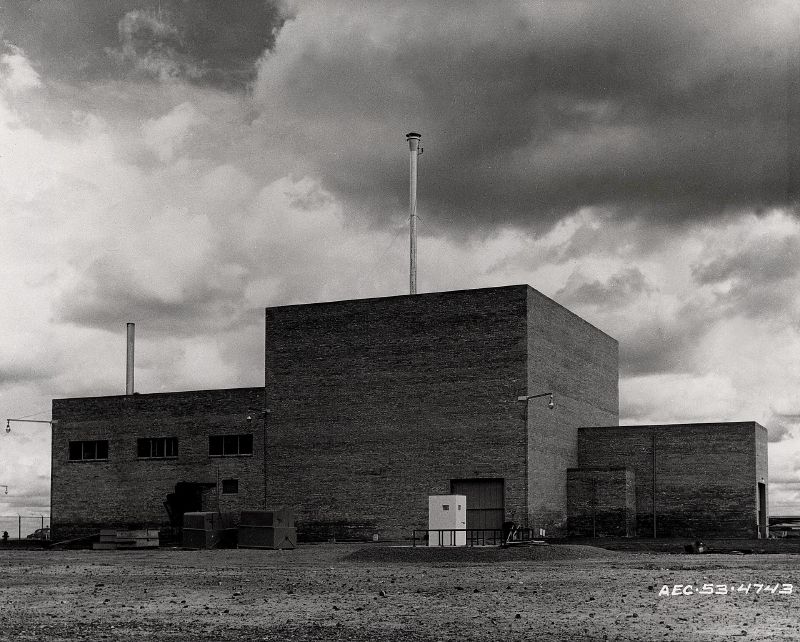
Fast reactors built in the United States have mostly used liquid sodium or lead as coolant. Both transfer heat efficiently and let the reactor run at low pressure, thanks to their high boiling points. The metallic fuel used in these designs carries a built-in safeguard: it expands when the core temperature rises unexpectedly, and that expansion slows the chain reaction on its own, without anyone having to act. The Department of Energy points to a 1980s test series on the Experimental Breeder Reactor II, which ran in Idaho from 1964 to 1994, as a demonstration that a fast reactor can shut itself down during a loss of cooling.
That reactor was one of several the United States built to test the idea. Experimental Breeder Reactor I, running from 1951 to 1963, was the world’s first reactor of any kind to generate electricity from nuclear power. Fermi-1, operating from 1966 to 1972, was the country’s first commercial fast reactor. The Fast Flux Test Facility ran at Hanford, Washington, from 1982 to 1992, and the Integral Fast Reactor programme ran at Argonne National Laboratory from 1984 to 1994, specifically to prove that spent fuel could be recycled this way.
Why it stalled
The idea is not new. Britain has not yet committed to building at Sellafield. Its Nuclear Decommissioning Authority has instead been studying which of several options to pursue for the stockpile, with no fixed date for a decision. In the United States, the Global Nuclear Energy Partnership launched under President George W. Bush to develop plutonium-consuming technology. President Obama then cut its funding. He also halted the planned geological repository at Yucca Mountain. “We are left with a million-year problem,” Loewen said. “Right now there isn’t a policy framework in the US for solving this issue.”
New fast reactor designs are now in development to meet rising demand for reliable power.