A census counts every person in a country against one fixed date, then a second survey goes back to check how many the first count still missed. In the United States, the Census Bureau’s checks put the 2020 national shortfall at about 1.1 million people out of a headcount of 331.5 million. The figure announced on the day is not the final word. It is the number statisticians spend the next two years testing.
more
Counting day and reference day are not the same
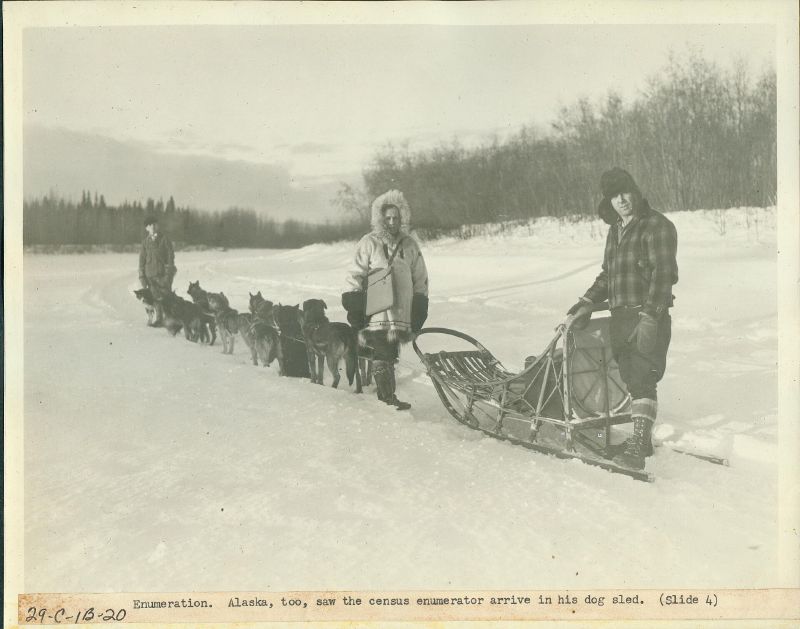
The date a household answers and the date its answers describe are not the same thing. The 2020 US census opened officially in the most remote part of Alaska on 21 January, and most of the country could not start replying until 12 March. Whenever a form was filled in, it asked who was living at that address on 1 April, the fixed reference day.
The UK’s household census works on the same logic, one form per household answered as of one day, a design in place since 1841. The form stayed paper-only until 2011, when England and Wales first offered an online option, and by 2021 the round ran almost entirely online.
Who the census actually counts
US federal law requires every resident aged 18 or over to answer, though one household member can complete the form for everyone else. The form counts anyone living in the country on census day, citizen or not, and that includes people without legal immigration status and green-card holders. It leaves out visitors on holiday or a short work trip. Each person is placed where they usually live and sleep: a prisoner at the prison, a service member deployed abroad at their home base inside the United States.
The UK’s form asks who lives at an address, and each resident’s age, gender and occupation. The US form does not ask about religion, political party or income.
How a country checks what it missed
The US Census Bureau checks its own headcount two separate ways. Demographic Analysis rebuilds the population from scratch, using birth and death records, immigration data and Medicare enrolment, with no reference to the census form itself. The Post-Enumeration Survey works from the other direction. It revisits about 10,000 census blocks and matches roughly 160,000 households against the original census records, to find who the count missed, who it counted twice, and who it should not have counted at all.
That survey leaves out anyone in a dormitory, prison or care home, along with the most remote parts of Alaska. Its result covers a household population of 323.2 million rather than the full count of 331.4 million.
The 2020 undercount, state by state
The two checks gave different answers. Demographic Analysis put the 2020 national shortfall at 0.35%, about 1.1 million people. The Post-Enumeration Survey put the household shortfall at 0.24%, roughly 780,000 people. A decade earlier, in 2010, the same method found no state with a measurable over- or undercount at all.
In 2020, eight states came out overcounted: Delaware, Hawaii, Massachusetts, Minnesota, New York, Ohio, Rhode Island and Utah. Six came out undercounted: Arkansas, Florida, Illinois, Mississippi, Tennessee and Texas.
When one region counts on a different day
The UK ran into its own version of this problem, by accident rather than by design. England, Wales and Northern Ireland held their census in March 2021 as planned, but the pandemic pushed Scotland’s count back a full year, to March 2022.
To produce one UK-wide figure anyway, the Office for National Statistics worked with National Records of Scotland and the Northern Ireland Statistics and Research Agency to build a stand-in. They drew a straight line between Scotland’s real 2011 and 2022 results to estimate what March 2021 would have shown. They adjusted that estimate against Scotland’s separate mid-year population figures, then added it to the genuine 2021 counts from the rest of the UK. The resulting Scottish figure for 2021 is not a census result. It is a modelled placeholder, built to sit on the same date as everyone else’s.
Why the census still runs only once a decade
A count taken once every ten years has been the benchmark for a country’s population for close to 200 years. The US Bureau points to more than $675 billion a year in federal funding distributed partly on its results, on top of the seats it allocates in Congress. The answers themselves stay locked away far longer: a named person’s own US census record only reaches the National Archives, and the public, 72 years after it was collected.
The ONS opened a public consultation on 29 June 2023 asking whether newer, faster data sources should replace or supplement a count taken only once a decade. Jen Woolford, the ONS’s director of population statistics, made the case for getting it right whatever form the count takes. “Better data means better decisions,” she said, pointing to school places, transport and hospital planning as examples that rest on the figures.
The UK’s next full census is already booked for 2031, with 2041 and 2051 pencilled in after it, continuing a rhythm broken only once, in 1941, when the war put a register in its place. Whether that rhythm is still the right one is the question the ONS’s consultation was set up to answer.