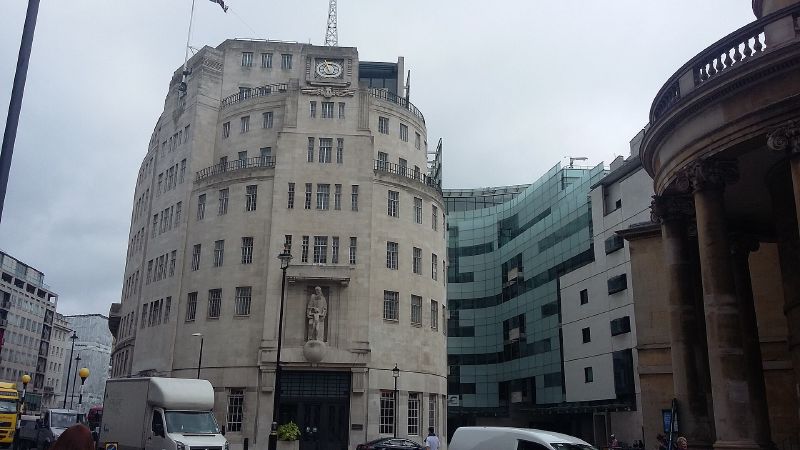
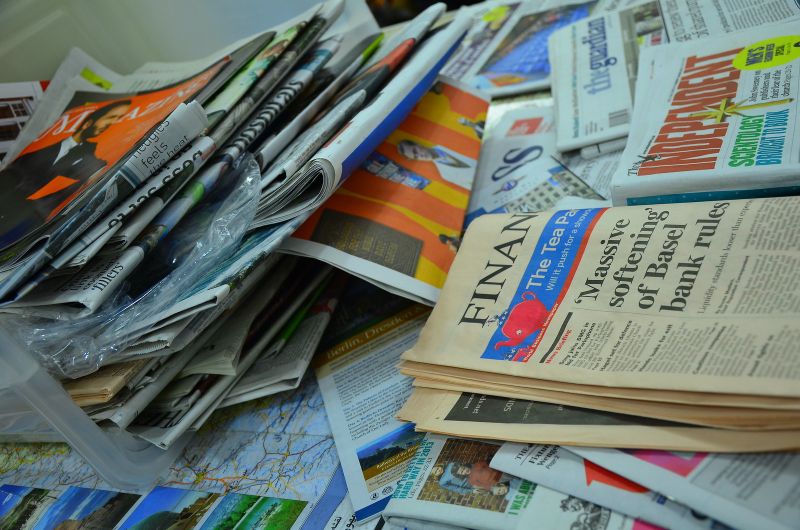
A newsroom’s style guide is a long, alphabetical list of rulings, each one closing a question before a writer on deadline has to guess at the answer. The BBC’s guide and the Guardian’s guide both work the same way. Each has one entry per word or name, so every reporter writing “Nasa” or “an hour” makes the same choice as everyone else on the desk.
more
Why leave nothing to the writer’s ear
Both guides fix “a” against “an” by sound rather than spelling. Use “an” before a silent H, as in “an hour”, “an honest politician” and “an heir”, and “a” before an H that is pronounced, as in “a hero” or “a hotel”. A sub-editor checking a page at midnight does not have to decide whether “historian” sounds aspirated to them personally. The guide already decided.
The Guardian’s entry adds one exception a purely phonetic rule would miss: if a quoted speaker says “an historic”, the paper does not silently correct their words to “a historic” in the quote. The rule governs the newsroom’s own prose, not somebody else’s recorded speech.
Turning a string of capital letters into a decision
Abbreviations are where a style guide earns its keep. Both guides split abbreviations into two kinds and treat each differently. An initialism, read out letter by letter, takes full capitals: BBC, VAT, UNHCR. An acronym, pronounced as a word, takes a single initial capital once it has settled into ordinary use: Nasa, Nato, Unicef. The BBC guide gives its own examples, listing Maga, Sars, Aids, Nasa, Opec and Apec as words its writers should treat as ordinary words rather than shout in capitals.
Neither guide leaves the split to instinct. The Guardian carves out acronyms that have fully entered the language as everyday words, such as “awol”, “laser”, “asbo”, “sim card” and “pin”, which it lowercases entirely. The BBC guide lists its own named exceptions where a capped-down acronym would confuse a reader. The National Institute for Health and Care Excellence becomes “NICE”, Seasonal Affective Disorder becomes “SAD” because “Sad” would read as the adjective, and the Strategic Health Authority becomes “SHA” because “Sha” looks like a typo. Each exception is a specific ruling on a specific term, not a formula a writer could rederive from first principles. That is the function a style guide performs: it replaces on-the-spot reasoning with a lookup.
Both guides also agree that a full name comes first. The BBC’s rule is to spell an organisation out in full at first mention and introduce the short form afterwards, unless the abbreviation is already unmistakable, such as the UN or the BBC itself. The Guardian states the same practice for a body like the Association of Chief Police Officers, given in full once with “(Acpo)” in brackets, then shortened to “Acpo” for the rest of the piece.
One ruling for a term that touches politics
A style guide does more than fix spelling. It decides which of two competing terms a newsroom will use when the choice itself carries a position. Both guides instruct writers to say “pro-choice” rather than “pro-abortion”, and “anti-abortion” rather than “pro-life”. The Guardian’s entry goes further, permitting “anti-choice” specifically when a piece covers opposition to reproductive rights more broadly than abortion alone, including birth control and family planning.
Fixing this kind of term in a guide, rather than leaving it to each writer, keeps a newsroom’s language consistent across hundreds of stories written by people who never discuss the question with each other. A reader comparing two articles from the same outlet, months apart, meets the same phrasing both times.
The same logic for a law, an award and an accident
The pattern repeats across unrelated entries. Both guides treat a named act of parliament as a proper noun that earns a capital, such as the Criminal Justice Act. A generic reference to “a new freedom of information act” stays lower case until a bill is named or passed. The Guardian applies an identical split to the Academy Awards: the ceremony’s own name is capitalised, but an individual prize such as “best actor award” is not.
Some entries steer a writer away from a word that carries an unproven claim. The Guardian’s guide flags “accident” for traffic stories, preferring “crash” or “collision” when the full circumstances are not yet known. The BBC’s guide makes the same move for a specific verb: writers should avoid saying one vehicle “hit” another and use “collided with” instead, for legal reasons. It adds that a collision needs two moving objects, so it cannot involve something stationary.
What a shared list buys a newsroom
None of these rulings is obvious on its own. A writer who has never seen the guide could reasonably spell “adviser” as “advisor”, write “actress” by habit, or call a road crash an “accident” without thinking about what the word assumes. The guide exists so that hundreds of writers do not each work this out alone, and so a reader never learns that today’s reporter made a different call from last week’s. It answers each question once, in one place, and every subsequent use borrows that answer rather than repeating the argument.