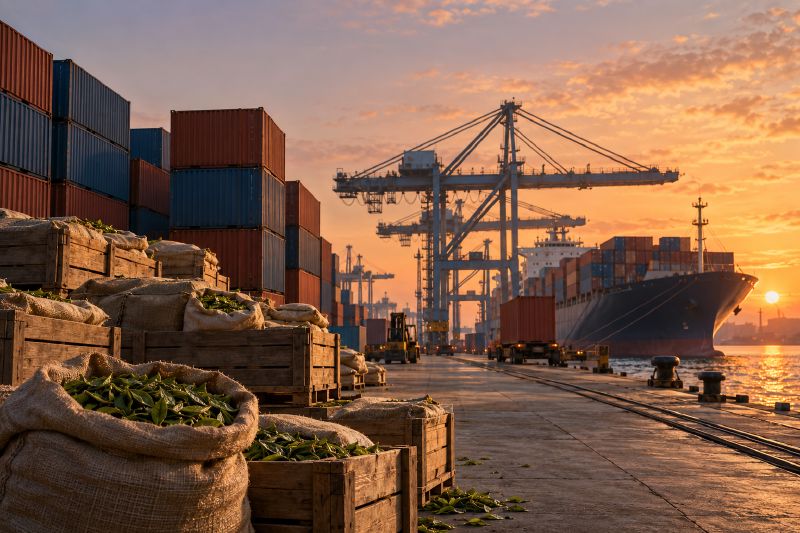
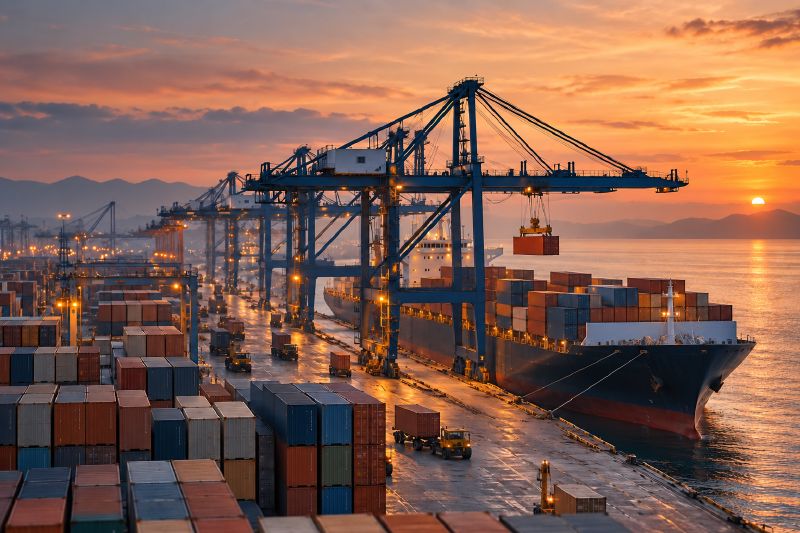
A shopper never pays a tariff at the till. The company bringing the goods into the United States pays it to the government, and then decides how much of that bill to push on to its customers. In 2025 the answer turned out to be a good share of it, arriving slowly rather than all at once.
more
Who writes the cheque
A tariff is a tax on imported goods, usually set as a percentage of what the goods are worth. The BBC gives the arithmetic: put a 10% tariff on a $10 product and the importer owes $1, so the item now costs $11 to land.
The importer then chooses what to do with that $1. The firm can pass on some of the cost, all of it, or none. It can also cut how much it buys from abroad. Its customers can be households or other American businesses that use the goods to make something else.
Encyclopedia Britannica describes the cost spreading along the whole chain. Manufacturers, distributors and retailers each soak up part of it, while the price a consumer sees is the part people notice most.
How much reached the shelf
Several large retailers said openly that they would pass the cost on, including Target, Walmart and Adidas. Toys, appliances and furniture got dearer, along with some foods. Goods made in the US also rose where they relied on imported parts.
Estimates of the share differ by method. In October 2025 Goldman Sachs put the portion of tariff charges passed to US consumers at about 55%, as the BBC reported.
The Federal Reserve Board took a more direct measure. Economists Sinem Hacıoğlu-Hoke, Sarojini Malladi and Leo Feler tracked what up to 200,000 American households paid at the till, using purchase data from the research firm Numerator. They matched about 27,000 products to the country where each was made.
Their finding was that at least 30% of the tariff on Chinese goods reached consumers between April and December 2025. Prices for goods from China were 8.5% higher by December than a year earlier, the largest effect of any origin they tracked.
Why the rise came slowly
The Fed note found price pressure building month by month through 2025, rather than a single jump when the duties took effect.
The dataset has limits the authors spell out. It covers only about 20% of the spending basket in the official inflation measures, and leaves out housing, travel, cars and healthcare. Groceries make up 44% of the spending it does capture.
What happens when a tariff is struck down
In February 2026 the US Supreme Court ruled that President Donald Trump had gone beyond his powers. He had used emergency law to set tariffs on specific countries without Congress. About $100bn has since gone back to the companies that paid the “Liberation Day” duties, roughly 60% of some $166bn collected, according to a court filing the BBC cited.
The money went to the importers, because they were the ones who paid the tax.
The ruling did not end the policy. The White House turned to Section 122 of the Trade Act of 1974 for a temporary 10% levy on all imports. When that expired on 24 July, tariffs of 10% to 12.5% on goods from the 60 largest US trading partners took its place, under Section 301 of the same act. Each new duty starts the same chain again at the importer’s desk.
An old lesson about retaliation
Tariffs can trigger retaliation. Britannica points to the Smoot-Hawley Tariff Act of 1930, which raised US import duties sharply. Other countries answered in kind, world trade fell steeply, and the Great Depression deepened.
So when a price tag climbs, the tax behind it was paid at the border by a company you may never have heard of.