AlphaFold changed protein science by making a protein’s shape something you compute rather than something you wait years to measure. DeepMind’s system predicts the three-dimensional structure of a protein from its sequence alone, and in 2020 it did so well enough to match lab experiments for about two-thirds of the proteins in a blind test. Paul Adams, a structural biologist at Lawrence Berkeley National Laboratory, put the result more sharply: “AlphaFold changed everything and nothing.”
Both halves of that line hold up. The everything is speed and coverage. The nothing is that experiments still decide what is true.
Why a protein’s shape mattered so much
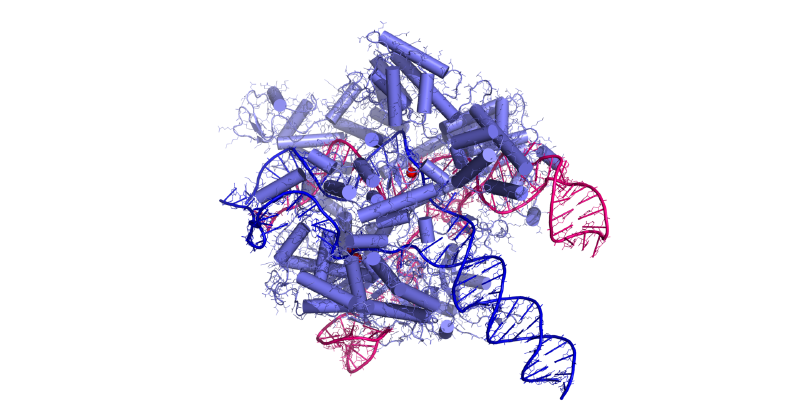
A string of amino acids does nothing until it folds into its own shape, and that shape decides what the protein can bind to and so what it does in a cell. Scientists have known roughly a couple of hundred million proteins, but had worked out the structure of only a fraction of them.
The bottleneck was the lab. John Moult, who chaired the CASP14 assessment, said that finding the shape of a single protein needs expensive equipment and can take years. The first protein structure was published in 1958, and the Protein Data Bank has collected experimental structures since 1971.
Predicting the shape from the sequence alone became known as the protein folding problem. BBC Science Focus described it in 2020 as a challenge some 50 years old.
The week the contest changed
The test bed was CASP, the Critical Assessment of protein Structure Prediction, which has run since 1994. It meets every other year, and some of its computational scientists had been attending for almost three decades, usually to see small gains.
In December 2020, with lockdowns forcing the meeting online, John Jumper of Google DeepMind in London presented AlphaFold2. Quanta Magazine reported that its models were over 90% accurate, five times better than the nearest rival.
“I was in shock,” Mohammed AlQuraishi, a systems biologist at Columbia University, told Quanta. Moult closed the meeting by saying AlphaFold2 had “largely solved” the problem, and added that it was “not an end but a beginning”. Venki Ramakrishnan, then president of the Royal Society, said the advance had come decades before many in the field expected.
From one protein to a whole proteome
DeepMind then used AlphaFold2 to predict the structures of every human protein. A 2022 study in PLOS Computational Biology, by E. Porta-Pardo and colleagues, measured what that added.
- Coverage of the human proteome by experimental or template-based models stood at 48%. With AlphaFold’s predictions it rose to 76%.
- The “dark proteome”, the share with no structural information at all, fell from 26% to 10%.
- Disease genes were already well covered, at 69% of ClinVar pathogenic mutations and 88% of cancer mutations. AlphaFold added between 3% and 13% on top.
The same study found the gain was larger still for other organisms, including bacteria that cause disease. Its authors concluded that the gap between known human protein sequences and known structures had almost disappeared.
What AlphaFold did not settle
AlphaFold2 solved one part of the problem, and not the way a scientist would, Quanta noted. It did not replace experiments. It made the case for them stronger.
The tools also leave out time and place. They cannot show how a protein changes shape over time, or how it behaves inside a living cell. Even in 2020, the DeepMind team said more work remained on how proteins form complexes and interact with DNA.
AlphaFold 3 and the argument over access
DeepMind’s answer to the complexes question arrived in a Nature paper on May 8, 2024, written with Isomorphic Labs, a London company set up in 2021. AlphaFold 3 uses a diffusion-based design that predicts raw atom positions for whole complexes. Those can include nucleic acids, small molecules, ions and chemically modified residues. The paper reported far better accuracy on protein-ligand pairs than leading docking tools.
The researchers claimed a 50% gain in accuracy over existing software methods, Live Science reported. Frank Uhlmann, a biochemist at the Francis Crick Institute, said the tool’s predictions for proteins that act on DNA had mostly held up in his experiments.
The release came with a catch. Unlike AlphaFold 2, AlphaFold 3 appeared without open source code, and more than 1,000 scientists signed a protest letter. Access instead ran through a free web server for non-commercial use, capped at 10 requests a day at launch and later 20.
Roland Dunbrack of the Fox Chase Cancer Center, who reviewed the paper, argued that open code for AlphaFold 2 had let others build their own servers and high-throughput tools. He called the change “a big step backwards”. AlQuraishi’s group responded by setting out to reproduce AlphaFold 3 from the pseudocode in the paper.
The next question
Quanta suggested AlphaFold2’s biggest effect may be the way it turned biologists’ attention to artificial intelligence, with new protein design algorithms and new biotech firms in its wake. Moult’s own closing question from that online meeting in 2020 still stands: “What now?”