Governments went from a confirmed ozone hole over Antarctica in 1985 to a global treaty in 1987. One debated explanation for the treaty’s success is that one industry caused the damage and substitutes were available. The damage was also dramatically visible in one region.
more
Who found the hole, and why nobody expected it
Jonathan Shanklin joined the British Antarctic Survey in the late 1970s and spent much of his time in a Cambridge office, working through years of backlogged readings from ground-based instruments called Dobson spectrophotometers. The devices track how much ozone sits above a fixed point, and Shanklin supervised the digitising of the paper records.
His bosses were slow to credit what the numbers were showing. By 1984, ozone above the Halley Bay research station had lost a third of its usual thickness compared with earlier decades. Shanklin, Joe Farman and Brian Gardiner published the finding in 1985 and pointed to a link with chlorofluorocarbons, then used widely in aerosol cans and refrigeration. The discovery became known as the ozone hole, and the alarm that followed did more than worry scientists. It mobilised research and pushed governments toward a scale of cooperation nobody had managed before.
Why CFCs were already a suspect
The chemistry behind the discovery was not new. In 1974, Mario Molina and Sherwood Rowland had calculated that CFCs could break apart in the stratosphere and destroy ozone there, a claim the chemical industry rejected and other scientists doubted. The projections at the time put any eventual damage at 2 to 4 percent, unfolding over centuries rather than decades.
Antarctica showed those projections had understated the danger by a wide margin. “It was really quite shocking,” Shanklin said of the discovery, looking back as an emeritus fellow at the Survey. NASA’s own satellites had recorded the same collapse in ozone, but the agency’s software had discarded the readings as sensor error, on the assumption that depletion that severe could not be real. Reprocessed later, the satellite record showed the hole from orbit too.
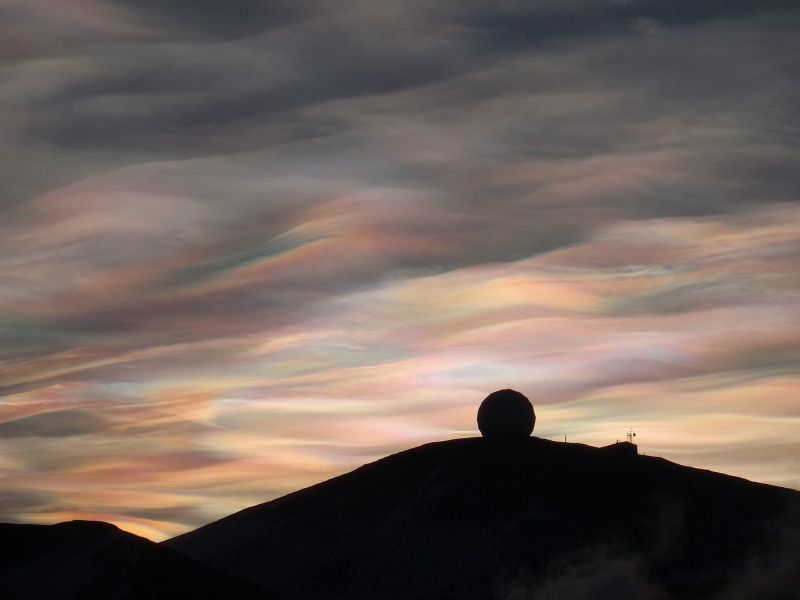
In 1986, Susan Solomon of the US National Oceanic and Atmospheric Administration led a team to McMurdo Base in Antarctica to test competing explanations for the mechanism, one of them her own. She concluded that chlorine reacting on the surface of polar stratospheric clouds was “the trigger for what happened.” Those clouds form only in the extreme cold of the Antarctic winter. The chlorine they release converts into an active form that breaks down ozone once sunlight returns each spring.
From a Nature paper to a treaty in Montreal
Governments had already laid groundwork. In 1985, the same year as the discovery, they adopted the Vienna Convention for the Protection of the Ozone Layer. It provided the framework for the Montreal Protocol. Two years of negotiation followed. On 16 September 1987, delegates from 24 countries and the European Economic Community signed the Montreal Protocol on Substances that Deplete the Ozone Layer, at the headquarters of the International Civil Aviation Organization in Montreal.
What they signed asked less of industry than the treaty would eventually deliver. It froze halon production at 1986 levels and set out a staged cut to CFCs, a 20 percent reduction by 1994 and 50 percent by 1998, both measured against 1986 consumption. Later amendments moved the deadlines forward rather than back. The 1990 London amendment called for developed countries to phase out CFCs, halons and carbon tetrachloride completely by 2000, and the 1992 Copenhagen amendment brought that date in to 1996.
By 2008, the Montreal Protocol had become the first, and so far the only, United Nations environmental agreement ratified by every country on Earth. Kofi Annan, then the UN secretary-general, called it “perhaps the single most successful international agreement to date.”
What phasing out CFCs actually bought
The ozone hole kept growing for years after the treaty was signed, because CFCs already released into the atmosphere take decades to break down. In 1987, as the protocol was being signed, the hole covered 22.4 million square kilometres and ozone had thinned to 109 Dobson Units at its worst point. By 2006, the worst year on record, it reached 29.6 million square kilometres and 84 Dobson Units. Its single largest extent came in 2000, at 29.9 million square kilometres, before the slow recovery began to show. By September 2019, the hole had shrunk to 16.3 million square kilometres at its peak, the smallest since 1982.
UNEP now estimates that around 99 percent of ozone-depleting substances have been phased out worldwide, and that the treaty spares roughly 2 million people a year from skin cancer they would otherwise have developed. Many ozone-depleting gases also drive up global temperatures. A study UNEP cites found that without the ban, plants and soil would have stored less carbon. That might have added 0.5 to 1.0 degrees Celsius of warming.
The hole that still opens every spring
The Antarctic hole has not closed, and will not for decades yet. UNEP expects it to return to 1980 levels only by the 2060s. NASA scientist Pawan Bhartia, who in 1985 was the first researcher to present satellite evidence of the hole, has said its size now depends less on chemistry than on weather. Year-to-year changes in the stratosphere, not changes in CFC levels, decide how large that year’s hole grows, he has said. “Like two snowflakes, two ozone holes are never alike,” he said.
UNEP says the work is not a one-time fix, and scientists remain the first line of defence.