Brasília replaced Rio de Janeiro because a president promised it on the campaign trail and then had four years to deliver. Juscelino Kubitschek inaugurated the city on April 21, 1960. Most of it went up in three years, built by tens of thousands of migrant workers known as candangos.
At the opening, Kubitschek told the crowd he was proud to count himself one of them.
A promise from 1889
The idea was far older than Kubitschek. When Brazil became a federal republic in 1889, its constitution set aside a future capital in the state of Goiás, with no date attached. The new republic’s leaders felt Rio held too much economic and political power, and some feared it lay open to attack from the sea, according to TheCollector. Survey expeditions went inland in 1892 and 1894, and then the plan stalled for decades.
In 1956, someone on the campaign trail asked Kubitschek about the capital. He replied, without much apparent thought, that he would “implement the constitution”, The Conversation reports. Once elected he was bound to it, and Brazilian politics gave him reason to finish within his four-year term.
Rio itself gave him arguments. TheCollector reports that it had grown overcrowded after the Second World War, with slums its infrastructure could not keep up with.
An airliner drawn on a plateau
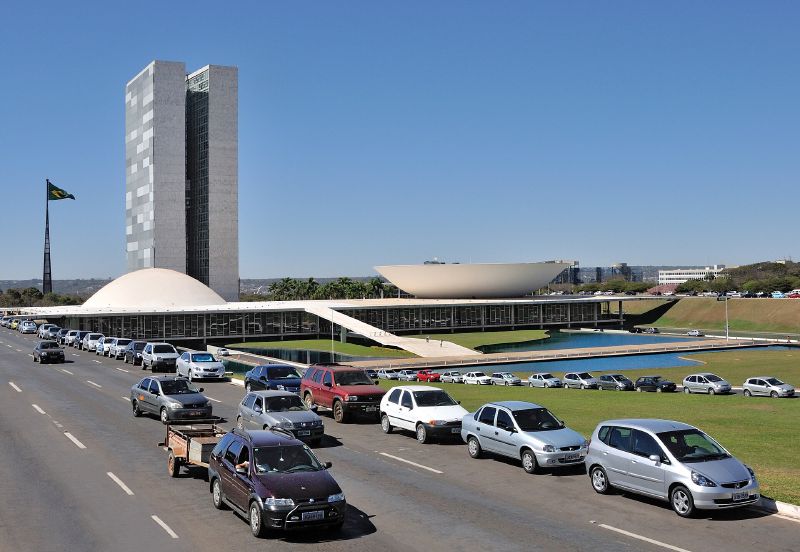
Kubitschek first hired his friend Oscar Niemeyer to design a presidential palace. Then he set aside the result of an international design competition and brought in the planner Lúcio Costa.
Costa laid out a highway axis 14 kilometres long, crossed at its midpoint by a monumental mall. From the air the plan looks like the fuselage and wings of an aircraft. His design was geometric and strictly zoned, full of machine-age imagery.
The site was not jungle, despite how foreign reporters often describe it. Brasília stands on an arid plateau.
The candangos who built it
Serious work began in 1957, when a few hundred workers cleared forest and cut the first main roads. An administrator of the time, Manuel Mendes, wrote in his diary that solitude was their worst enemy, with no radio and no electricity.
Workers were so scarce that building firms raced each other to hire them. By 1959 about 30,000 candangos were on site, most with no building experience. Vicente Castro arrived on a flatbed truck after hearing an advertisement on the radio. He told the BBC that crews worked 48 hours without a break to hit the inauguration date.
Raimundo Aguilar took 18 days to travel from Ceará, in the north-east. Life in the camps was hard, he said, but it was worse at home.
The workers’ first settlement was called Cidade Livre, or Free Town, because trade there paid no tax. It was a town of wooden houses and bars, reached from the rest of the country only by the occasional plane. Few men brought wives. Maria Araujo’s fiancé left for the site in 1958 without telling her, and came back to marry her six years later. She said her husband saw many deaths, including men falling from the Senate’s scaffolding.
An unfinished city opens
The city was finished only in part when it opened in April 1960. The Pope celebrated a special mass by radio for thousands of invited guests. Many visitors also noticed the shoddy building, the lack of a real city beyond a few monuments, and the squatter camps.
Many candangos could not afford homes in the city they had built, and moved to satellite towns after the inauguration. Castro stayed in Vila Planalto, the old workers’ camp, where he still lived when the BBC visited for the city’s 50th anniversary. Kubitschek left office and died in a car crash in 1976.
What Brasília became
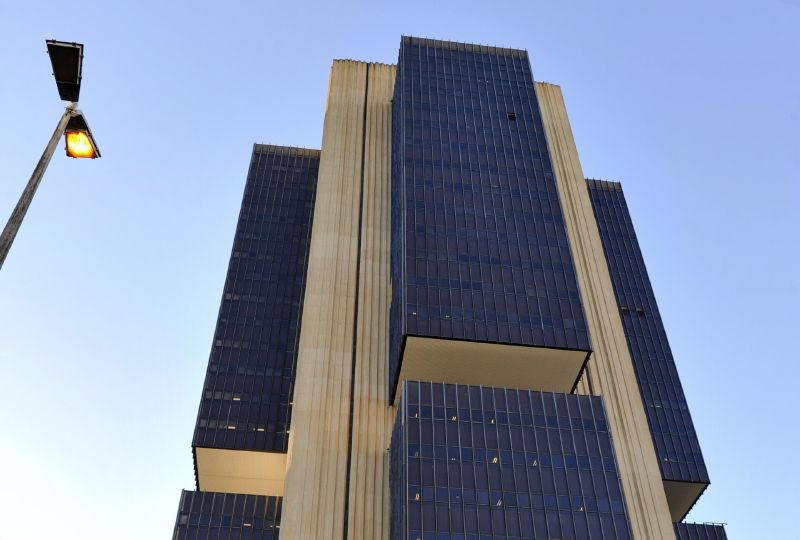
The Plano Piloto, the planned centre, is the most complete and best-preserved modernist city anywhere, according to The Conversation. UNESCO made it a World Heritage Site in 1987.
Costa planned for about 500,000 people, TheCollector reports. By 2013 the metropolis held about 2.8 million. Its GDP per head tops US$30,000 a year, ahead of any other large Latin American city.
Brazilians still like to mock it. Politicians, The Conversation notes, often say their favourite building there is the airport, the last place they see before going home.