Every living thing absorbs a radioactive atom called carbon-14 throughout its life, and that atom starts disappearing the moment the organism dies. Measure how much of it remains in a bone, a scrap of cloth, or a lump of charcoal, and a laboratory can work out roughly how long ago that tissue stopped exchanging carbon with the world around it. Willard Libby built the technique at the University of Chicago in the late 1940s, and it can still date organic remains up to about 60,000 years old.
more
Where the carbon-14 comes from
Cosmic rays, arriving from beyond the atmosphere, strike the Earth’s air every day. A collision knocks a proton off a nitrogen-14 atom and turns it into carbon-14, which bonds with oxygen to form radioactive carbon dioxide. Plants pull that carbon dioxide in during photosynthesis, and animals take in the same carbon-14 by eating the plants, or by eating the animals that ate the plants.
While an organism is alive, it keeps swapping carbon in and out, so the ratio of carbon isotopes inside it stays more or less stable. Death ends that exchange. From that point, the carbon-14 already in the body decays away, while the ordinary, stable carbon around it stays exactly as it was.
Why a 5,730-year half-life works as a clock
Carbon-14 has a half-life of about 5,730 years: half of any sample’s carbon-14 atoms will have decayed into nitrogen by the time that period has passed. Because the rate never changes, a laboratory can work backwards, comparing what is left in a sample against what a living organism would carry, to estimate how long ago it died. A piece of wood charcoal holding 80 percent of the carbon-14 expected in a living tree, for instance, comes from a tree that was felled about 1,845 years before the sample was collected.
Equipment has sharpened that estimate since Libby’s day. His original detectors counted the rare decay of single atoms directly. Laboratories can now run a sample through a particle accelerator and count the carbon-14 atoms themselves, a method that needs a far smaller sample and dates to the 1970s. Advancing technology has made radiocarbon dates accurate to within a few decades in many cases.
The chemist who turned decay into a date
Radiocarbon dating traces to 1940, when the physicists Martin Kamen and Sam Ruben discovered the carbon-14 isotope. Willard Libby, a University of Chicago chemistry professor and former Manhattan Project scientist, built on that discovery and proposed dating organic material by its radiocarbon content in the journal Physical Review in 1946.
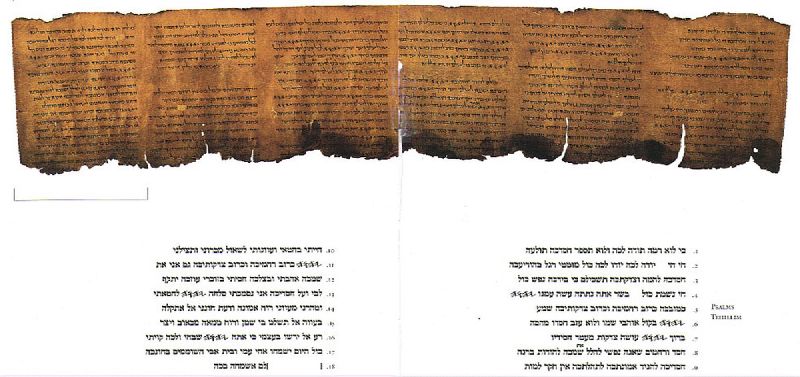
The theory was the easier part. Libby’s first graduate student, Ernest C. Anderson, showed that organic material carried roughly the same concentration of radiocarbon everywhere on Earth, from near one pole to the other, which meant the method could work on a sample from anywhere. The University of Chicago anthropologist Robert Braidwood brought archaeological material into the testing. Libby tried the method on objects whose ages other evidence had already fixed: a rope sandal from an Oregon cave, the dung of an extinct ground sloth, linen wrapping from the Dead Sea Scrolls, and timber from a funeral ship buried in the tomb of the Egyptian pharaoh Sesostris III.
By 1960, more than 30 radiocarbon laboratories were running worldwide, among them one led by the physicist Hilde Levi, who had spent several months in Chicago working with Libby in 1947 and 1948. That year, Libby won the Nobel Prize in Chemistry for the work. For several decades, Libby’s method was the only way to measure carbon-14 in samples. University of Chicago chemistry professor David Mazziotti says it “was long considered the most accurate means of dating carbon decay.”
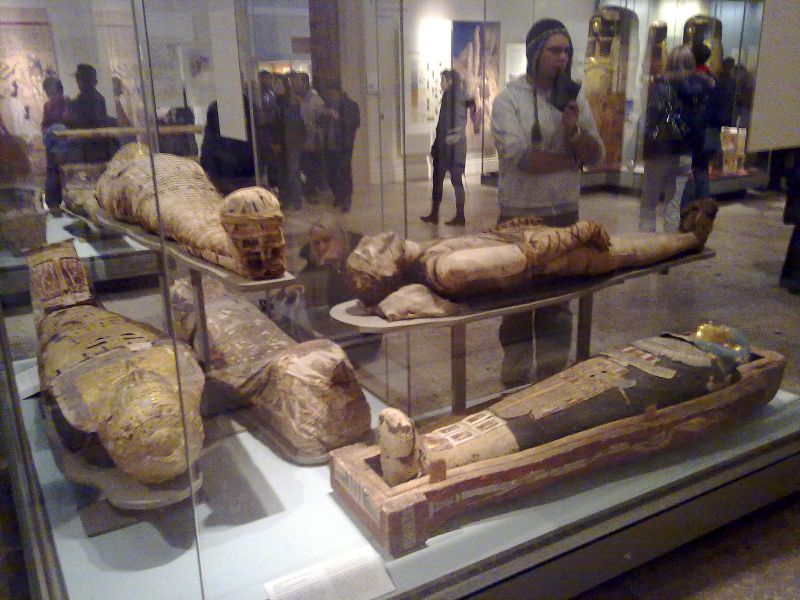
Carbon dating has dated tattoos on ancient mummies, shown that a British library holds one of the world’s oldest Qurans, and traced most trafficked ivory to elephants killed within the past three years.
Where the method reaches its limit
Carbon dating only works on what was once alive, and only within a certain age. Dinosaurs died out millions of years ago, long enough that any carbon-14 in their remains has fully decayed, so palaeontologists date the volcanic ash layers around the fossil-bearing rock instead.
A raw measurement is not the final answer, either. Because the atmosphere’s ratio of carbon-14 has not stayed perfectly constant through history, laboratories calibrate each result against samples of known age, often tree rings counted back through time by a technique called dendrochronology.
Why fossil fuel is complicating the count
That calibration assumes scientists can still tell an old atmosphere from a new one, and burning fossil fuels is eroding that assumption. Coal and oil formed from plants that died so long ago their carbon-14 is entirely gone, so burning them pumps carbon dioxide with none of the isotope into the air, diluting the modern ratio.
Imperial College London physicist Heather Graven pointed out how that dilution will skew radiocarbon dating, and Alfred Wegener Institute physicist Peter Köhler worked out the timeline in a study published in the journal Environmental Research Letters. By 2050, Köhler calculated, a fresh sample of organic material could carry the same radiocarbon reading as something that died a thousand years ago, making it impossible to tell whether a given reading points to the past or the future.
Köhler’s proposed fix looks at a different, stable isotope, carbon-13, which fossil fuels also carry in unusually low amounts. A sample whose carbon-13 comes back lower than expected is a warning sign that its carbon-14 reading has been skewed by fossil emissions, telling a laboratory to set the date aside and look for another way to date the object.