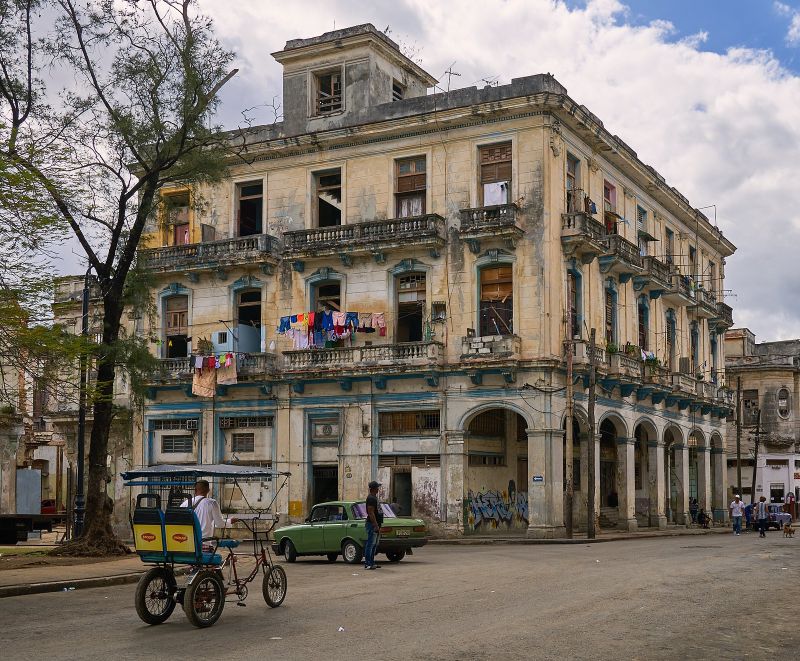
Cuba’s government sent an estimated 250,000 volunteer teachers into the countryside in 1961, aiming to teach a million illiterate adults to read and write within a single year. Fidel Castro had announced the target the year before, less than two years after his revolution took power.
more
By the end of 1961, the campaign had brought basic literacy to around 75% of the million people it set out to reach, with further adult education programmes continuing afterwards. Cuba’s literacy rate, which a Miami University account puts at around 70% in the 1950s, stands close to 100% today.
Who did the teaching
Many of the volunteers, known as brigadistas, were teenagers rather than trained teachers. One account from the Literacy Project, an oral history archive, describes more than 100,000 volunteers from Cuba’s cities, most of them aged 12 to 19 and more than half of them women. They travelled to the countryside by truck and lived for months with the rural families they taught.
A retired brigadista interviewed decades later for that project recalled joining the campaign as a 17-year-old, swept up in the mood of the revolution, and described it as a defining experience of her life.
Where the teaching happened
The programme targeted rural Cuba, where literacy was at its worst and there were no schools. Volunteers moved in with impoverished families for the duration of their assignment rather than commuting to a classroom, and helped with farm work by day.
The Literacy Project still collects those memories. A High Tech High student who interned with it interviewed 12 former teachers and two former students in Havana. Norma, a former brigadista who is now a retired psychologist, helped connect the student with other former teachers.
The campaign was not without danger. Cuba faced attacks during 1961, including the Bay of Pigs invasion in April, and one attack killed a teacher and a student. The government pressed ahead with the campaign regardless.
What the campaign was part of
The literacy drive was the first of three major methods The Conversation credits to Cuba’s post-revolutionary government. While it was under way, school enrolment grew rapidly, and it more than doubled a decade later. This was largely because education at every level, including university, became free. The government also launched programmes for peasant girls, domestic workers, and people who had dropped out before finishing school.
The model travelled. The Literacy Project’s founder, Catherine Murphy, has documented how Cuba’s approach became a template for literacy campaigns elsewhere in Latin America in the years that followed.
How the numbers vary
Accounts of the campaign do not always agree on the scale of the volunteer effort. The Conversation and a Miami University account both put the number of volunteer teachers at 250,000, while the Literacy Project’s oral history work counts more than 100,000 volunteers specifically from Cuba’s cities, a narrower group within the wider campaign. What the sources agree on is the timeframe: the push to reach a million adults happened within a single year, 1961, and relied overwhelmingly on volunteers rather than professional teachers.
What the figures look like now
Cuba’s literacy stands near 100% today, according to a Miami University account and a UNICEF report on young people. Debra Pellegrino, a dean at the University of Scranton who travelled to Cuba to examine its schools, said Cuba places the highest premium on education. Its public schooling is free, every student wears a uniform, and children get free access to artistic education. Her husband Michael Hardisky, a biology professor on the same trip, said the word that summed up what they saw was “widespread”.