Eritrea won its independence on the battlefield in 1991 and confirmed it at the ballot box in 1993. Fighters of the Eritrean People’s Liberation Front marched into the capital, Asmara, on 24 May 1991, and the Ethiopian forces they had fought for 30 years fled the city. Two years later the United Nations supervised a referendum on independence, and the front’s leader, Isaias Afwerki, became the first president.
The war had begun with an annexation. Eritrea, a former Italian colony, had been in a loose federation with Ethiopia until Emperor Haile Selassie dissolved its parliament and seized it in 1962. Separatists fought a guerrilla war from then on.
The battle that broke Ethiopia’s hold
Samuel Ghebhrehiwet joined the liberation army at 16, in 1982, and later became a BBC Tigrinya editor. He names one operation as the decisive one: the capture of the port of Massawa in February 1990, known as Fenqel.
The fighting for the city lasted 72 hours. The front then held it for more than a year from 100-kilometre lines of trenches. Taking Massawa choked the Ethiopian army’s movements and in the end forced it out of Eritrea, he writes.
The cost was high. About 65,000 Eritrean fighters died in combat over the course of the war. Many survivors had been wounded two or three times.
The day the checkpoints emptied
Ghebhrehiwet’s unit was on Dahlak Island, off Massawa, when the news came. They crossed by boat, then rode lorries about three hours to Asmara, through an Ethiopian checkpoint its soldiers had already abandoned.
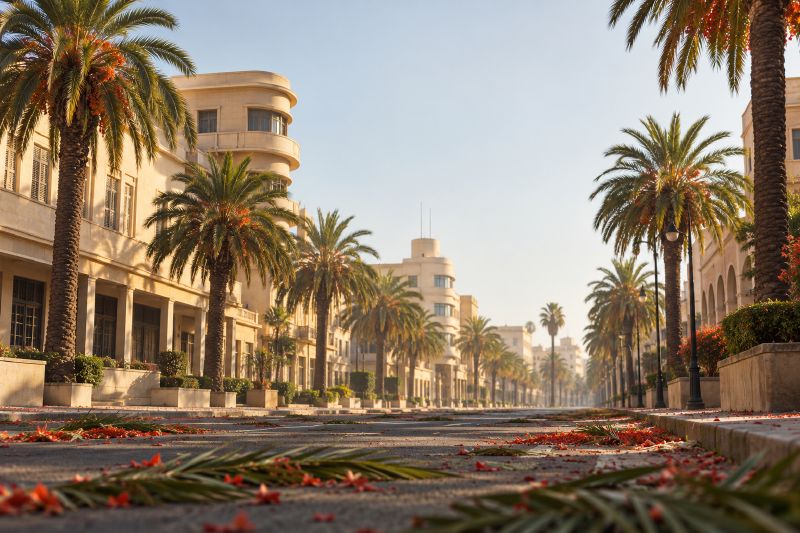
Asmara had been under siege, with a strict curfew and its airport bombed again and again. On 24 May residents left their stoves and coffee to line the streets, stripping palm trees for leaves to wave. Parents held up framed photographs to ask the arriving fighters whether their children had survived.
Ethiopia’s ruler for most of the war was Mengistu Haile Mariam, the Marxist army officer who led the country from 1977 to 1991. His heavy-handed rule had deepened Eritreans’ wish to break away, according to DW.
From liberation to the 1993 vote
The two years between victory and the referendum were hopeful. The British journalist Michela Wrong, who reported from Eritrea then, told DW that fighters were demobilising and that exiles were returning from America, Canada, Sweden and Norway to invest. A multi-party constitution was being drafted.
It was ratified in 1997, after four years of drafting, and the president later shelved it, the exiled Eritrean writer who wrote for Al Jazeera in 2017 records. The front became the People’s Front for Democracy and Justice, which has ruled ever since.
What independence did not settle
The border was the first fault line. In 1998 war broke out with Ethiopia over the village of Badme, and it did not formally end until a 2018 summit after Abiy Ahmed became Ethiopia’s prime minister. Tens of thousands died.
The government has used the unresolved border to keep Eritreans in indefinite national and military service, the Guardian reported in 2016. A 2016 UN Commission of Inquiry accused the state of crimes against humanity.
Ghebhrehiwet’s own disappointment came quickly. He and his comrades had hoped to go home, study and work, and found they were not even allowed to leave the army. Some Eritreans in the diaspora see it differently. One July, thousands protested in Geneva against a UN human rights report they said demonised their country, and days later thousands more rallied there in its support.