The Eurovision Song Contest started as a test of what television could do across borders. The idea took shape in early 1955, at a meeting in Monaco of the newly formed European Broadcasting Union. It drew inspiration from a song competition that already existed, the Sanremo Festival in Italy.
more
After a year and a half of planning, the first contest went out live from Switzerland to small audiences watching in black and white. It took place in Lugano on 24 May 1956. The Guardian counts it among the earliest attempts to broadcast a live television event to an international audience.
Seven countries and a quarrel
The first contest had only seven competing countries. Even then, according to Den of Geek, the voting caused a row.
The BBC was not among the seven. It contributed heavily to the technical side of the project but missed the deadline to enter a song in the first year.
The corporation does claim a part in the name itself. In an interview in the BBC’s archive, the former BBC publicist George Campey explains how the word “Eurovision” came about.
From Lugano to the Albert Hall
Twelve years on, the contest had grown into a large production. The BBC staged it at the Royal Albert Hall in London on 6 April 1968, the first time anyone produced it in colour.
The Guardian’s reporter Christine Eade watched the rehearsals that week. She counted 17 singers and 250 foreign journalists, and some delegations brought a dozen managers and television and record staff. The BBC expected about 150 million people in 23 countries across Europe and North Africa to watch live.
The hall’s echo was a technical headache. The 40-piece orchestra sat spread out and got 24 microphones rather than the usual 12, Eade reported. Britain’s entry that year was Cliff Richard singing “Congratulations”.
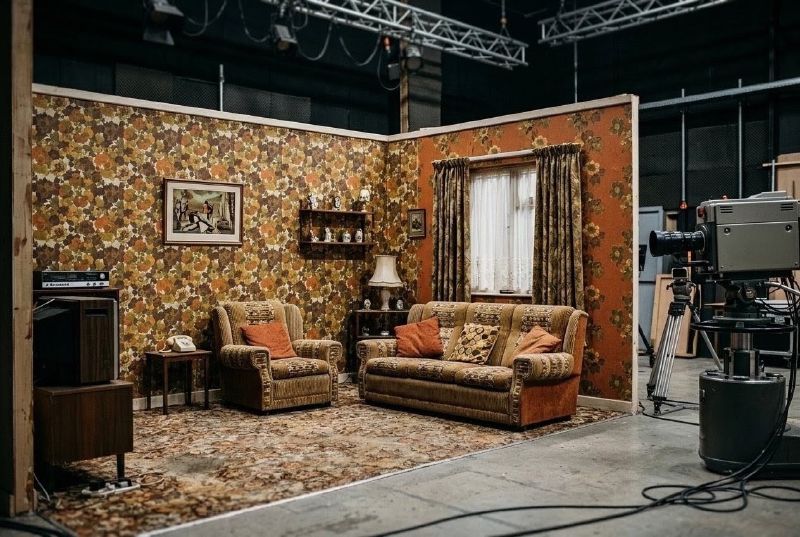
The BBC set other records for the format. It is the only broadcaster to have staged the contest in a TV studio, at BBC Television Centre in 1963. It also televised the 1977 contest while in the grip of a strike, which no other host has done.
The night that made careers
Abba won the 19th contest for Sweden on 6 April 1974 with “Waterloo”, at the Dome in Brighton. The win launched the group to fame around the world. In 2005 the song was named the best in the contest’s history.
By 1994 the audience had grown to an expected 600 million people, according to a Guardian column by John Peel. Den of Geek gave the same figure as its upper estimate in 2020, with performers from more than 40 countries.
How the rules shape the show
The rules Den of Geek set out in 2020 are strict. Songs must not have been released before the previous September, and none may run longer than three minutes. A performance can have at most six people on stage, and entrants must be at least 16. Vocals must be live, but the music is pre-recorded.
Voting is split. Professional juries supply half the points and viewers the other half. Each country ranks its favourites and gives 12 points to the top song, 10 to the second, 8 to the third, and then 7 down to 1. Den of Geek explains that the positional system stops larger countries from gaining an unfair edge.
The borders have loosened too. Morocco entered in 1980, and Israel, Cyprus, and Armenia compete regularly. Australia had broadcast the contest since the 1980s and was invited to compete in 2015 to mark Eurovision’s 60th anniversary. It was meant to be a one-off, and the invitation has been renewed every year since.
Why it keeps its hold in Britain
The UK has won five times. In 2023 the BBC hosted the contest on behalf of Ukraine, which could not stage it because of Russia’s invasion. That year’s final drew 9.9 million UK viewers, the highest on current records, with a five-minute peak of 11 million for Mae Muller’s performance.
The Guardian noted in 2019 that the contest is increasingly read as a gauge of tension between European countries, and compared with international football. That is a long way from a technical trial with seven entrants, and it may be the truest measure of how far the experiment went.